Artificial intelligence is reshaping how people look for products online. Shoppers no longer rely only on traditional search pages. They now ask AI assistants for recommendations, comparisons, and personalized suggestions. This shift changes the entire discovery journey, and ecommerce brands that adapt early will benefit long before the rest of the market catches up.
The goal is simple. You want your products to show up when someone asks an AI tool a question like “best budget gaming mouse” or “which skincare products are safe for oily skin.” To do that, you need to understand how AI search works and how it decides which brands deserve a spot in its recommendations.
Below is a practical breakdown of what actually matters and how ecommerce teams can take action.
Why AI search discovery is a massive opportunity for ecommerce
AI search has condensed the buying journey. Instead of moving from discovery to comparison to evaluation across multiple websites, shoppers can now ask one question and get everything in a single response. This dynamic makes AI a new type of storefront.
When customers rely on these responses, they trust them. If your brand or product appears, you win instant visibility. If it doesn’t, the customer may never even reach your website.
Early movers enjoy a significant advantage. As AI systems learn from past data, brands that consistently show up across the web create a long-term presence that is much harder for late entrants to build.
The stakes are high. The rewards are higher.
The three types of AI visibility and which one matters most
AI tools can surface ecommerce brands in more than one way, but not all of them are equally valuable.
Mentions
This is the simplest form of visibility. Your brand name appears in a general explanation or a broader discussion. It’s helpful for awareness, but it doesn’t directly influence buying decisions.
Citations
Citations occur when AI tools reference or link to your content. This tends to happen when your guides, product pages, or tutorials help answer a user’s question. Citations build trust and send positive authority signals.
Product recommendations
This is the level every ecommerce brand should aim for. When an AI assistant directly recommends your product to a shopper, you get the closest possible equivalent to being placed at the top of a “best products” list. This is the spot that influences real purchasing decisions.
Your strategy should focus on earning more citations and recommendations, not just mentions.
What AI search engines actually look for
To appear in AI-powered results, you must understand how these systems evaluate content and products.
1. Clear experience and expertise signals
AI models rely on trustworthy sources. They respond well to content that shows real product knowledge. Tutorials, step-by-step guides, product demonstrations, and troubleshooting articles all send the message that your brand knows what it’s talking about.
2. Strong product data signals
AI assistants work best when they can confidently understand your product. This requires detailed information such as:
- Materials
- Dimensions
- Compatibility
- Variants
- Safety information
- Benefits and drawbacks
- Ideal use cases
The richer your product data, the easier it becomes for AI systems to match your product to user needs.
3. Structured data and machine readability
Structured data helps AI systems interpret your product pages accurately. Product schema, how-to schema, FAQ schema, and review schema all contribute to better machine understanding. It is not a bonus. It is a requirement.
4. Consensus across the web
AI systems look for patterns. If reviewers, community discussions, guides, and listicles repeatedly mention your products, the algorithms view your brand as a reliable choice. This consensus is extremely valuable and very difficult for competitors to replicate.
Turning your ecommerce site into an AI-ready catalog
Your site needs to speak in a way AI systems understand clearly.
Here are 4 ways to do that:
1. Build content around real buyer scenarios
People don’t ask AI to “show best wireless mouse.” They ask:
- “Which wireless mouse is best for small hands?”
- “What are good office chair options under 200?”
- “Which skincare is safe for teens with oily skin?”
Your content strategy should reflect real-world needs. Create pages and guides focused on specific situations, not just product features.
2. Strengthen category-level authority
AI systems reward brands that demonstrate depth in a topic. That means building more than just product pages. Category authority comes from:
- Buying guides
- Troubleshooting advice
- Comparison pages
- Care instructions
- Style or usage ideas
- Product alternatives
When your brand becomes the most comprehensive resource in a niche, AI search notices.
3. Improve your product detail pages for AI
A product page today is not just for shoppers. It is also for machines. Add details that clarify what your product does, who it is for, and when it should be used.
Include real customer FAQs, testing results, durability notes, and honest explanations of pros and cons. This information helps AI systems place your products in the correct recommendations.
4. Fix data hygiene issues
Your product information must be consistent everywhere. If your store says one thing and your marketplace feed says another, AI assistants will ignore your product entirely. Consistency builds trust.
Earn credibility through reviews, UGC, and external authority sources
AI models use sentiment signals from across the web. A strong review presence increases your credibility.
Why AI trusts social and community proof
Reviews, YouTube videos, Reddit threads, and third-party buying guides collectively shape how AI systems interpret your brand. A large number of detailed, authentic reviews sends a clear trust signal.
Increase review quality and volume
Encourage customers to share:
- How they used the product
- What problem it solved
- How it compares to alternatives
- What they liked and disliked
This level of detail helps AI categorize your product accurately.
Expand your presence across authority platforms
Build visibility on sites that publish buying guides, comparison articles, or hands-on tests. AI tools frequently pull from these sources. A strong presence outside your own website amplifies your footprint.
Turn customer questions into AI-friendly content
When customers repeatedly ask the same questions, turn those into structured FAQ sections. These FAQs offer context that AI systems love.
Optimize for AI-driven comparison queries
Comparison queries are some of the most common in ecommerce.
1. Create honest comparison content
Customers appreciate transparency. Build pages that compare your product with alternatives. Include pros and cons. Be honest about where each product performs best. Shoppers trust balanced insights, and AI systems use these pages to understand product strengths.
2. Build segmented recommendation pages
Price-based and usage-based recommendations perform exceptionally well in AI search. Create:
- Best-budget lists
- “Under a certain price” lists
- Premium upgrade lists
- “Best for beginners” and “best for professionals” lists
These formats match the way users talk to AI assistants.
3. Provide alternative-based browsing
Create content for scenarios like:
- “If you need something more durable”
- “If you prefer a quieter option”
- “If you want a version suitable for travel”
These pages help AI map your product to specific customer needs.
Leverage structured data, feeds, and AI-friendly formats
Structured data is one of the most direct signals you can control.
1. Keep your product schema complete
Missing fields reduce your chances of being included in AI results. Make sure your product data includes pricing, availability, reviews, images, SKU details, and more.
2. Clean up product feeds
Your Merchant Center feed, marketplace feeds, and affiliate feeds all influence how AI systems understand your products. Fixing feed errors improves visibility.
3. Build AI-consumable content formats
Tables, comparison charts, troubleshooting guides, and feature summaries help AI understand your products clearly and accurately.
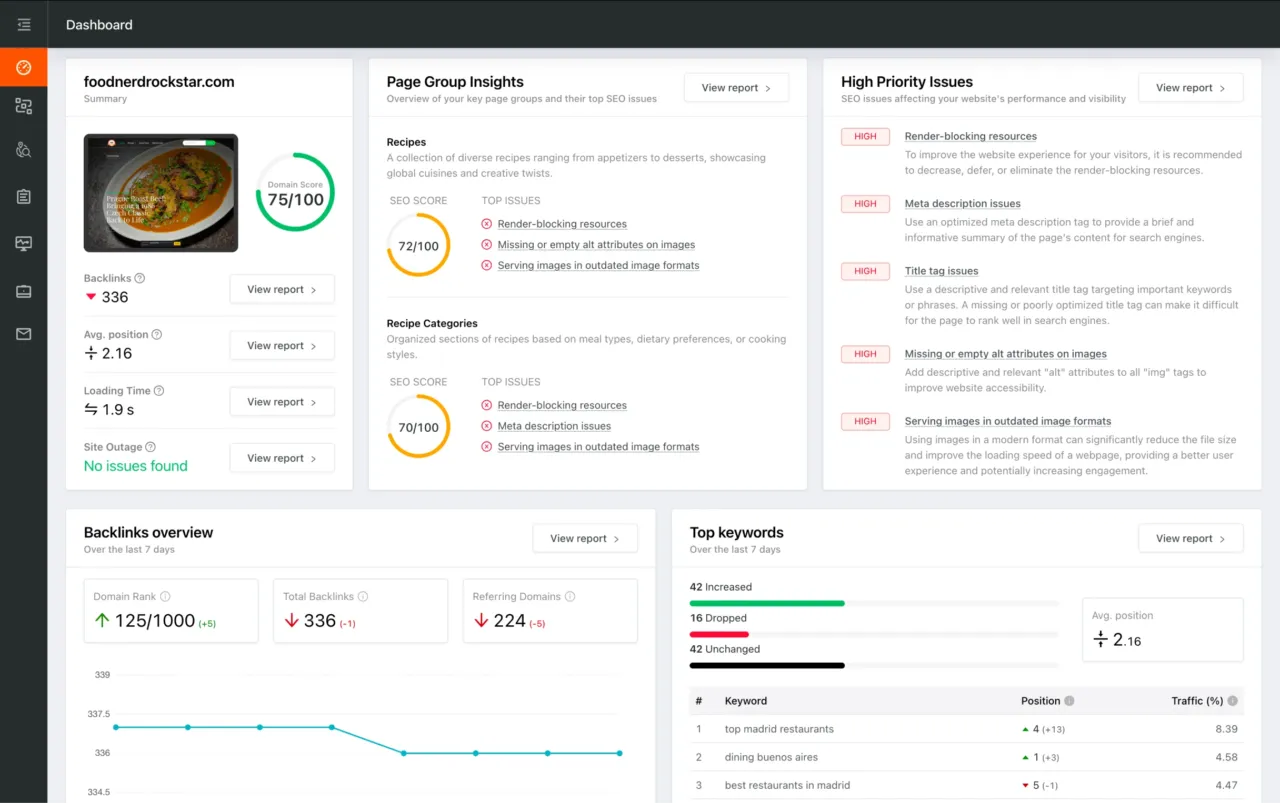
Track your AI search visibility
You cannot improve what you cannot measure.
Tools you can use
Several analytics platforms now track visibility in AI-generated answers. These tools won’t capture everything, but they help you identify patterns.
Practical manual monitoring
Regularly test relevant prompts in different AI tools. Look for patterns in the recommendations. Track which products appear, how often they appear, and where you are missing opportunities.
Practical checklist for ecommerce teams
- Ensure product data is consistent across all platforms.
- Add complete structured data across all product and category pages.
- Build content around buyer scenarios.
- Create comparison pages and segmented recommendation pages.
- Improve your PDPs with deeper detail and FAQs.
- Encourage and collect high-quality reviews.
- Track AI search visibility monthly and adjust your content strategy accordingly.
AI search has changed how shoppers discover products, but it hasn’t changed what earns trust: clarity, authority, and real usefulness. Ecommerce brands that invest in better product data, richer content, and stronger signals across the web put themselves in the best position to be recommended when it matters most.
The brands that treat AI search as a new storefront, rather than a short-term trend, will be the ones customers find first and remember longest.