Most content never gets found. When Ahrefs analyzed around 14 billion pages, it found that 96.55% got zero traffic from Google. A lack of backlinks was one of the main reasons.
The usual fix is a distribution calendar: post here on Monday, there on Wednesday, reshare next month. That helps with consistency, but it skips a more basic question. Where should this piece go in the first place?
There's a better starting point than habit or guesswork. For almost any topic you write about, Google and AI tools have already decided which sources they trust. Find those sources, get your content onto them, and you reach people today while becoming part of the material AI quotes later.
Map who gets cited for your topics
Start with the evidence. Surfer analyzed 6.78 million AI Overview citations from September 2026 and found that YouTube alone earned more citations than Reddit and Google.com combined. The more useful finding for small businesses was further down: the 50 most-cited domains accounted for only 21% of all citations. The other 79% went to smaller sites.
What it means: you don't need to break into giant publications. Much of what AI cites in your niche comes from industry blogs, forums, newsletters, and comparison pages that will actually answer your email.
What to do
- Pick a topic you publish on and list 5 to 10 searches your customers would type about it.
- Search each one in a private window while signed out. Our guide on auditing what AI Overviews say about your brand explains how to keep these checks consistent.
- For every search, note the sources cited in the AI Overview, the top organic results, and any forum or video results.
- Log each source in a spreadsheet with its type and the number of your searches it appears on.
After 10 searches, a pattern usually shows. A handful of sites will keep coming back. Those repeat names are your distribution list for that topic.
Five types of source, and how to get into each
Most maps fall into five groups. Each one needs a different approach.
1. Community threads
Reddit and Quora both rank among Surfer's top 10 most-cited domains in AI Overviews, and smaller industry forums often show up for niche searches.
What to do: look for threads that are already being cited and add an answer that's genuinely useful on its own. Say who you are, link only when it helps the reader, and read each community's rules before posting. A thread that's already cited is worth far more than a new one nobody sees.
Our post on what brand subreddits do for SEO covers how to take part without coming across as spam.
2. Video
Video is the clearest gap for most small businesses. YouTube topped Surfer's list by a wide margin, and many searches show a video result alongside the written ones.
What to do: go back to your map and find the searches where video already appears. Those are the topics to film first. A short walkthrough recorded on a phone answers the question as well as a polished production, and the transcript gives Google text to work with. Our list of YouTube SEO tools helps with titles and keywords.
3. Niche publications and newsletters
These are the industry blogs and newsletters that keep showing up in your map. They're often the most reachable sources on it.
What to do: don't pitch the whole article. Pitch the one thing in it they can use: a stat, a finding, a template, or a quote. A specific number is easy for an editor to drop into their next piece than a general guide.
4. Roundups and comparison pages
"Best [service] in [city]" and "[tool] alternatives" pages turn up in AI Overviews all the time, especially for searches close to a buying decision.
What to do: email the editor of each roundup on your map. Keep it short and send everything they need to add you without a follow-up: what you do, who it's for, what sets you apart, and a link. If you're already listed, check that the details are current.
5. Professional networks
LinkedIn ranked fifth in Surfer's list. In the Content Marketing Institute's 2026 B2B research, 76% of marketers rated it the most effective channel for thought leadership. That's B2B data, but if your customers are other businesses, it's hard to ignore.
What to do: post the insight, not the link. Share the main finding or opinion in the post itself, and keep the link for the comments or the end. An idea people can repeat in their own words travels further than a link they have to click.
Give each source something it can cite
Every source type on your map wants something different from the same piece. A publication wants a stat. A forum wants first-hand experience. A video channel wants a how-to. A roundup wants clear, current facts.
What to do
Before you hand a piece to any source, ask what in it is worth citing. Then shape what you send around that one thing:
- Data or a finding: pitch it to niche publications and newsletters.
- A step-by-step process: turn it into a short video.
- Experience or a strong opinion: share it in community threads and on LinkedIn.
- Product or service facts: send them to roundup editors.
If you can't find anything worth citing, the piece isn't ready for distribution yet. Publishing original research is one of the most reliable ways to fix that. To produce the different versions quickly, see the repurposing tip in our guide to using Claude Code for SEO and content.
Turn the map into a habit
The map gets more useful each time you use it. Once it exists, every new piece on that topic starts with the same list of sources, and you stop deciding from scratch where to share things.
What to do
- Reuse the map. For each new piece, check which sources on the topic map it suits, and go there first.
- Re-check it every quarter. The sites that get cited change. Rerun your searches, add new sources, and drop ones that no longer appear.
- Tag every link. Add UTM parameters to the links you share so the visits show up by source in GA4's Traffic acquisition report. Google's guide to campaign URLs shows how they work.
- Watch the searches themselves. The real test is whether your brand starts appearing in the AI Overviews and top results for the searches on your map.
This also helps with a common problem. In the same CMI research, 33% of B2B marketers named measuring content effectiveness as a top challenge. A map gives you something concrete to measure: did you get onto the sources that matter, and did it change what people see?
See which sources are linking back
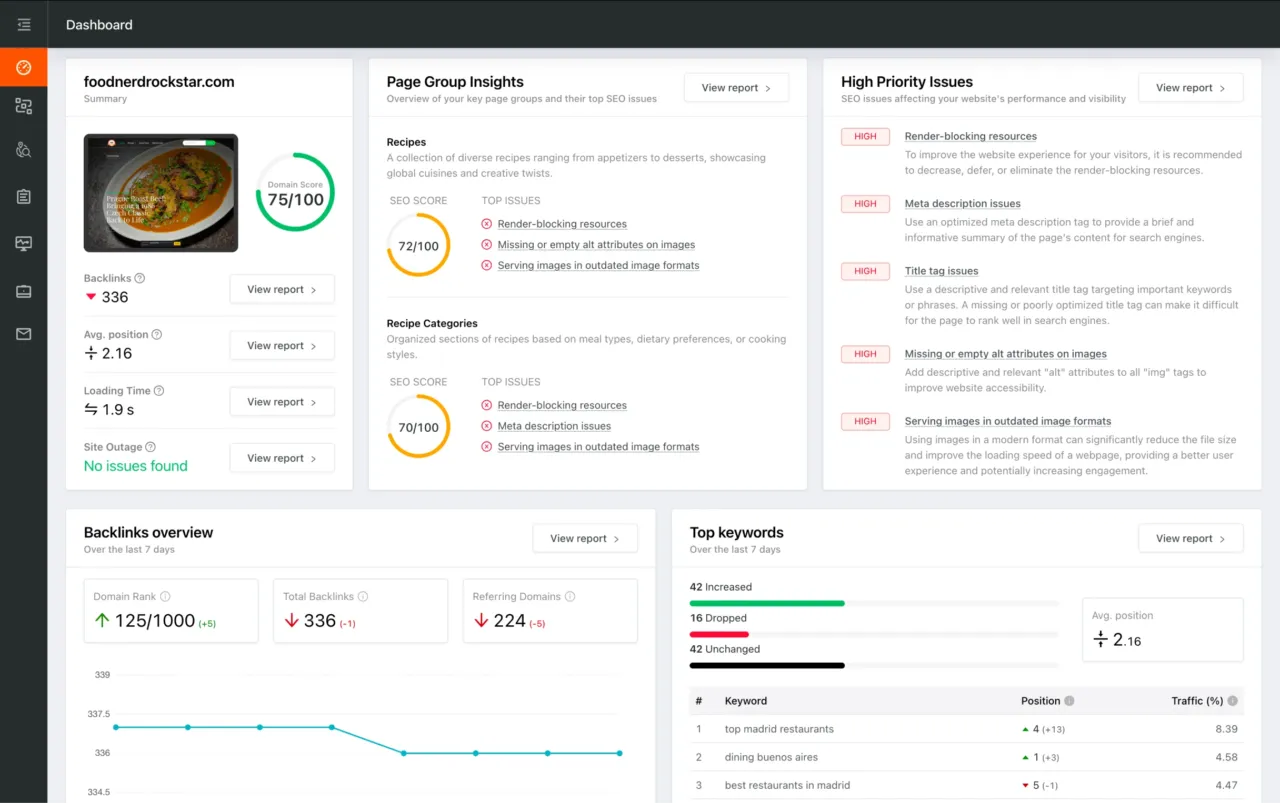
A map tells you where to go. Backlinks tell you whether it's working. Run your site through the free Backlinks Test before you start, then again after your first round of outreach. When sites from your map start showing up in that list, your distribution is doing its job.