Archived

SEO Report for https://www.logos.com.hk

Your general SEO Checkup Score


SEO Score37/100
Average SEO score of top 100 sites: 75%This value indicates the average SEO score of the top 100 most visited websites in the US (in the past 12 months)

Your site scored 37/100, well below the 75 average for top sites. We found 12 issues to fix, and they're costing you traffic right now.

12 Failed
0 Warnings
14 Passed

Want to fix these issues and track your progress?

Common SEO issues
Score:35
Failed:4
Warnings:0
Passed:5
Google Search Results Preview
Desktop version
http://www.logos.com.hk/bf/acms/?site=logosbf基道 BOOKFINDER
Mobile version
http://www.logos.com.hk/bf/acms/?site=logosbf基道 BOOKFINDER
Check how your page might appear in Google search results. Google search results typically uses your webpage title, url and meta-description in order to display relevant summarized information about your site. If these elements are too long, Google will truncate their content. Webpage title up to 70 characters in length, and webpage descriptions up to 160 characters in length are recommended in order to optimize readability.
Keywords Cloud
alister
alleluia
bauckham
brueggemann
christian
discernment
dynamics
faith
fasting
foster
gerd
gratitude
hk$ 
john
logos
mcgrath
merton
philip
reading
richard
signs
theissen
theology
thinking
thomas
uncommon
walter
worship
yancey
  
 信仰,是感知的東西?神學,是基督徒私有的範疇?
 倘若人一生根本就是一句哈利路亞,又如何?
 我們如何明白上帝的心意、引導、旨意?
 禁食,感同上帝的視角與哀傷……
中華福音神學院教會歷史與神學教授,博士班專攻歷史神學,主要研究早期教父神學以及政教關係。近年致力鑽研靈修神學、當代神學與公共神學。
今天尋求知識,要不是以客觀為判準,就是以相對的多元為判準。前者排斥任何未經證實的信念,聲稱惟有理性才可勝任這一任務;後者不相信理性,不會委身於任何特定的信念,只在不同的觀點之間遊走。神學思考同樣也會落入如斯景況。
今生.來世
侯活士
信仰、神學智慧
信故我思:
傅士德
八十年代《突破》雜誌執行編輯,作品中總有深邃的信仰反省或直率建言,也常能以深入淺出的文字引介神學知識,幫助信徒走過一段兼具知性與靈性的成長之路。
包衡
南非普勒陀利亞大學文學博士,主要研究新約文學和語言(希臘文)及聖經翻譯。中英文學術性編著書目和專文逾半百,現任聯合聖經公會(亞太區)翻譯顧問。
周學信
哈特
在基督教傳統中,一直都有禁食這古老的屬靈操練。然而,有人說禁食令人受到傷害;有人說過分的禁食會導致過度的沉溺;有人說上帝賜我們豐富的食物,供我們享用,為甚麼要禁食呢?
布魯格曼
建道神學院院長,曾於宣道會黃竹坑堂及東方佈道基督教會擔任義務堂主任,研究範圍以中國基督教史為主,其作品猶如一面明鏡,廣為信徒喜愛。
德國圖賓根大學神學博士,現為台灣神學院系統神學教授與基督教思想研究中心主任、臺灣大學哲學系兼任教授。
德國海德堡大學新約教授,同時也是德國福音教會的牧師,在國際上更是研究新約歷史與釋義的權威,獲得許多知名大學的學術獎項以及個榮譽博士。
感恩
戴歌德
曾思瀚
有些事物使我們自然發出感恩之聲:上主、和平、財富、生命、信仰、合一。但跟這些共存的死亡、分裂、痛苦,甚或罪人,卻使我們難以想到要開口讚美。
本書作者主張,身體和魂、靈、思想是統一的,我們的屬靈操練應包括身體的參與;而適度的禁食,是我們面對生命中重大的神聖時刻一種無可避免的回應,那是一種明白我們需要在恩典中成長、悔改的神聖時刻。
本書兩位作者盼望讓讀者看見,人一生就是學習頌唱哈利路亞,力求在幽深的時刻裏辨認所隱藏的聖顏。找出哈利路亞在人生中的意義,即是學習如何面對最叫人無法讚美的時刻。書中的反思表明頌唱哈利路亞並非逃避現世之舉,而是叫人看到另一個實在。
本書是神學知識論的著作,討論神學知識的進路及其本性。面對啟蒙時代以來做神學時常見的問題,本書並不簡單直接提供標準答案,首先深入分析上述兩種判準所引起的種種困難,方才提出作者的第三條進路。
林鴻信
柯諾邁雅、凱特勒
梁家麟
梅頓
楊牧谷
活動消息
溫偉耀
潘霍華
當今舊約神學泰斗之一,美國哥倫比亞神學院舊約榮譽教授,著作眾多而且甚具特色,既尊重學術及信仰的固有傳統,也兼容各家的異見。
當代北美的重要作家、神學家、教會音樂家和教育家,創立了美國華盛頓州「基督徒裝備事工」,並於溫哥華維真學院擔任靈修神學講師。
當代北美福音派教會重要靈修大師,憑《屬靈操練禮讚》一書榮獲當年的北美年度作家獎,對華人教會的屬靈觀也產生了重大的影響。
當代最具影響力的靈修學作家之一,畢業於劍橋大學和哥倫比亞大學,後加入客西馬尼苦修會修院,成為熙篤會士,對東方宗教和靈修學素有研究。
當代最具活力的倫理神學家之一,曾獲《時代雜誌》選為「美國最佳神學家」,退休前為杜克大學神學院吉伯特‧羅爾講席神學教授;現部分時間任教於鴨巴甸大學。
盧雲
神學思考方法獻議
禁食,讓身體說話
羅雲.威廉斯、卓滌娜
聯絡我們
胡燕青
英國劍橋大學哲學博士,著名華人神學工作者,年起全時間從事寫作與神學研究。後證實患有鼻咽癌,但一連串痛苦的治療令他對信仰及生命作出更深邃的反省。
英國牛津大學及香港中文大學哲學博士,多年來教授有關中國文化與基督教、系統神學、中國哲學及靈修學等科目,近年致力參與中國學術界對基督教的研究及教學。
英國牛津大學教授,當代福音派神學家,既有神學研究的深度,有福音派信仰的持守,也有歷史研究的寬廣胸襟,每每能使讀者迅速把握要點,綜觀全局。
英國聖安德烈斯大學哲學博士,論文研究莫特曼神學中上帝的歷史;現為香港浸信會神學院基督教思想(神學與文化)教授,資深文字及神學工作者。
英國雪菲大學聖經研究博士,研經類書籍暢銷作家,現部分時間任職香港浸信會神學院聖經研究科副教授,並於美國西雅圖全時間寫作、講道,並擔任聖經講座的講員。
著名基督徒記者兼暢銷作家,著有三十多本著作,並且獲獎無數,至今仍寫作不輟。曾於《校園生活》擔任記者與編輯,並且長期兼任《今日基督教》雜誌特約編輯。
著名聖經學者,前蘇格蘭聖安得烈大學新約研究教授、華德洛主教講座教授,著作等身,現已退休並專心於寫作。他的研究範圍及於神學、早期猶太教及新約研究。
著名華人聖經學者,其著作以嚴謹細緻見稱,現為崇基學院神學院名譽高級研究員。早年任教於中國神學研究院,後專注於研究和寫作,獲acp金書獎「金筆獎」殊榮。
許立中
註冊帳戶
趙崇明
邢福增
鄧紹光
靈心明辨:在日常生活中體悟上帝的旨意
香港中文大學崇基學院神學院副教授,主要任教範圍包括基督教與社會、系統神學和基督教倫理,一直關注基督教倫理、公共神學及生命教育等議題。
香港中文大學崇基學院神學院院長,著名的中國基督教史研究學者,著作等身,近年研究專注於當代中國基督教發展,中國政教關係及香港基督教歷史。
香港浸會大學哲學博士。曾任職社工八年,後踏上神學教育之旅,現為香港神學院神學及歷史科專任講師。教學以外亦喜歡寫作,尤其關注神學與社會文化整合的課題。
香港浸會大學語文中心副教授。創作包括新詩、散文、小說和少兒文學。曾獲兩項香港中文文學創作獎、兩項基督教湯清文藝獎及多項香港中文文學雙年獎。
馮蔭坤
麥克奈特
麥格夫
黃錫木
龔立人
The Keyword Cloud is a visual representation of keywords used on your website. This will show you which words are frequently used in the content of your webpage. Keywords having higher density are presented in larger fonts and displayed in alphabetic order.
Competitor Domains Test
Competitor Domains

Understand your competitors' SEO and backlink profile

Get related competitors and their domain authority score in relation to your domain.

Identifies up to ten domains that compete for similar organic search results, ranked by overall domain authority based on the volume and quality of their backlink profiles. Useful for benchmarking the competitive landscape and prioritizing which sites to study for content and link-building strategy.
Robots.txt Test
Your site lacks a "robots.txt" file. This file can protect private content from appearing online, save bandwidth, and lower load time on your server. A missing "robots.txt" file also generates additional errors in your apache log whenever robots request one. Read more about the robots.txt file, and how to create one for your site.

Robots.txt Test

How to pass this test?

In order to pass this test you must create and properly install a robots.txt file.
For this, you can use any program that produces a text file or you can use an online tool (Google Webmaster Tools has this feature).
Remember to use all lower case for the filename: robots.txt, not ROBOTS.TXT.
A simple robots.txt file looks like this:
User-agent: *
Disallow: /cgi-bin/
Disallow: /images/
Disallow: /pages/thankyou.html
This would block all search engine robots from visiting "cgi-bin" and "images" directories and the page "http://www.yoursite.com/pages/thankyou.html"

TIPS:
  • You need a separate Disallow line for every URL prefix you want to exclude
  • You may not have blank lines in a record because they are used to delimit multiple records
  • Notice that before the Disallow command, you have the command: User-agent: *. The User-agent: part specifies which robot you want to block. Major known crawlers are: Googlebot (Google), Googlebot-Image (Google Image Search), Baiduspider (Baidu), Bingbot (Bing)
  • One important thing to know if you are creating your own robots.txt file is that although the wildcard (*) is used in the User-agent line (meaning "any robot"), it is not allowed in the Disallow line.
  • Regular expressions are not supported in either the User-agent or Disallow lines
Once you have your robots.txt file, you can upload it in the top-level directory of your web server. After that, make sure you set the permissions on the file so that visitors (like search engines) can read it.
Check if your website is using a robots.txt file. When search engine robots crawl a website, they typically first access a site's robots.txt file. Robots.txt tells Googlebot and other crawlers what is and is not allowed to be crawled on your site.
Sitemap Test
Your site lacks a sitemap file. Sitemaps can help robots index your content more thoroughly and quickly. Read more on Google's guidelines for implementing the sitemap protocol.

Sitemap Test

How to pass this test?

In order to pass this test you must create a sitemap.xml file for your website. Some of the best practices are listed below:
  • It is strongly recommended that you place your sitemap at the root directory of your website: http://yourwebsite.com/sitemap.xml But in some situations, you may want to produce different sitemaps for different paths on your site (e.g., security permission issues)
  • Sitemaps should be no larger than 10MB (10,485,760 bytes) and can contain a maximum of 50,000 URLs. This means that if your site contains more than 50,000 URLs or your sitemap is bigger than 10MB, you must create multiple sitemap files and use a Sitemap index file
  • All URLs listed in the sitemap must reside on the same host as the sitemap. For instance, if the sitemap is located at http://www.yourwebsite.com/sitemap.xml, it can't include URLs from http://subdomain.yourwebsite.com
  • Once you have created your sitemap, let search engines know about it by submitting directly to them, pinging them, or adding the sitemap location to your robots.txt file
  • Sitemaps can be compressed using gzip, reducing bandwidth consumption
sitemap.xml example:
<?xml version="1.0" encoding="UTF-8"?>
<urlset xmlns="http://www.sitemaps.org/schemas/sitemap/0.9">
<url>
 <loc>http://www.yourwebsite.com</loc>
 <lastmod>2013-01-01</lastmod>
 <changefreq>weekly</changefreq>
 <priority>0.9</priority>
</url>
<url>
 <loc>http://www.yourwebsite.com/articles/100</loc>
 <changefreq>weekly</changefreq>
</url>
<url>
 <loc>http://www.yourwebsite.com/articles/101</loc>
 <lastmod>2013-01-02</lastmod>
 <changefreq>weekly</changefreq>
</url>
<url>
 <loc>http://www.yourwebsite.com/articles/102</loc>
 <lastmod>2013-01-02T13:00:12+00:00</lastmod>
 <priority>0.5</priority>
</url>
</urlset>
Check if the website has a sitemap. A sitemap is important as it lists all the web pages of the site and let search engine crawlers to crawl the website more intelligently. A sitemap also provides valuable metadata for each webpage.
Image Alt Test
Your webpage has 120 'img' tags and 110 of them are missing the required 'alt' attribute.

Image Alt Test

How to pass this test?

In order to pass this test you must add an alt attribute to every <img> tag used into your webpage.
An image with an alternate text specified is inserted using the following HTML line:
<img src="image.png" alt="text_to_describe_your_image">
Remember that the point of alt text is to provide the same functional information that a visual user would see. Search engines, users who disabled images in their browsers and other agents who are unable to see the images on your webpage can read the alt attributes assigned to the image since they cannot view it.

Learn more about optimizing images for SEO.
Check if images on your webpage are using alt attributes. If an image cannot be displayed (e.g., due to broken image source, slow internet connection, etc), the alt attribute provides alternative information. Using relevant keywords and text in the alt attribute can help both users and search engines better interpret the subject of an image.
Deprecated HTML Tags
We found some HTML deprecated tags. You are advised to change these old tags with equivalent tags or proper CSS rules.

Deprecated HTML Tags

How to pass this test?

In order to pass this test you must identify into your code all deprecated HTML tags listed above and replace them with proper tags or CSS rules. Some examples are given below:
  • for <applet> tag, the equivalent tag is <object>
  • for <center> tag, the alternative CSS property is text-align
  • for <font> tag, the alternative CSS properties are font-family and font-size
  • for <s>, <strike> and <u> tags, the alternative CSS property is text-decoration
Check if your webpage is using old, deprecated HTML tags. These tags will eventually lose browser support and your web pages may render incorrectly as browsers drop support for these tags.
Google Analytics Test
Congratulations! Your website is using the latest version of Google Analytics.
Check if your website is connected with Google Analytics. Google Analytics is a popular, free website analysis tool that helps provide insights about your site's traffic and demographics.
Favicon Test
favicon
Congratulations! Your website appears to have a favicon.
Check if your site is using and correctly implementing a favicon. Favicons are small icons that appear in your browser's URL navigation bar. They are also saved next to your URL's title when your page is bookmarked. This helps brand your site and make it easy for users to navigate to your site among a list of bookmarks.
JS Error Checker
Congratulations! There are no severe JavaScript errors on your web page.
Check your page for JavaScript errors. These errors may prevent users from properly viewing your pages and impact their user experience. Sites with poor user experience tend to rank worse in search engine results.
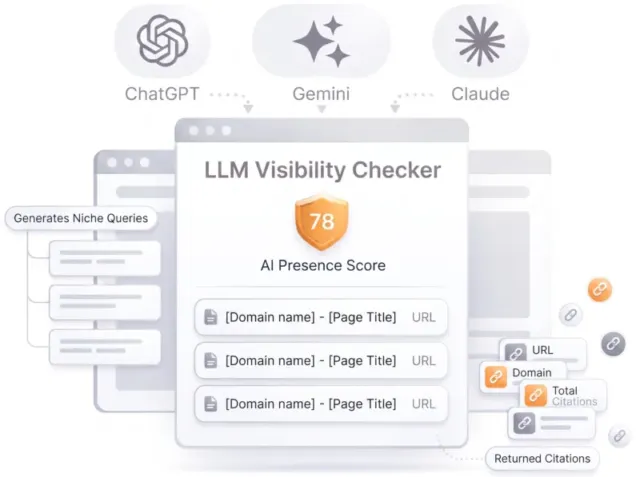
LLM Visibility Checker

LLM Visibility Checker

Track your brand across ChatGPT, Gemini and Claude

Get an AI Presence Score, see which of your pages get cited, and follow how you compare with competitors over time.

Speed optimizations

Score:0
Failed:6
Warnings:0
Passed:0
HTML Page Size Test
The size of your web page's HTML is 182.13 Kb, and is over the average web page's HTML size of 33 Kb.
This can lead to slower than average load times, lost visitors, and decreased revenue. Good steps to reduce HTML size include: using HTML compression, CSS layouts, external style sheets, and moving javascript to external files.

HTML Page Size Test

How to pass this test?

In order to resolve this problem you are advised to:
  • use gzip compression
  • move all CSS style rules into a single, external and minified CSS file
  • minify all JS files and,if possible, try combining them into a single external JS file
  • use CSS layouts
Check your page's HTML size. HTML size is the size of all the HTML code on your web page - this size does not include images, external javascripts or external CSS files.
HTML Compression/GZIP Test
Your page do not use any HTML compression!
You should compress your HTML to reduce your page size and page loading times - this will help your site retain visitors and increase page views. If you were using compression, you could be compressing your HTML size by 82 % - from 182.13 Kb to 33.19 Kb which would further reduce your page loading time.
HTML Compression/GZIP Test

How to pass this test?

Your two options for file compression are Deflate and GZIP.
  • Deflate is an option which comes automatically with the Apache server and which is simple to set up.
  • GZIP on the other hand needs to be installed and requires a bit more work to install. However, GZIP does achieve a higher compression rate and therefore might be a better choice if your website uses pages which have a lot of images or large file sizes.
Setting up file compression for your website will depend on which type of server you?re using for your website. Most likely, you?ll be using Apache, which means you can enable compression by adding a few deflate codes to your .htaccess file.
# compress text, html, javascript, css, xml:
AddOutputFilterByType DEFLATE text/plain
AddOutputFilterByType DEFLATE text/html
AddOutputFilterByType DEFLATE text/xml
AddOutputFilterByType DEFLATE text/css
AddOutputFilterByType DEFLATE application/xml
AddOutputFilterByType DEFLATE application/xhtml+xml
AddOutputFilterByType DEFLATE application/rss+xml
AddOutputFilterByType DEFLATE application/javascript
AddOutputFilterByType DEFLATE application/x-javascript
For more advanced information regarding deflate you can check this Apache documentation.
Check if your website is using HTML compression. HTML compression plays an important role in improving website speed by finding similar strings within a text file and replacing them temporarily to reduce overall file size.
Site Loading Speed Test
Your site loading time is around 14.273 seconds and is over the average loading speed which is 5 seconds.
Related Keywords

Accurate historical loading speed monitor and reports

Get detailed and accurate loading speed reports for your websites and see how your pages are being loaded over time.

Check your website's loading speed. Page speed is an important factors in search engine rankings and overall site success. Pages that take longer than 5 seconds to load can lose up to 50% of users. Faster webpages result in higher traffic, better conversions and increased sales over slower loading pages.
Page Objects
Your page has more than 20 http requests, which can slow down page loading. You can try reducing http requests through various methods such as using text instead of images, using css sprites, using data URIs instead of images, or combining several external files together into one.
Total Objects: 185
  • 9 HTML Pages
  • 14 CSS Files
  • 25 JS Files
  • 137 Images
  • 0 Flash Files
Check if all the objects requested by this webpage can be retrieved. If they are not retrievable, your page may display incorrectly, leading to a bad user experience and lower search engine rankings.
Image Caching Test
Your site is not using expires headers for your images. An expires tag can help speed up the serving of your webpages for users that regularly visit your site and see the same images. Learn more about how to add expires headers to your images.

Image Caching Test

How to pass this test?

In order to reduce the number of HTTP requests, you can use the HTTP Expires header to set an expiration time for your images or any other content type. You can add the following lines into your .htaccess file:
<IfModule mod_expires.c>
    ExpiresActive on
 
    ExpiresByType image/jpg "access plus 1 month"
    ExpiresByType image/jpeg "access plus 1 month"
    ExpiresByType image/gif "access plus 1 month"
    ExpiresByType image/png "access plus 1 month"
</IfModule>
Checks if your page is using an image expires tag, which specifies a future expiration date for your images. Users browsers will see this tag and cache the image in their browser until the specified date (so that it does not keep re-fetching the unchanged image from your server). This speeds up your site the next time returning visitors arrive at your site and require the same image.
URL Redirects Checker
Your URL performed 3 redirects! Avoid chained redirects if possible, as this may cause search engine indexing problems and adversely affect site loading time.
Check how many redirects your URL will perform to resolve to the final destination URL. Redirects often cause search engine indexing issues and can also lead to some minor loading delays. Google recommends removing or keeping redirects to a minimum.
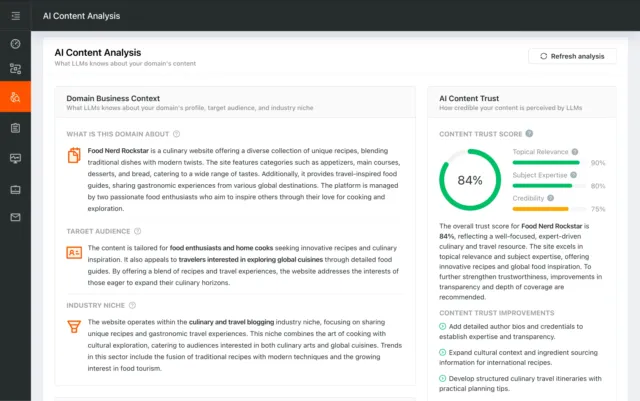
AI Content Analysis

AI Content Analysis

Optimize your content for search and LLMs

AI Content Analysis scores your pages on clarity, depth, and machine readability, so you optimize for both human readers and LLMs.

Server and security

Score:73
Failed:1
Warnings:0
Passed:2
URL Canonicalization Test
http://www.logos.com.hk and http://logos.com.hk/ resolve to the same URL.
Test your site for potential URL canonicalization issues. Canonicalization describes how a site can use slightly different URLs for the same page (e.g., if http://www.example.com and http://example.com displays the same page but do not resolve to the same URL). If this happens, search engines may be unsure about which URL is the correct one to index. Learn more about canonicalization issues.
HTTPS Test
Your website is not using https, a secure communication protocol. Even for sites that do not collect sensitive customer information, search engines suggest that switching to https is an increasingly good idea and may help improve rankings. Note: if your site relies primarily on adsense income, be aware that using https may be detrimental to ad earnings.

HTTPS Test

How to pass this test?

If your website needs a secured authentication or an encrypted transfer of data, you need to install an SSL certificate in order to provide a secure connection over HTTPS protocol. HERE is a "step by step" guide to purchase and install an SSL certificate.
Check if your website is using HTTPS, a secure protocol for sending/receiving data over the Internet. Using HTTPS indicates that an additional encryption/authentication layer was added between client and server. HTTPS should be used by any site that collects sensitive customer data such as credit card information. Even for sites that do not collect such data, switching to https helps users by improving privacy and overall security. Google is increasingly using https as a positive ranking factor.
Plaintext Emails Test
Congratulations! Your webpage does not include email addresses in plaintext.
Check your webpage for plaintext email addresses. Any e-mail address posted in public is likely to be automatically collected by computer software used by bulk emailers (a process known as e-mail address harvesting). A spam harvester can read through the pages in your site and extract plaintext email addresses which are then added to bulk marketing databases (resulting in more inbox spam). There are several methods for email obfuscation.
Visual SEO Analysis

Visual SEO Analysis

Find out if your page design converts the visitors you earn

We score six things that decide whether a visitor stays and acts, from the first screen to the path to action, and rank every fix by effort and impact.

Mobile usability

Score:100
Failed:0
Warnings:0
Passed:2
Media Query Responsive Test
Congratulations, your website uses media query technique, which is the base for responsive design functionalities.
Check if your page implements responsive design functionalities using the media query technique. The '@media' rule allows different style rules for screen sizes. Media query techniques allow different presentation and content to be served depending on the output device, helping ensure that your website renders optimally on all devices and platforms.
Mobile Snapshot
Mobile view
Check how your website renders on a mobile device.

Advanced SEO

Score:80
Failed:1
Warnings:0
Passed:5
Microdata Schema Test
Your webpage doesn't take the advantages of HTML Microdata specifications in order to markup structured data. View Google's guide for getting started with microdata.

Microdata Schema Test

How to pass this test?

HTML5 Microdata is an easy way to add semantic markup to your web pages. Search engines rely on this markup to improve the display of search results, making it easier for people to find the right web pages.
Here is a simple example of how to use HTML5 microdata in your contact web page:
<div itemscope itemtype="http://schema.org/Person">
   <span itemprop="name">Joe Doe</span>
   <span itemprop="company">The Example Company</span>
   <span itemprop="tel">604-555-1234</span>
   <a itemprop="email" href="mailto:joe.doe@example.com">joe.doe@example.com</a>
</div>
Check if your website uses HTML Microdata specifications (or structured data markup). Search engines use microdata to better understand the content of your site and create rich snippets in search results (which helps increase click-through rate to your site).
Noindex Checker
Your webpage does not use the noindex meta tag. This means that your webpage will be read and indexed by search engines.
Check if your webpage is using the robots meta tag or the X-Robots-Tag HTTP header to instruct search engines not to show your site in search results pages.
Canonical Tag Checker
Your page does not use the canonical link tag.
Check if your webpage is using the canonical link tag. The canonical link tag is used to nominate a primary page when you have several pages with duplicate or very similar content.
Nofollow Checker
Your webpage does not use the nofollow meta tag. This means that search engines will crawl all links from your webpage.
Check if your webpage is using the robots meta tag or the X-Robots-Tag HTTP header to instruct search engines not to follow the links on your page. Outgoing links marked with this tag will tell search engines not to follow or crawl that particular link. Google recommends that nofollow tags are used for paid advertisements on your site and links to pages that have not been vetted as trusted sites (e.g., links posted by users of your site).
Disallow Directive Checker
Your site lacks a "robots.txt" file. This file can protect private content from appearing online, save bandwidth, and lower load on your server. A missing "robots.txt" file also generates additional errors in your apache log whenever robots request one.
Check if your robots.txt file is instructing search engine crawlers to avoid parts of your website. The disallow directive is used in robots.txt to tell search engines not to crawl and index a file, page, or directory.
SPF records checker
Congratulations! Your DNS server is using an SPF record. This SPF record is listed below:
v=spf1 a:ip1.almega.com.hk a:ip2.almega.com.hk a:ip3.almega.com.hk ~all
Check if your DNS records contains an SPF record. SPF (Sender Policy Framework) records allow email systems to verify if a given mail server has been authorized to send mail on behalf of your domain. Creating an SPF record increases email delivery rates by reducing the likelihood of your email being marked as spam.

Dominate search today on Google and AI Engines.

Join 85,000+ SaaS Marketers, Growth Agencies, Content-Led Companies and E-commerce Brands.

See Pricing
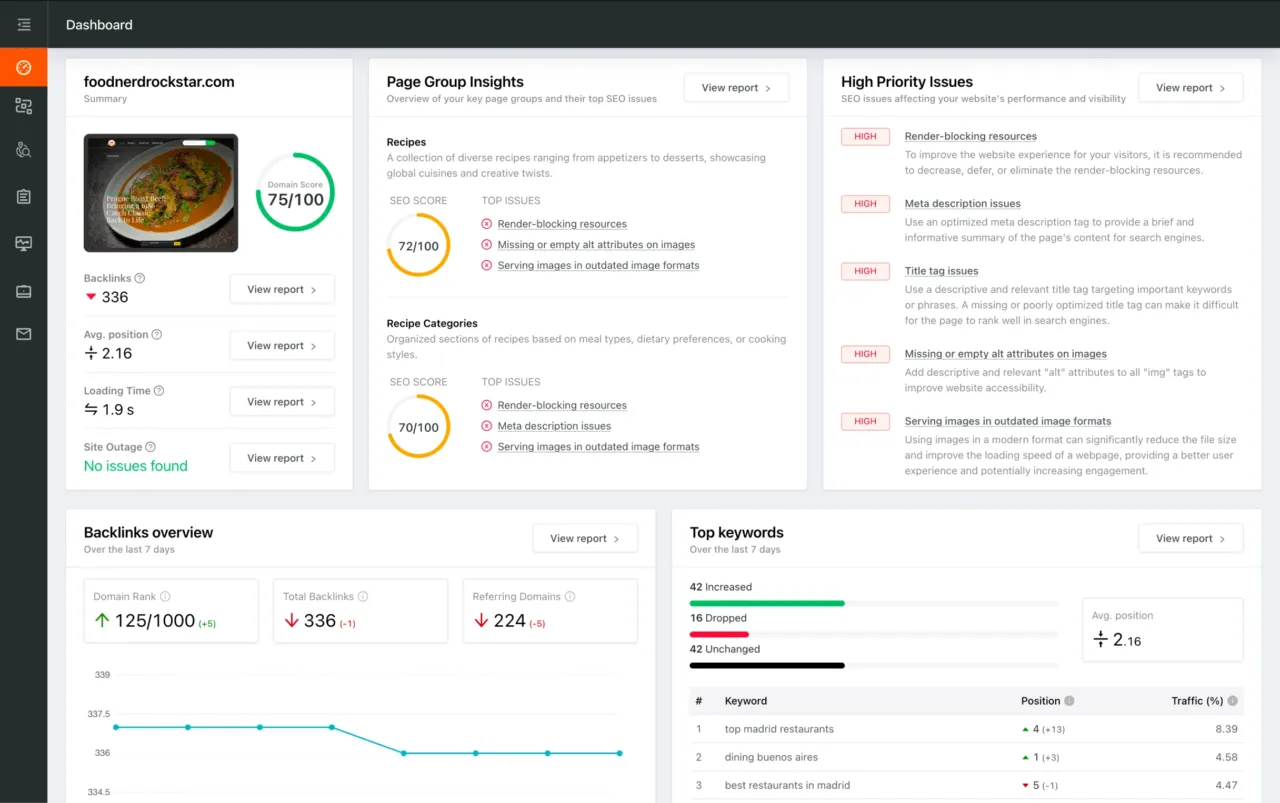
Dashboard preview showing SEO site checkup metrics, page group insights, and issue prioritization