Archived

SEO Report for https://www.blackbook.dk

Your general SEO Checkup Score


SEO Score86/100
Average SEO score of top 100 sites: 75%This value indicates the average SEO score of the top 100 most visited websites in the US (in the past 12 months)
AI Visibility54/100
AI visibility score reflects brand reach in AI

Your site scored 86/100, comfortably above the 75 average for top sites. We found 5 issues to fix, and they're the gap between you and the very top. And an AI Visibility Score of 54/100 means ChatGPT, Gemini and Perplexity mention your brand only occasionally, which is ground your competitors are leaving open.

5 Failed
4 Warnings
54 Passed

Want to fix these issues and track your progress?

Issues to fix

HIGH
To ensure that Search Engines can accurately identify the topic of this webpage, it is important to include the most common keywords in the title tag, meta description, and heading tags.
Details
HIGH
Using images in a modern format can significantly reduce the file size and improve the loading speed of a webpage, providing a better user experience and potentially increasing engagement.
Details
MEDIUM
Add a Google Analytics script to this website to help in diagnosing potential SEO issues by monitoring site visitors and traffic sources.
Details
LOW
Consider reducing the HTML size to improve loading times and retain visitors.
Details
LOW
Using more than 20 HTTP requests on a webpage can negatively impact the loading time.
Details

AI Insights

Score:0
Failed:0
Warnings:0
Passed:5
Domain Business Context
Understanding the business context of a domain can help you create content that is more relevant to your target audience and differentiate your website from competitors.

What is this domain about

A personal portfolio and services website focused on AI-driven design, apps, products, branding, and web/ecommerce work.

Industry Niche

AI Design and Digital Services

Target Audience

Businesses and organizations seeking creative digital services, AI-enabled product thinking, and portfolio examples.
This test will check the business context of the domain associated with the analyzed webpage. The business context includes the domain's description, target audience and industry niche (if applicable). Understanding the business context of a domain can help you create content that is more relevant to your target audience and differentiate your website from competitors.
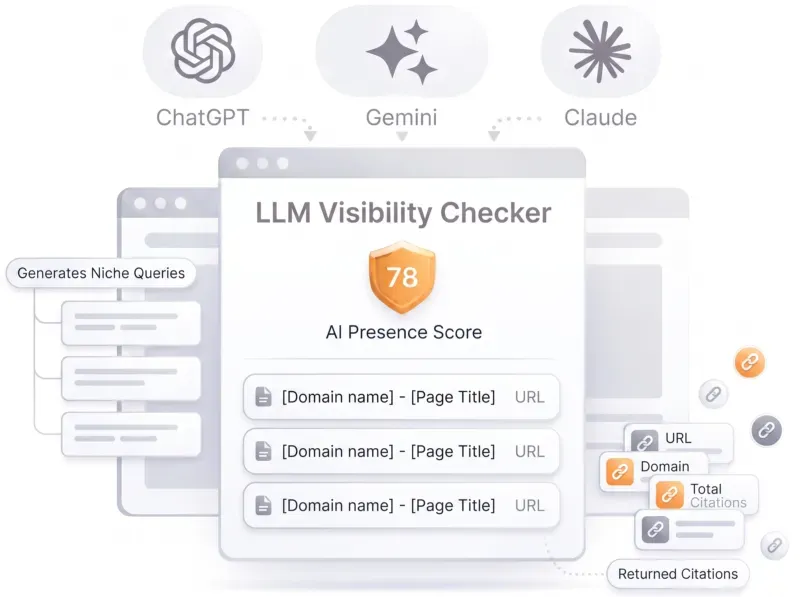
LLM Visibility Checker

Track your brand across ChatGPT, Gemini and Claude

Get an AI Presence Score, see which of your pages get cited, and follow how you compare with competitors over time.

How visible your brand is to AI engines
Content Strengths and Weaknesses

This webpage is concise and visually focused, with clear navigation to portfolio, services, experience, and contact sections. However, the homepage content is very sparse, offering limited detail about capabilities, process, or proof of expertise.

Content Strengths

  • Clear Service Navigation
  • Focused Value Proposition
  • Bilingual Access

Content Weaknesses

  • Minimal Homepage Detail
  • No Proof Points
  • Limited Credibility Signals
This test will analyze the content of the webpage to identify its strengths and weaknesses. The analysis includes factors such as keyword usage, readability, originality, and relevance to the target audience. By understanding the strengths and weaknesses of your content, you can make informed decisions about how to improve it and better meet the needs of your audience.
Content Trust
48%
Topical Relevance90%
Subject Expertise45%
Credibility35%

This webpage appears moderately trustworthy because it includes clear site navigation, a privacy policy link, and a copyright notice. Trust is limited by the absence of visible contact details, team/about information, testimonials, citations, or third-party validation on the page.
This test will evaluate the trustworthiness of the content on the webpage. It assesses factors such as the credibility of sources, accuracy of information, and overall reliability. A high level of content trust can enhance your website's reputation and improve its ranking in search engine results.
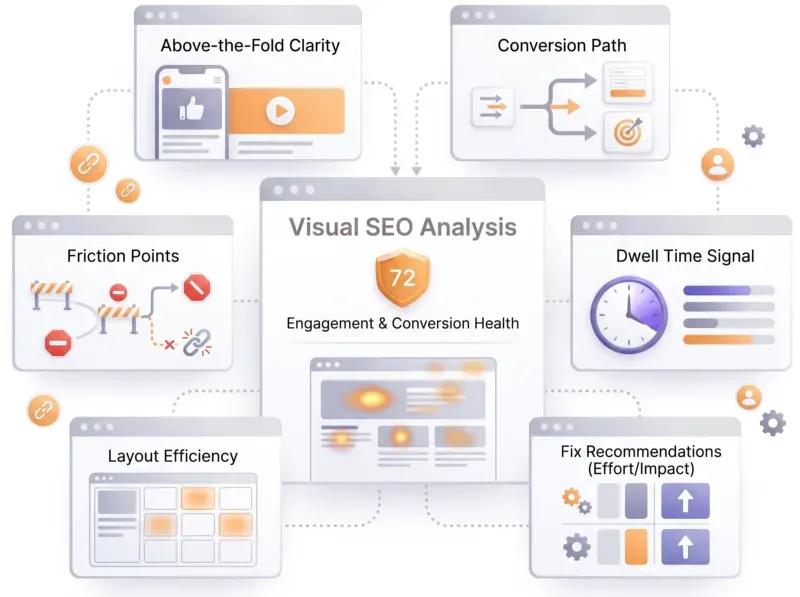
Visual SEO Analysis
Visual SEO Analysis

Find out if your page design converts the visitors you earn

We score six things that decide whether a visitor stays and acts, from the first screen to the path to action, and rank every fix by effort and impact.

How your page's design and UX affect conversions
Content Freshness
72%

The page looks current and actively maintained, with a copyright range extending to 2026 and language/navigation elements that suggest an up-to-date site structure. There are no explicit article dates or time-sensitive claims on the page, so freshness is inferred mainly from the boilerplate and present-tense positioning.

Positive Signals

  • Copyright © 1996-2026
  • Current site navigation
  • Present-tense positioning
This test will check the freshness of the content on the webpage. It evaluates how recently the content was created or updated, and whether it remains relevant to current trends and user interests. Fresh content can attract more visitors and improve your website's ranking in search engine results.
Content Opportunities

The page has strong positioning potential but currently leaves many audience questions unanswered. The biggest opportunities are to add proof, depth, and clearer service explanations so visitors can quickly understand what is offered and why it is credible.

Quick Wins

  • •Add one-sentence service descriptions under each expertise area on the homepage.
  • •Insert a short featured case study block with a project name and outcome.
  • •Place an attributed testimonial or client quote near the main headline.
This test will identify potential content opportunities for the webpage. It analyzes the current content landscape, identifies gaps in coverage, and suggests topics or keywords that could be targeted to attract more visitors and improve search engine rankings.

Common SEO issues

Score:76
Failed:2
Warnings:2
Passed:15
Meta Title Test
100% of top 100 sites passed
This webpage is using a title tag with a length of 66 characters. While there's no target number of characters, titles should be descriptive and concise. We recommend using a title with a length between 20 - 60 characters in order to fit Google Search results that have a 600-pixel limit.
Text: Digitalt designbureau i København — webdesign, UX & AI | Blackbook
Length: 66 characters
The meta title is an HTML element that defines a page's title, displayed in search engine results, browser tabs, and bookmark lists. A concise, keyword-relevant title is a strong on-page ranking signal and a major driver of organic click-through rate. AI answer engines and LLM-driven search experiences also rely on the title to identify, summarize, and cite the page in generative results.
Meta Description Test
92% of top 100 sites passed
This webpage is using a meta description tag with a length of 149 characters. We recommend using well-written and inviting meta descriptions with a length between 150 and 220 characters (spaces included).
Text: Blackbook skaber digitale løsninger inden for UX, branding, websites og eCommerce. Se udvalgte cases fra strategi til udvikling. Baseret i København.
Length: 149 characters
The meta description is an HTML tag that provides a short summary of a page's content, often shown beneath the title in search results. While not a direct ranking factor, an accurate and inviting description significantly improves click-through rate from organic listings. AI answer engines and social platforms also use it as a trusted summary when generating previews, citations and shareable snippets.
Google Search Results Preview Test
Desktop version
https://www.blackbook.dk/Digitalt designbureau i København — webdesign, UX & AI | BlackbookBlackbook skaber digitale løsninger inden for UX, branding, websites og eCommerce. Se udvalgte cases fra strategi til udvikling. Baseret i København.
Mobile version
https://www.blackbook.dk/Digitalt designbureau i København — webdesign, UX & AI | BlackbookBlackbook skaber digitale løsninger inden for UX, branding, websites og eCommerce. Se udvalgte cases fra strategi til udvikling. Baseret i København.
A simulated preview of how the page may appear in Google search results, combining the title, URL, and meta description as Google typically renders them. Useful for spotting truncated text, weak phrasing, or missing elements before publishing, since the snippet directly influences whether searchers click through.
Social Media Meta Tags Test
89% of top 100 sites passed
This webpage is using social media meta tags.
Open Graph Meta Tags
og:titleDigitalt designbureau i København — webdesign, UX & AI | Blackbook
og:descriptionBlackbook skaber digitale løsninger inden for UX, branding, websites og eCommerce. Se udvalgte cases fra strategi til udvikling. Baseret i København.
og:urlhttps://www.blackbook.dk/
og:site_nameBlackbook
og:localeda_DK
og:imagehttps://cdn.sanity.io/images/zpjzvf1y/production/e889aaffe545c006824cb9b3205b3598ee59c066-2400x1260.png?w=1200&fm=jpg&q=80&fit=max
og:image:width1200
og:image:altBlackbook — digitalt designbureau i København med speciale i UX design, webdesign, apps og branding
og:typewebsite
Twitter Card Meta Tags
twitter:cardsummary_large_image
twitter:site@Jeppe_Carlsen
twitter:titleDigitalt designbureau i København — webdesign, UX & AI | Blackbook
twitter:descriptionBlackbook skaber digitale løsninger inden for UX, branding, websites og eCommerce. Se udvalgte cases fra strategi til udvikling. Baseret i København.
twitter:imagehttps://cdn.sanity.io/images/zpjzvf1y/production/e889aaffe545c006824cb9b3205b3598ee59c066-2400x1260.png?w=1200&fm=jpg&q=80&fit=max
twitter:image:altBlackbook — digitalt designbureau i København med speciale i UX design, webdesign, apps og branding
Open Graph and Twitter Card meta tags tell social platforms and link unfurlers how to display a page when its URL is shared. Well-formed tags produce richer previews with the intended title, description, and image, which improves click-through on social channels. They also serve as a structured signal that AI crawlers and answer engines can use when summarizing the page.
Most Common Keywords Test
There is likely no optimal keyword density (search engine algorithms have evolved beyond keyword density metrics as a significant ranking factor). It can be useful, however, to note which keywords appear most often on your page and if they reflect the intended topic of your page. More importantly, the keywords on your page should appear within natural sounding and grammatically correct copy.
3blackbook
2forside
2portfolio
2services
2experience
A frequency analysis of the most repeated words and phrases in the page's visible content. Useful for getting a quick sense of which topics search engines are likely to associate with the page, and for spotting cases where the actual content drifts from the intended subject.
Keywords Usage Test
48% of top 100 sites passed
The most common keywords of this webpage are not distributed across the important HTML tags! Primary keywords should appear in title tag, meta description and heading tags to help Search Engines to properly identify the topic of this webpage.
Keyword
Title tag
Meta description
Headings
blackbook
forside
portfolio
services
experience
Cross-checks whether the most frequently used keywords on the page also appear in the title and meta description. Alignment between body content and metadata helps search engines confirm the page's topic and reinforces relevance for those terms.
Keywords Cloud Test
apps
blackbook
brand
campaigns
copyright
ecommerce
ekspertiseområde
ekspertiseområder
experience
forside
journal
kontakt
making
policy
portfolio
privacy
products
prompt
services
websites
work
A visual word cloud of the page's content, with more frequent terms shown in larger text. Provides a quick at-a-glance view of which words dominate the page, helping confirm that the visible content reflects the intended topic.
Competitor Domains Test
Competitor Domains

Understand your competitors' SEO and backlink profile

Get related competitors and their domain authority score in relation to your domain.

Identifies up to ten domains that compete for similar organic search results, ranked by overall domain authority based on the volume and quality of their backlink profiles. Useful for benchmarking the competitive landscape and prioritizing which sites to study for content and link-building strategy.
Heading Tags Test
62% of top 100 sites passed
This webpage contains headings tags.
H1 tags
Making AI work
Inspects the page for H1 and H2 heading tags and reports their structure. Headings give both users and search engines a clear outline of the page's topics, with the H1 acting as the primary subject and H2s framing major sections. A clean heading hierarchy also helps AI answer engines segment the content into discrete passages they can quote or summarize.
Robots.txt Test
99% of top 100 sites passed
This website is using a robots.txt file.
Verifies whether the site exposes a robots.txt file at the root domain. This file is the first resource most crawlers request, telling search engines and other bots which paths they may or may not access. It is also the standard mechanism for allowing or blocking modern AI crawlers used by training pipelines and answer engines.
Sitemap Test
83% of top 100 sites passed
Looks for an XML sitemap on the site and reports whether one is published. Sitemaps give search engines an explicit, machine-readable list of the URLs you want crawled, along with metadata such as last-modified dates, which speeds up discovery of new and updated pages. They are especially useful for large sites or those with weak internal linking.
Image Alt Test
78% of top 100 sites passed
This webpage doesn't use "img" tags.
Inspects whether images on the page include descriptive alt attributes. Alt text provides accessibility for screen readers, a fallback when images fail to load, and a textual signal that helps search engines understand image content. It also improves how AI crawlers and image search tools interpret and surface the visuals.
Responsive Image Test
29% of top 100 sites passed
All images in this webpage are properly sized for different users' viewports.
Compares the natural dimensions of each image to the size at which it is actually rendered in the user's viewport. Serving images significantly larger than needed wastes bandwidth, slows page load, and forces the browser to scale assets unnecessarily, all of which hurt performance and user experience.
Image Aspect Ratio Test
75% of top 100 sites passed
All image display dimensions match the natural aspect ratio.
Compares each image's natural aspect ratio against the ratio at which it is displayed on the page. Significant mismatches result in stretched or squashed visuals that look unprofessional and degrade the user experience.
Deprecated HTML Tags Test
94% of top 100 sites passed
This webpage does not use HTML deprecated tags.
Scans the markup for HTML elements that are no longer part of the modern HTML specification. Deprecated tags may still render today, but browsers can drop support at any time, leading to broken layouts and rendering inconsistencies. Replacing them with current standards keeps the page resilient and easier to maintain.
Google Analytics Test
72% of top 100 sites passed
A Google Analytics script is not detected on this page. While there are several tools available to monitor your site's visitors and traffic sources, Google Analytics is a free, commonly recommended program to help diagnose potential SEO issues.

Google Analytics Test

How to pass this test?

Google Analytics 4 is a free measurement platform that records visitor behavior, traffic sources, and conversion data. Installing it does not directly affect rankings, but the data it produces is essential for measuring SEO performance, identifying high-value pages, and prioritizing future optimization work. Fixing this issue means installing the GA4 tag site-wide and confirming events appear in your reports.

Example

<!-- Place inside <head> on every page -->
<script async src="https://www.googletagmanager.com/gtag/js?id=G-XXXXXXXXXX"></script>
<script>
  window.dataLayer = window.dataLayer || [];
  function gtag(){dataLayer.push(arguments);}
  gtag('js', new Date());
  gtag('config', 'G-XXXXXXXXXX');
</script>

Where to make the change

  • Raw HTML: paste the GA4 snippet into the <head> of every page. A shared layout file is the cleanest place.
  • WordPress: use a site-kit or analytics plugin, or paste the snippet into your theme's header file. Avoid duplicating the tag across multiple plugins.
  • Shopify: add the GA4 measurement ID under Online Store, Preferences, Google Analytics, or install the official Google channel app.
  • Wix or Squarespace: both platforms offer a GA4 measurement ID field in their analytics settings panel.
  • Headless or framework sites: install via Google Tag Manager or use the framework's analytics integration so the tag fires on every route change.

Common causes and how to resolve them

  • Tag not installed at all: install GA4 using the snippet above or the platform-specific path.
  • Universal Analytics tag still in place: Universal Analytics stopped processing data on July 1, 2024. Replace any UA tag (UA-...) with a GA4 measurement ID (G-...).
  • Tag fires only on the homepage: ensure the snippet is in a shared template loaded by every page, not pasted into one post.
  • Cookie banner blocks the tag before consent: integrate Consent Mode v2 so GA4 receives anonymized signals before consent and full data after.
  • Tag duplicated: two snippets on the same page double-count sessions. Audit with the Tag Assistant browser extension and remove duplicates.

Best practices

  • Verify with real-time reports: after installing, open GA4's Realtime view and load the site to confirm events arrive.
  • Use Google Tag Manager: for any site beyond the simplest, GTM gives you a single place to manage analytics, conversion tags, and third-party scripts without code changes.
  • Configure key events: mark conversions (purchase, lead, signup) as key events so reports highlight what matters for SEO ROI.
  • Link to Search Console: connecting GA4 to Search Console surfaces organic queries alongside on-site behavior in the same reports.
Detects whether the page is instrumented with Google Analytics tracking code. Analytics is not an SEO ranking factor, but having reliable traffic and behavior data is essential for measuring the impact of SEO work and identifying opportunities for improvement.
Favicon Test
100% of top 100 sites passed
favicon
This website appears to have a favicon.
Verifies whether the site declares a favicon and that it loads correctly. Favicons appear in browser tabs, bookmarks, and increasingly in search engine result pages, where they reinforce brand recognition and make a listing easier to spot at a glance.
JS Error Test
83% of top 100 sites passed
There are no severe JavaScript errors on this webpage.
Inspects the page for JavaScript runtime errors that occur as it loads. Unhandled errors can break interactive features, leave content unrendered, and signal poor code quality, all of which hurt the user experience that search engines factor into rankings.
Console Errors Test
27% of top 100 sites passed
This webpage doesn't have any warnings or errors caught by the Chrome DevTools Console.
Reviews the browser console for warnings and errors emitted while the page loads. Console messages often expose underlying issues such as failed network requests, deprecated APIs, or security warnings that can quietly degrade the experience even when the page appears to work.
Charset Declaration Test
96% of top 100 sites passed
This webpage has a character encoding declaration.
Content-Type: text/html; charset=utf-8
Checks whether the page declares a character encoding such as UTF-8. Without an explicit charset declaration, browsers must guess the encoding, which can lead to garbled symbols, broken accented characters, and inconsistent rendering across devices. UTF-8 is the modern standard recommended by Google.

Speed optimizations

Score:86
Failed:3
Warnings:1
Passed:16
HTML Page Size Test
23% of top 100 sites passed
The size of this webpage's HTML is 61.38 Kb, and is greater than the average size of 33 Kb! This can lead to slower loading times, lost visitors, and decreased revenue. Good steps to reduce HTML size include: using HTML compression, CSS layouts, external style sheets, and moving javascript to external files.

HTML Page Size Test

How to pass this test?

This test fails when the raw HTML document weighs significantly more than necessary, even before counting images, CSS, or JavaScript. Bloated HTML increases time to first byte, slows parsing, and stalls rendering on mobile networks and lower-powered devices. Fixing this issue means trimming inline data, removing legacy markup, and keeping the document focused on what the user needs.

Where to make the change

  • Application code or templates: identify which sections produce the most bytes (often a large inline JSON blob, an inline base64 image, or a giant comment block) and refactor them to load externally or be removed.
  • WordPress: check for plugins or page builders that emit large inline configurations. Disable unused plugins and prefer themes that ship clean markup.
  • Shopify: theme code may inline large product or section JSON. Move heavy data to a fetch-on-demand endpoint when possible.
  • Headless or framework sites: review the rendered output for serialized state (for example __NEXT_DATA__ in Next.js) and trim what is sent on first paint by streaming or lazy-loading non-critical chunks.

Common causes and how to resolve them

  • Inline base64 images or fonts: move them to external files so the browser can cache them across requests.
  • Excessive inline CSS or JavaScript: link to external stylesheets and scripts so they cache. Inline only the truly critical CSS for above-the-fold content.
  • Large server-side JSON payloads: ship only the data needed for first render. Fetch the rest on demand.
  • Repeating boilerplate or commented-out code: strip comments and dead code in the production build.
  • HTML compression disabled: Gzip or Brotli compression often shrinks the response by half or more. Confirm the server sends the appropriate Content-Encoding header.

Best practices

  • Aim for under 100 KB of HTML: most pages can comfortably stay under this. Anything beyond a few hundred KB usually indicates structural bloat worth refactoring.
  • Enable compression: Gzip is the safe minimum, Brotli is even better for HTML and other text formats.
  • Defer non-critical content: rendering only what is needed for the initial viewport keeps both bytes and parse time down.
  • Audit periodically: add HTML size to your performance budget so regressions get caught in CI.
Measures the size of the raw HTML document, excluding images and external CSS or JavaScript. Bloated HTML increases time to first byte and parsing time, slowing down rendering on mobile networks and lower-powered devices. Trimming inline styles, redundant markup, and oversized inline data keeps initial load fast.
DOM Size Test
56% of top 100 sites passed
The Document Object Model (DOM) of this webpage has 409 nodes which is less than the recommended value of 1,500 nodes.
Measures the size and depth of the page's Document Object Model, the tree of nodes the browser builds from the HTML. Very large DOMs increase memory usage, lengthen style and layout calculations, and slow down rendering, particularly on mobile devices. Keeping the DOM lean improves both load time and runtime responsiveness.
HTML Compression/GZIP Test
99% of top 100 sites passed
This webpage is successfully compressed using br compression on your code. The HTML code is compressed from 283.84 Kb to 61.38 Kb (78% size savings). This helps ensure a faster loading webpage and improved user experience.
Verifies whether the server delivers the HTML using a compression algorithm such as Gzip or Brotli. Compressed responses dramatically reduce transfer size with negligible decompression cost, translating directly into faster page loads, especially on slower connections.
Site Loading Speed Test
71% of top 100 sites passed
The loading time of this webpage (measured from N. Virginia, US) is around 1.05 seconds and this is under the average loading speed which is 5 seconds.
Related Keywords

Accurate historical loading speed monitor and reports

Get detailed and accurate loading speed reports for your websites and see how your pages are being loaded over time.

Measures the overall time required to load the page in the browser. Page speed is a confirmed Google ranking factor and a strong driver of bounce rate, with slower pages losing a meaningful share of users before they even see the content. Faster pages also tend to convert better, making this a key metric for both SEO and revenue.
JS Execution Time Test
53% of top 100 sites passed
The JavaScript code used by this webpage is executed in less than 2 seconds.
Reports the total time the browser spends parsing, compiling, and executing JavaScript while the page loads. Heavy JavaScript work blocks the main thread and is the primary cause of poor Interaction to Next Paint, the Core Web Vital that replaced First Input Delay in 2024 and that Google uses as part of its ranking algorithms. Reducing bundle size and deferring non-critical scripts directly improves perceived performance.
Page Objects Test
7% of top 100 sites passed
This webpage is using more than 20 http requests, which can slow down page loading and negatively impact user experience!
Content size by content type
Content type
Percent
Size
image
40.3 %
386.13 Kb
javascript
28.3 %
270.93 Kb
other
20.4 %
194.99 Kb
font
5.4 %
51.66 Kb
html
4.5 %
42.83 Kb
css
1.1 %
10.56 Kb
TOTAL
100%
957.10 Kb
Requests by content type
Content type
Percent
Requests
other
50.0 %
39
javascript
29.5 %
23
image
15.4 %
12
font
2.6 %
2
html
1.3 %
1
css
1.3 %
1
TOTAL
100%
78
Content size by domain
Domain
Percent
Size
blackbook.dk
62.3 %
596.21 Kb
cdn.sanity.io
37.7 %
360.89 Kb
TOTAL
100%
957.10 Kb
Requests by domain
Domain
Percent
Requests
blackbook.dk
85.9 %
67
cdn.sanity.io
14.1 %
11
TOTAL
100%
78
Verifies that every resource the page requests, including images, scripts, stylesheets, and fonts, can be successfully retrieved. Broken or unreachable assets can leave the page rendered incorrectly, trigger console errors, and damage both user experience and how search engines perceive page quality.
CDN Usage Test
95% of top 100 sites passed
This webpage is not serving all resources (images, javascript and css) from CDNs!

CDN Usage Test

How to pass this test?

A Content Delivery Network serves static assets from edge locations close to the user, reducing latency, improving cache hit rates, and offloading traffic from the origin server. Fixing this issue means routing your images, JavaScript, CSS, and fonts through a CDN so visitors anywhere in the world get fast, consistent delivery.

Where to make the change

  • Cloud platforms: Cloudflare, Fastly, AWS CloudFront, Bunny.net, and similar providers offer free or low-cost CDN tiers. Sign up, point your domain through the CDN, and enable caching for static asset paths.
  • WordPress: use a CDN integration plugin or sign up directly with Cloudflare and update the site's nameservers.
  • Shopify: Shopify serves storefront assets through its own CDN automatically; the failure usually points at custom assets uploaded outside the platform.
  • Headless or framework sites: deploying to Vercel, Netlify, or Cloudflare Pages puts the entire site behind a global CDN by default.

Common causes and how to resolve them

  • No CDN at all: add one. Even a free Cloudflare account in front of an existing host produces measurable speed gains.
  • CDN configured but bypassed for some assets: ensure all img, script, link, and font URLs use the CDN hostname rather than the origin.
  • Cache headers prevent caching: long-lived assets need cache-control headers like public, max-age=31536000, immutable. Without them, the CDN cannot cache effectively.
  • Origin-only third-party scripts: many vendors already serve their scripts via their own CDN. Use the URL the vendor provides rather than self-hosting.

Best practices

  • Use a versioned asset path: filenames like app.a3f9.css let you set far-future cache headers without ever serving stale files. Update the filename when content changes.
  • Enable Brotli at the edge: most CDNs can compress responses on the fly, including text formats.
  • Pre-warm caches for new launches: after a major release, request key URLs through every region (or use the CDN's purge-and-prefetch tools) so users do not hit cold caches.
Detects whether static assets such as images, JavaScript, and CSS are delivered through a Content Delivery Network. CDNs serve files from edge locations close to the user, reducing latency, improving cache hit rates, and offloading traffic from the origin server. The result is faster, more consistent page performance worldwide.
Modern Image Format Test
43% of top 100 sites passed
This webpage is not serving images in a modern format! Image formats like JPEG 2000, JPEG XR, and WebP often provide better compression than PNG or JPEG, which means faster downloads and less data consumption.

Modern Image Format Test

How to pass this test?

This test fails when images are served in legacy formats such as JPEG and PNG instead of modern alternatives like WebP or AVIF. Modern formats compress significantly better at equivalent visual quality, which means smaller transfers, faster page loads, and lower data usage for visitors on metered connections. Fixing this issue means generating modern variants and serving them to browsers that support them.

Example

<picture>
  <source srcset="/images/hero.avif" type="image/avif">
  <source srcset="/images/hero.webp" type="image/webp">
  <img src="/images/hero.jpg" alt="Marathon runners at sunrise" width="1600" height="900">
</picture>

Where to make the change

  • Raw HTML: use the <picture> element with multiple <source> entries so the browser picks the best supported format.
  • WordPress: WordPress 6.x and later supports WebP natively. Use a media optimization plugin to convert existing JPEGs and PNGs and serve modern formats automatically.
  • Shopify: Shopify's image CDN can serve WebP automatically; using the image_url filter with format parameter or the image_tag helper handles negotiation.
  • Wix or Squarespace: both platforms convert and serve WebP automatically when supported by the visitor's browser.
  • Headless or framework sites: components like next/image and astro:assets generate AVIF and WebP variants at build time and serve the best format per request.

Common causes and how to resolve them

  • Only legacy formats published: add a build step or image CDN that generates WebP and AVIF alongside the original.
  • Single-format <img> tag: wrap the image in <picture> with <source> entries for AVIF and WebP, falling back to the JPEG.
  • Image CDN not negotiating format: enable automatic format conversion or pass a format=auto query parameter (depends on provider).
  • SVG used where a raster image would be smaller (or vice versa): illustrations and icons should be SVG; photos should be raster in a modern format. Mixing them up wastes bytes.

Best practices

  • AVIF first, WebP fallback, JPEG last: AVIF compresses best, WebP is widely supported, JPEG remains the universal fallback.
  • Match quality to use case: hero images can use higher quality settings; thumbnails can drop quality without visible loss.
  • Use an image CDN: services like Cloudflare Images, Cloudinary, or Imgix handle resizing, format conversion, and caching in one step.
Identifies images served in legacy formats such as JPEG and PNG instead of modern alternatives like WebP or AVIF. Modern formats compress significantly better at equivalent visual quality, which means smaller transfers, faster page loads, and lower data usage for visitors on metered connections.
Image Metadata Test
72% of top 100 sites passed
This webpage is not using images with large metadata.
Flags images carrying disproportionately large embedded metadata such as EXIF data, thumbnails, color profiles, geolocation, and camera information. This metadata is rarely useful on the web and adds bytes to every request without any rendering benefit, making it an easy win for shrinking image payloads.
Image Caching Test
95% of top 100 sites passed
This website is using cache headers for images and the browsers will display these images from the cache.
Inspects whether image responses include caching headers that allow browsers to store them for repeat visits. With proper caching directives, returning visitors retrieve images from the local cache instead of refetching them, producing noticeably faster subsequent page loads.
JavaScript Caching Test
96% of top 100 sites passed
This webpage is using cache headers for all JavaScript resources.
Inspects whether external JavaScript files are served with caching headers that allow browsers to store and reuse them. Cached scripts skip the network on repeat visits, reducing load time and bandwidth for returning users without sacrificing the ability to push fresh code by versioning file URLs.
CSS Caching Test
98% of top 100 sites passed
This webpage is using cache headers for all CSS resources.
Inspects whether external CSS files are served with caching headers that allow browsers to store and reuse them. Cached stylesheets skip the network on repeat visits, reducing load time for returning users while still allowing updates through versioned filenames.
JavaScript Minification Test
98% of top 100 sites passed
All JavaScript files used by this webpage are minified.
Detects whether external JavaScript files are minified by stripping whitespace, comments, and shortening identifiers. Minified scripts are substantially smaller and faster to download and parse, which lowers page load time and improves Core Web Vitals scores.
CSS Minification Test
100% of top 100 sites passed
All CSS resources used by this webpage are minified.
Detects whether external CSS files are minified by removing whitespace, comments, and unused characters. Minification reduces stylesheet size with no functional change, leading to faster downloads and quicker first render.
Render Blocking Resources Test
15% of top 100 sites passed
This webpage is not using render-blocking resources.
Identifies JavaScript and CSS resources that the browser must download and process before it can render visible content. Each render-blocking file delays the first paint, and on slower networks the cumulative impact can be severe. Inlining critical styles, deferring non-essential scripts, and removing unused code all help unblock the rendering path.
URL Redirects Test
97% of top 100 sites passed
This URL doesn't have any redirects (which could potentially cause site indexation issues and site loading delays).
Counts the number of HTTP redirects required for the URL to resolve to its final destination. Each hop adds latency and can dilute link equity, while long redirect chains sometimes confuse crawlers and indexing pipelines. Keeping redirects short and direct is a Google recommendation for both performance and SEO.
Time To First Byte Test
99% of top 100 sites passed
The Time To First Byte value of this webpage is 0.002 seconds. To provide a good user experience, Google recommends that sites should strive to have a TTFB of 0.8 seconds or less.
0.002 s
0.8 s
1.8 s
Measures Time to First Byte, the delay between the browser requesting the page and the first byte of the response arriving. TTFB reflects backend, network, and CDN performance and effectively sets the floor for every other loading metric, since rendering cannot begin until bytes start flowing. Sustained high TTFB usually points to slow server processing, missing edge caching, or inefficient redirects.
First Contentful Paint Test
90% of top 100 sites passed
The First Contentful Paint value of this webpage is 1.404 seconds. To provide a good user experience, Google recommends that sites should strive to have a First Contentful Paint value of 1.8 seconds or less.
1.404 s
1.8 s
3 s
Measures First Contentful Paint, the moment when the browser renders the first piece of visible content from the DOM, such as text, an image, or an SVG. FCP is the first signal to the user that the page is actually loading, and faster values are strongly correlated with lower bounce rates and better Core Web Vitals scores.
Largest Contentful Paint Test
77% of top 100 sites passed
The Largest Contentful Paint duration of this webpage is 1.4 seconds. To provide a good user experience, Google recommends that sites should strive to have Largest Contentful Paint of 2.5 seconds or less.
1.4 s
2.5 s
4 s
Largest Contentful Paint element within the viewport:
Text: BLACKBOOK
Html: <a class="text-[11px] font-black tracking-[0.3em] select-non..." style="writing-mode:vertical-rl;transform:rotate(180deg);..." data-nosnippet="true" href="/">
Measures Largest Contentful Paint, the time at which the largest visible element in the viewport, such as a hero image or main heading, finishes rendering. LCP is one of Google's Core Web Vitals and a direct ranking factor, used as a proxy for when the user perceives the page as effectively loaded.
Cumulative Layout Shift Test
91% of top 100 sites passed
The CLS score of this webpage is 0.0000. To provide a good user experience, Google recommends that sites should strive to have a CLS score of 0.1 or less.
0
0.1
0.25
Measures Cumulative Layout Shift, the total amount that visible elements move around unexpectedly while the page loads. Layout shifts cause users to misclick and feel the page is unstable, and CLS is one of Google's Core Web Vitals and a direct ranking factor. Common causes include images without explicit dimensions, late-loading fonts, and aggressively injected overlays such as cookie consent banners.

Server and security

Score:100
Failed:0
Warnings:0
Passed:7
URL Canonicalization Test
93% of top 100 sites passed
Detects whether different URL variants of the site, such as the apex domain and the www subdomain or HTTP and HTTPS, all resolve consistently to a single canonical version. When the same content is reachable at multiple URLs without proper redirects, search engines may split ranking signals across the variants and become unsure which one to index.
SSL Checker and HTTPS Test
100% of top 100 sites passed
This website is successfully using HTTPS, a secure communication protocol over the Internet.
The certificate is not used before the activation date.
The certificate has not expired.
The hostname "www.blackbook.dk" is correctly listed in the certificate.
The certificate should be trusted by all major web browsers.
The certificate was not revoked.
The certificate was signed with a secure hash.
Certificate Chain:
Server certificate
Common Name
www.blackbook.dk
Subject Alternative Names
www.blackbook.dk
Not Valid Before
Mon, June 22, 2026 at 12:25:05 AM UTC
Not Valid After
Sun, September 20, 2026 at 12:25:04 AM UTC
Signature Algorithm
sha256WithRsaEncryption
Issuer
YR2
Intermediate certificate
Common Name
YR2
Organization
Let's Encrypt
Location
US
Not Valid Before
Wed, September 3, 2025 at 12:00:00 AM UTC
Not Valid After
Sat, September 2, 2028 at 11:59:59 PM UTC
Signature Algorithm
sha256WithRsaEncryption
Issuer
Root YR
Intermediate certificate
Common Name
Root YR
Organization
ISRG
Location
US
Not Valid Before
Wed, May 13, 2026 at 12:00:00 AM UTC
Not Valid After
Thu, September 2, 2032 at 11:59:59 PM UTC
Signature Algorithm
sha256WithRsaEncryption
Issuer
ISRG Root X1
Root certificate
Common Name
ISRG Root X1
Organization
Internet Security Research Group
Location
US
Not Valid Before
Thu, June 4, 2015 at 11:04:38 AM UTC
Not Valid After
Mon, June 4, 2035 at 11:04:38 AM UTC
Signature Algorithm
sha256WithRsaEncryption
Issuer
ISRG Root X1
Verifies whether the site is served over HTTPS with a valid TLS certificate. HTTPS encrypts the connection between visitor and server, protecting credentials and other sensitive data in transit, and Google has used it as a positive ranking signal since 2014. Modern browsers also flag non-HTTPS pages as Not Secure, which damages user trust.
Mixed Content Test (HTTP over HTTPS)
100% of top 100 sites passed
This webpage does not use mixed content - both the initial HTML and all other resources are loaded over HTTPS.
Detects whether a page served over HTTPS is loading any sub-resources such as images, scripts, or stylesheets over insecure HTTP. Mixed content weakens the security guarantees of HTTPS, and modern browsers either block the resources outright or warn the user, often breaking the page in the process.
HTTP2 Test
99% of top 100 sites passed
This webpage is using the HTTP/2 protocol.
Verifies whether the page and its resources are delivered over HTTP/2 or newer, rather than the legacy HTTP/1.1 protocol. HTTP/2 introduces multiplexing, header compression, and prioritization, which together reduce latency and allow the browser to load many resources from the same origin far more efficiently.
HSTS Test
84% of top 100 sites passed
This webpage is using the Strict-Transport-Security header.
strict-transport-security:max-age=63072000
Checks whether the server sends a Strict-Transport-Security header instructing browsers to only access the site over HTTPS. HSTS protects users from protocol downgrade attacks and accidental exposure to insecure connections, and is a baseline requirement for any site handling sensitive data.
Plaintext Emails Test
97% of top 100 sites passed
This webpage does not include email addresses in plaintext.
Scans the page for email addresses written in plain text. Spambots harvest such addresses to add them to bulk mailing lists, so obfuscating contact emails or replacing them with contact forms helps reduce inbox spam without hiding the address from legitimate visitors.

Mobile usability

Score:100
Failed:0
Warnings:0
Passed:3
Meta Viewport Test
92% of top 100 sites passed
This webpage is using a viewport meta tag.
<meta name="viewport" content="width=device-width, initial-scale=1" />

Checks whether the page declares a viewport meta tag that controls how the layout scales on mobile devices. Without it, mobile browsers render the page at a default desktop width and shrink it to fit, producing unreadable text and unusable touch targets. A correct viewport declaration is the foundation of responsive design.
Media Query Responsive Test
98% of top 100 sites passed
This webpage is using CSS media queries, which is the base for responsive design functionalities.
Detects whether the page's stylesheets use CSS media queries to adapt the layout to different screen sizes. Media queries are the primary mechanism for responsive design, allowing typography, spacing, and component arrangement to adjust gracefully from phones to large desktops. Because Google now indexes the web mobile-first, the responsive mobile layout is effectively the version search engines crawl, evaluate, and rank.
Mobile Snapshot Test
Mobile view
A rendered screenshot of how the page appears on a mobile device. Useful for visually confirming that responsive layouts work as intended and for spotting issues such as overflowing content, illegible text, or broken images that automated checks alone may miss.

Advanced SEO

Score:98
Failed:0
Warnings:1
Passed:8
Structured Data Test
66% of top 100 sites passed
This webpage is using structured data.
Inspects the page for structured data markup such as JSON-LD or Microdata that follows schema.org vocabularies. Structured data helps search engines understand entities and relationships on the page, often unlocking rich result features in SERPs such as star ratings, FAQs, recipes, and product cards. It is also a primary signal AI answer engines use to extract precise facts when generating responses.
Custom 404 Error Page Test
80% of top 100 sites passed
This website is using a custom 404 error page. We recommend to have a custom 404 error page in order to improve the website's user experience by letting users know that only a specific page is missing/broken (and not the entire site), providing them helpful links, the opportunity to report bugs, and potentially track the source of broken links.
Detects whether the site serves a branded, helpful page when a requested URL is not found, instead of the browser's generic error screen. A custom 404 keeps users on the site by offering navigation, search, or suggested links, which reduces frustration and protects engagement metrics that influence both UX perception and indirect SEO outcomes.
Noindex Tag Test
99% of top 100 sites passed
This webpage does not use the noindex meta tag. This means that it can be indexed by search engines.
Detects whether the page is being excluded from search engine indexes via a noindex directive in the robots meta tag or X-Robots-Tag HTTP header. A noindex on the wrong page is one of the most common ways important content silently disappears from search results, so verifying its absence on pages meant to rank is critical.
Canonical Tag Test
93% of top 100 sites passed
This webpage is using the canonical link tag. This tag specifies that the URL: https://www.blackbook.dk/ is preferred to be used in search results. Please ensure that this specification is correct, as canonical tags are often hard-coded and may not always reflect the latest changes in a site's URL structure.
<link href="https://www.blackbook.dk/" rel="canonical"/>
Detects whether the page declares a canonical link tag indicating its preferred URL. Canonical tags consolidate ranking signals across duplicate or near-duplicate URLs onto a single authoritative version, which prevents search engines from splitting authority across variants caused by query parameters, session IDs, or alternate paths. They also help AI crawlers identify the source of truth when citing the page.
Nofollow Tag Test
This webpage does not use the nofollow meta tag. This means that search engines will crawl all links from this webpage.
Detects whether the page applies a nofollow directive, either through a robots meta tag, an X-Robots-Tag header, or per-link rel attributes, that tells search engines not to follow outbound links. Google recommends nofollow for sponsored links and for user-generated content where the linked sites are not vetted, so its presence or absence has real consequences for how link equity flows.
Disallow Directive Test
Your robots.txt file includes a disallow command which instructs search engines to avoid certain parts of your website! You are advised to confirm if access to these resources or pages are intended to be blocked (e.g., if they contain internal-only content or sensitive information).
Surfaces the disallow rules declared in the site's robots.txt file. Disallow directives tell search engine crawlers not to access specific files, paths, or directories, which is useful for keeping admin sections and duplicate content out of indexes but dangerous when applied too broadly, since over-blocking can hide important pages from search.
Meta Refresh Test
98% of top 100 sites passed
This webpage is not using a meta refresh tag.
Detects whether the page uses a meta refresh tag to automatically reload or redirect after a delay. Meta refresh is largely obsolete, hurts accessibility by jumping focus and disorienting screen reader users, and is a weaker signal to search engines than a proper server-side 301 redirect. Its presence usually indicates outdated implementation worth updating.
SPF Records Test
94% of top 100 sites passed
This DNS server is using an SPF record.
v=spf1 include:icloud.com ~all
Checks the domain's DNS for a Sender Policy Framework record. SPF lets receiving mail servers verify that messages claiming to come from the domain were actually sent by an authorized mail server, which significantly reduces the chance of legitimate email being marked as spam and protects the domain's sender reputation.
Ads.txt Validation Test
67% of top 100 sites passed
This website doesn't use an ads.txt file! Ads.txt is a text file that contains a list of Authorized Digital Sellers. The purpose of ads.txt files is to give advertisers and advertising networks the ability to verify who is allowed to sell advertising on your website.
Validates the format of the site's ads.txt file, which publishers use to declare which advertising vendors are authorized to sell their inventory programmatically. A correctly formatted ads.txt protects against domain spoofing in the ad supply chain and is required for inclusion in many premium advertising marketplaces.

Dominate search today on Google and AI Engines.

Join 85,000+ SaaS Marketers, Growth Agencies, Content-Led Companies and E-commerce Brands.

See Pricing
Dashboard preview showing SEO site checkup metrics, page group insights, and issue prioritization