You're viewing a free snapshot. Unlock full monitoring, AI visibility tracking, and weekly reports.
SEO Score78/100
Average SEO score of top 100 sites: 75%This value indicates the average SEO score of the top 100 most visited websites in the US (in the past 12 months)
Your site scored 78/100, just above the 75 average for top sites. We found 8 issues to fix, and they're what's holding you back from the top spots.
8 Failed
5 Warnings
39 Passed
Want to fix these issues and track your progress?
Common SEO issues
Score:73
Failed:2
Warnings:3
Passed:14
Meta Title Test
100% of top 100 sites passed
This value indicates the percent of top 100 most visited websites in the US that pass this test (in the past 12 months). Failing a test that a high percentage of top websites are passing may indicate an industry best practice that you should be fixing.
Congratulations! Your webpage is using a title tag
Your webpage's meta title is an HTML tag that defines the title of your page. This tag displays your page title in search engine results, at the top of a user's browser, and also when your page is bookmarked in a list of favorites. A concise, descriptive title tag that accurately reflects your page's topic is important for ranking well in search engines.
Meta Description Test
97% of top 100 sites passed
This value indicates the percent of top 100 most visited websites in the US that pass this test (in the past 12 months). Failing a test that a high percentage of top websites are passing may indicate an industry best practice that you should be fixing.
Congratulations! Your webpage is using a meta description tag
Your webpage's meta description is an HTML tag that is intended to provide a short and accurate summary of your page. Search engines use meta descriptions to help identify the a page's topic - they may also use meta descriptions by displaying them directly in search engine results. Accurate and inviting meta descriptions can help boost both your search engine rankings and a user's likelihood of clicking through to your page.
Desktop version
https://www.addad.lt
Mobile version
https://www.addad.lt
Check how your page might appear in Google search results. Google search results typically uses your webpage title, url and meta-description in order to display relevant summarized information about your site. If these elements are too long, Google will truncate their content. Webpage title up to 70 characters in length, and webpage descriptions up to 160 characters in length are recommended in order to optimize readability.
There is likely no optimal keyword density (search engine algorithms have evolved beyond keyword density metrics as a significant ranking factor). It can be useful, however, to note which keywords appear most often on your page and if they reflect the intended topic of your page. More importantly, the keywords on your page should appear within natural sounding and grammatically correct copy.
Check the most common keywords in your page and their usage (number of times used). This can help give a quick overview of the keywords and topics that crawlers may associate with your web page.
Keywords Usage Test
81% of top 100 sites passed
This value indicates the percent of top 100 most visited websites in the US that pass this test (in the past 12 months). Failing a test that a high percentage of top websites are passing may indicate an industry best practice that you should be fixing.
Your most common keywords are not appearing in one or more of the meta-tags above. Your primary keywords should appear in your meta-tags to help identify the topic of your webpage to search engines.
This will check if your most common keywords are used in the webpage's title and description
addad
administravimas
administravimo
agentūra
analizė
apartamentai
apie
arba
atgalinės
atidaryti
atvejo
auditas
auginkite
basic
būkite
cookies
daugiau
domenas
erdvė
essential
facebook
filmavimo
firminio
forus
function
functionalities
gerinimas
google
grafikos
hostingas
internete
internetinių
jums
jūsų
kaip
kartu
kaunas
kokybiškos
kokybę
komunikacija
kontaktai
kuris
kūrimas
linkedin
maratonas
marketingo
matomi
media
mokymai
mumis
mūsų
naujienlaiškiai
necessary
nuorodos
optimizuotos
pagrindinis
parduotuvių
pasirinktinai
paslaugos
patarimai
personal
plačiau
populiariausių
pradedantiesiams
prekinio
priežiūra
pritraukti
profesionalios
profesionalūs
reklama
reklamos
rinkodaros
skaitmeninės
social
socialiniai
socialinių
socialinė
sprendimai
stiliaus
straipsniai
sužinoti
svetainių
tiek
tinklai
tinklapių
tinklų
transport
unikalūs
user
uzsidirbti
varlė
verslo
verslui
verslą
vienas
website
youtube
įmonės
įvaizdžio
ženklo
The Keyword Cloud is a visual representation of keywords used on your website. This will show you which words are frequently used in the content of your webpage. Keywords having higher density are presented in larger fonts and displayed in alphabetic order.
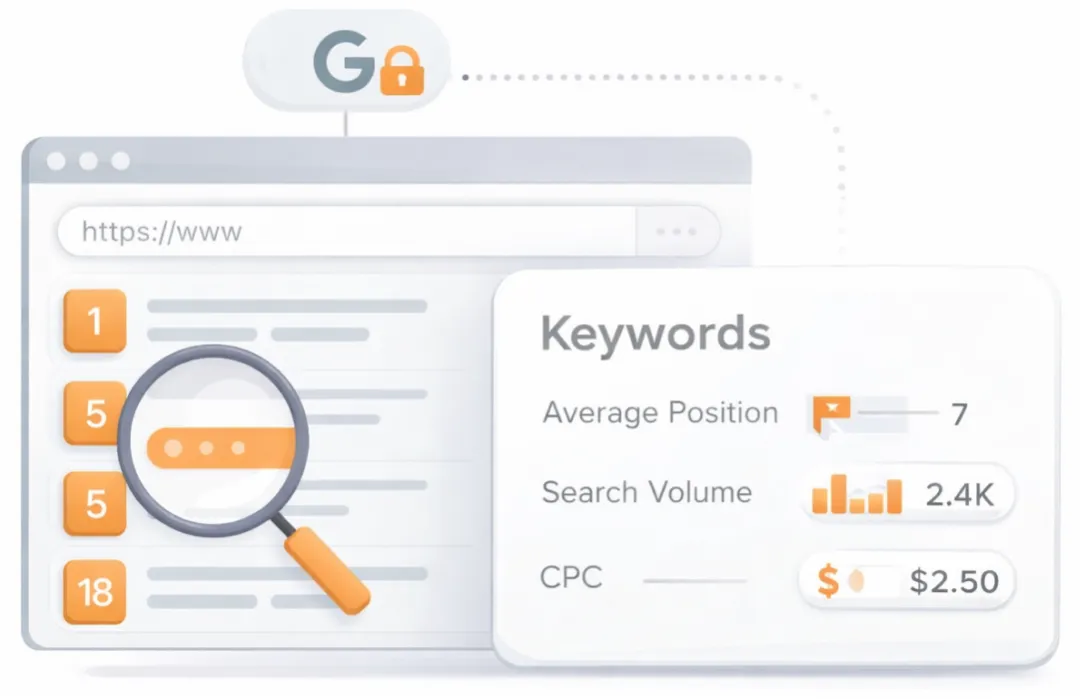
See which keywords rank your URL in Google’s top 20
Get key keyword metrics like average position, search volume, CPC, and more.

A list of search queries for which the page already appears in the top organic results. Highlights the topical territory the page is winning in search and can surface unexpected terms that present new content or optimization opportunities.

Understand your competitors' SEO and backlink profile
Get related competitors and their domain authority score in relation to your domain.
Identifies up to ten domains that compete for similar organic search results, ranked by overall domain authority based on the volume and quality of their backlink profiles. Useful for benchmarking the competitive landscape and prioritizing which sites to study for content and link-building strategy.
Robots.txt Test
94% of top 100 sites passed
This value indicates the percent of top 100 most visited websites in the US that pass this test (in the past 12 months). Failing a test that a high percentage of top websites are passing may indicate an industry best practice that you should be fixing.
This website is using a robots.txt file.
Check if your website is using a robots.txt file. When search engine robots crawl a website, they typically first access a site's robots.txt file. Robots.txt tells Googlebot and other crawlers what is and is not allowed to be crawled on your site.
Sitemap Test
75% of top 100 sites passed
This value indicates the percent of top 100 most visited websites in the US that pass this test (in the past 12 months). Failing a test that a high percentage of top websites are passing may indicate an industry best practice that you should be fixing.
This website has a sitemap file.
Check if the website has a sitemap. A sitemap is important as it lists all the web pages of the site and let search engine crawlers to crawl the website more intelligently. A sitemap also provides valuable metadata for each webpage.
Image Alt Test
71% of top 100 sites passed
This value indicates the percent of top 100 most visited websites in the US that pass this test (in the past 12 months). Failing a test that a high percentage of top websites are passing may indicate an industry best practice that you should be fixing.
Your webpage is using "img" tags with empty or missing "alt" attribute.
Check if images on your webpage are using alt attributes. If an image cannot be displayed (e.g., due to broken image source, slow internet connection, etc), the alt attribute provides alternative information. Using relevant keywords and text in the alt attribute can help both users and search engines better interpret the subject of an image.
Responsive Image Test
38% of top 100 sites passed
This value indicates the percent of top 100 most visited websites in the US that pass this test (in the past 12 months). Failing a test that a high percentage of top websites are passing may indicate an industry best practice that you should be fixing.
All images in this page are properly sized for different users' viewports.
This test will check if all of your page's images are appropriately sized for your user's viewport. Ideally, your page should not serve images that are larger than the version that's rendered on the user's screen. Serving an image larger than the user's viewport results in scaling down the image, use of unnecessary bandwidth, and slower page load time.
Image Aspect Ratio Test
72% of top 100 sites passed
This value indicates the percent of top 100 most visited websites in the US that pass this test (in the past 12 months). Failing a test that a high percentage of top websites are passing may indicate an industry best practice that you should be fixing.
All image display dimensions match the natural aspect ratio.
This test will check if all images are displayed with a correct aspect ratio. If a rendered image has an aspect ratio that's significantly different from the aspect ratio in its source file (the natural aspect ratio), the rendered image may look distorted, possibly creating an unpleasant user experience.
Google Analytics Test
69% of top 100 sites passed
This value indicates the percent of top 100 most visited websites in the US that pass this test (in the past 12 months). Failing a test that a high percentage of top websites are passing may indicate an industry best practice that you should be fixing.
Congratulations! Your webpage is using Google Analytics.
Check if your website is connected with Google Analytics. Google Analytics is a popular, free website analysis tool that helps provide insights about your site's traffic and demographics.
Favicon Test
100% of top 100 sites passed
This value indicates the percent of top 100 most visited websites in the US that pass this test (in the past 12 months). Failing a test that a high percentage of top websites are passing may indicate an industry best practice that you should be fixing.

Congratulations! Your website appears to have a favicon.
Check if your site is using and correctly implementing a favicon. Favicons are small icons that appear in your browser's URL navigation bar. They are also saved next to your URL's title when your page is bookmarked. This helps brand your site and make it easy for users to navigate to your site among a list of bookmarks.
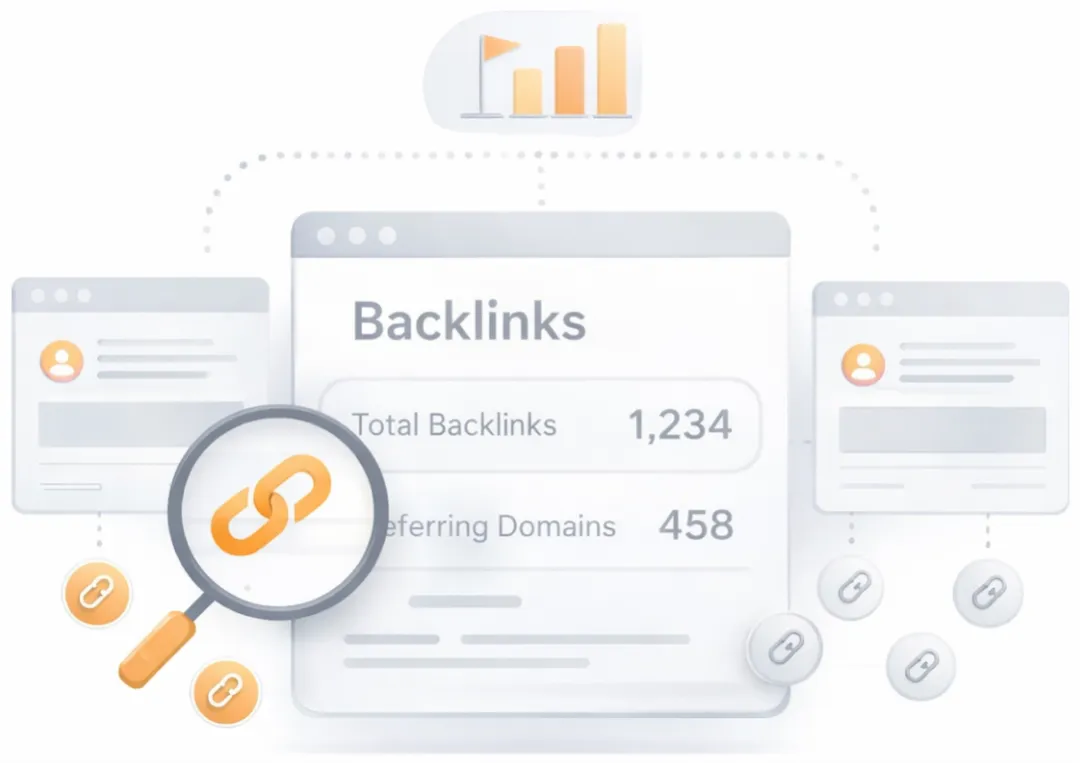
Get a full and detailed list of your backlinks
See every website linking to yours, along with detailed backlink data.
Surfaces the external pages that link to the analyzed URL. Backlinks from authoritative, topically relevant sites remain one of the strongest off-page ranking signals, while a profile dominated by low-quality or spammy links can attract algorithmic penalties. Reviewing the inbound link mix helps identify both link-building wins and toxic links worth disavowing.
JS Error Test
74% of top 100 sites passed
This value indicates the percent of top 100 most visited websites in the US that pass this test (in the past 12 months). Failing a test that a high percentage of top websites are passing may indicate an industry best practice that you should be fixing.
Congratulations! There are no severe JavaScript errors on your webpage.
Check your page for JavaScript errors. These errors may prevent users from properly viewing your pages and impact their user experience. Sites with poor user experience tend to rank worse in search engine results.
Console Errors Test
33% of top 100 sites passed
This value indicates the percent of top 100 most visited websites in the US that pass this test (in the past 12 months). Failing a test that a high percentage of top websites are passing may indicate an industry best practice that you should be fixing.
This webpage has some warnings caught by the Chrome DevTools Console!
This will check the Chrome DevTools Console for warnings and errors. These errors may prevent users from properly viewing your pages and impact their user experience. Sites with poor user experience tend to rank worse in search engine results.
Charset Declaration Test
100% of top 100 sites passed
This value indicates the percent of top 100 most visited websites in the US that pass this test (in the past 12 months). Failing a test that a high percentage of top websites are passing may indicate an industry best practice that you should be fixing.
This webpage has a character encoding declaration.
Content-Type: text/html; charset=UTF-8
This test will check if the webpage has a character encoding declaration ("charset"). If the server doesn't specify a character encoding format when it sends an HTML file, the browser may display some characters incorrectly to users. Google recommends using the Unicode/UTF-8 character set when possible.
Speed optimizations
Score:74
Failed:4
Warnings:1
Passed:10
HTML Page Size Test
34% of top 100 sites passed
This value indicates the percent of top 100 most visited websites in the US that pass this test (in the past 12 months). Failing a test that a high percentage of top websites are passing may indicate an industry best practice that you should be fixing.
Congratulations! The size of your webpage's HTML is 26.05 Kb and is under the average webpage's HTML size of 33 Kb. Faster loading websites result in a better user experience, higher conversion rates, and generally better search engine rankings.
Check your page's HTML size. HTML size is the size of all the HTML code on your web page - this size does not include images, external javascripts or external CSS files.
DOM Size Test
17% of top 100 sites passed
This value indicates the percent of top 100 most visited websites in the US that pass this test (in the past 12 months). Failing a test that a high percentage of top websites are passing may indicate an industry best practice that you should be fixing.
The Document Object Model (DOM) of this webpage has 2,468 nodes which is greater than the recommended value of 1,500 nodes. A large DOM size negatively affects site performance and increases the page load time.
This test will check the size of the DOM tree. When a web page is loaded, the browser creates a Document Object Model (DOM) of the page. All the tags in the HTML document are called nodes and the sum of them is translated as the DOM size. A large DOM tree will likely increase memory usage, cause longer style calculations, and may produce slower layout rendering.
HTML Compression/GZIP Test
96% of top 100 sites passed
This value indicates the percent of top 100 most visited websites in the US that pass this test (in the past 12 months). Failing a test that a high percentage of top websites are passing may indicate an industry best practice that you should be fixing.
Congratulations! Your webpage is successfully compressed using gzip compression on your code. Your HTML is compressed from 215.69 Kb to 26.05 Kb (88% size savings). This helps ensure a faster loading webpage and improved user experience.
Check if your website is using HTML compression. HTML compression plays an important role in improving website speed by finding similar strings within a text file and replacing them temporarily to reduce overall file size.
Site Loading Speed Test
68% of top 100 sites passed
This value indicates the percent of top 100 most visited websites in the US that pass this test (in the past 12 months). Failing a test that a high percentage of top websites are passing may indicate an industry best practice that you should be fixing.
Your website loading time is around 4.56 seconds and this is under the average loading speed which is 5 seconds.
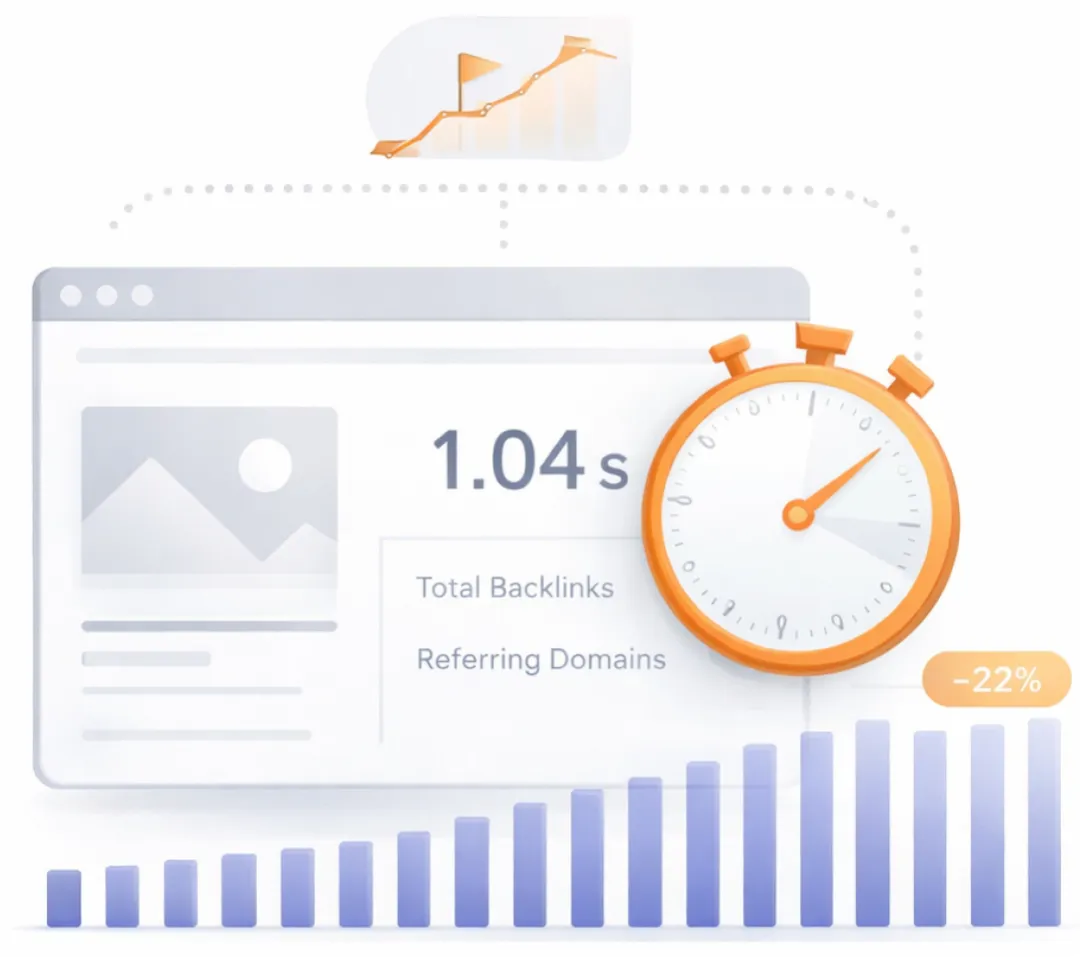
Accurate historical loading speed monitor and reports
Get detailed and accurate loading speed reports for your websites and see how your pages are being loaded over time.
Check your website's loading speed. Page speed is an important factors in search engine rankings and overall site success. Pages that take longer than 5 seconds to load can lose up to 50% of users. Faster webpages result in higher traffic, better conversions and increased sales over slower loading pages.
JS Execution Time Test
79% of top 100 sites passed
This value indicates the percent of top 100 most visited websites in the US that pass this test (in the past 12 months). Failing a test that a high percentage of top websites are passing may indicate an industry best practice that you should be fixing.
The JavaScript code used by this webpage is executed in less than 2 seconds.
This test will check the total execution time of the JavaScript code. Reducing the JavaScript execution time, in general, refers to decreasing the amount of time spent to parse, compile and execute the JavaScript code. Improving JavaScript execution time will result in faster page load times, and improved user experience (which Google uses as a factor in its ranking algorithms).
Page Objects Test
Your page uses more than 20 http requests, which can slow down page loading and negatively impact user experience.
Content size by content type
Content type
Percent
Size
javascript
36.6 %
487.07 Kb
image
23.1 %
307.75 Kb
font
17.4 %
231.14 Kb
other
12.0 %
158.97 Kb
css
9.0 %
120.21 Kb
html
1.8 %
24.41 Kb
TOTAL
100%
1.30 Mb
Requests by content type
Content type
Percent
Requests
image
48.2 %
27
font
21.4 %
12
javascript
16.1 %
9
css
7.1 %
4
other
5.4 %
3
html
1.8 %
1
TOTAL
100%
56
Content size by domain
Domain
Percent
Size
addad.lt
65.7 %
873.55 Kb
fonts.gstatic.com
17.4 %
231.14 Kb
connect.facebook.net
8.5 %
113.27 Kb
googletagmanager.com
6.7 %
89.01 Kb
google-analytics.com
1.5 %
19.92 Kb
fonts.googleapis.com
0.2 %
2.25 Kb
facebook.com
0.0 %
427 B
TOTAL
100%
1.30 Mb
Requests by domain
Domain
Percent
Requests
addad.lt
64.3 %
36
fonts.gstatic.com
21.4 %
12
googletagmanager.com
3.6 %
2
connect.facebook.net
3.6 %
2
facebook.com
3.6 %
2
fonts.googleapis.com
1.8 %
1
google-analytics.com
1.8 %
1
TOTAL
100%
56
Check if all the objects requested by this webpage can be retrieved. If they are not retrievable, your page may display incorrectly, leading to a bad user experience and lower search engine rankings.
CDN Usage Test
96% of top 100 sites passed
This value indicates the percent of top 100 most visited websites in the US that pass this test (in the past 12 months). Failing a test that a high percentage of top websites are passing may indicate an industry best practice that you should be fixing.
Your webpage is not serving all resources (images, javascript and css) from CDNs.
Check if your webpage's resources (images, javascript and css files) are served via CDNs.
Modern Image Format Test
32% of top 100 sites passed
This value indicates the percent of top 100 most visited websites in the US that pass this test (in the past 12 months). Failing a test that a high percentage of top websites are passing may indicate an industry best practice that you should be fixing.
Image Caching Test
99% of top 100 sites passed
This value indicates the percent of top 100 most visited websites in the US that pass this test (in the past 12 months). Failing a test that a high percentage of top websites are passing may indicate an industry best practice that you should be fixing.
Congratulations! Your website is using cache headers for your images and the browsers will display these images from the cache.
Checks if your page is using an image expires tag, which specifies a future expiration date for your images. Users browsers will see this tag and cache the image in their browser until the specified date (so that it does not keep re-fetching the unchanged image from your server). This speeds up your site the next time returning visitors arrive at your site and require the same image.
JavaScript Caching Test
98% of top 100 sites passed
This value indicates the percent of top 100 most visited websites in the US that pass this test (in the past 12 months). Failing a test that a high percentage of top websites are passing may indicate an industry best practice that you should be fixing.
Congratulations! Your website is using cache headers for all JavaScript resources.
Checks if your page is using caching headers for all JavaScript resources. Users browsers will check for these headers and, if any, will cache the JavaScript resources until the specified date (so that it does not keep re-fetching the unchanged file from your server). This speeds up your site the next time returning visitors arrive at your site and require the same JavaScript resource.
CSS Caching Test
98% of top 100 sites passed
This value indicates the percent of top 100 most visited websites in the US that pass this test (in the past 12 months). Failing a test that a high percentage of top websites are passing may indicate an industry best practice that you should be fixing.
Congratulations! Your website is using cache headers for all CSS resources.
Checks if your page is using caching headers for all CSS resources. Users browsers will check for these headers and, if any, will cache the CSS resources until the specified date (so that it does not keep re-fetching the unchanged file from your server). This speeds up your site the next time returning visitors arrive at your site and require the same CSS resource.
JavaScript Minification Test
93% of top 100 sites passed
This value indicates the percent of top 100 most visited websites in the US that pass this test (in the past 12 months). Failing a test that a high percentage of top websites are passing may indicate an industry best practice that you should be fixing.
Congratulations! Your website's JavaScript files are minified!
Checks if any external javascript files used in your page is minified. Minified files reduce page size and overall load time.
CSS Minification Test
97% of top 100 sites passed
This value indicates the percent of top 100 most visited websites in the US that pass this test (in the past 12 months). Failing a test that a high percentage of top websites are passing may indicate an industry best practice that you should be fixing.
Congratulations! Your webpage's CSS resources are minified.
Checks if any CSS files used in your page is minified. Minified files reduce page size and overall load time.
Render Blocking Resources Test
29% of top 100 sites passed
This value indicates the percent of top 100 most visited websites in the US that pass this test (in the past 12 months). Failing a test that a high percentage of top websites are passing may indicate an industry best practice that you should be fixing.
This webpage is using render blocking resources! Eliminating render-blocking resources can help your page load significantly faster and improve the website experience for your visitors.
This test will check if any of the webpage's JavaScript or CSS resources is blocking the render process. When the browser encounters a render blocking resource, it stops downloading the rest of the resources until these critical files are processed. In the meantime, the entire rendering process is put on hold. Aim to reduce the impact of these render-blocking URLs by inlining critical resources, deferring non-critical resources, and removing anything unused. This can greatly improve page load times and the user experience (factors which Google uses in its ranking algorithms).
URL Redirects Test
96% of top 100 sites passed
This value indicates the percent of top 100 most visited websites in the US that pass this test (in the past 12 months). Failing a test that a high percentage of top websites are passing may indicate an industry best practice that you should be fixing.
Congratulations! Your URL doesn't have any redirects (which could potentially cause site indexation issues and site loading delays).
Check how many redirects your URL will perform to resolve to the final destination URL. Redirects often cause search engine indexing issues and can also lead to some minor loading delays. Google recommends removing or keeping redirects to a minimum.
Server and security
Score:78
Failed:2
Warnings:0
Passed:4
URL Canonicalization Test
92% of top 100 sites passed
This value indicates the percent of top 100 most visited websites in the US that pass this test (in the past 12 months). Failing a test that a high percentage of top websites are passing may indicate an industry best practice that you should be fixing.
https://www.addad.lt and https://addad.lt resolve to the same URL.
Test your site for potential URL canonicalization issues. Canonicalization describes how a site can use slightly different URLs for the same page (e.g., if http://www.example.com and http://example.com displays the same page but do not resolve to the same URL). If this happens, search engines may be unsure about which URL is the correct one to index. Learn more about canonicalization issues.
SSL Checker and HTTPS Test
100% of top 100 sites passed
This value indicates the percent of top 100 most visited websites in the US that pass this test (in the past 12 months). Failing a test that a high percentage of top websites are passing may indicate an industry best practice that you should be fixing.
Your website is successfully using HTTPS, a secure communication protocol over the Internet.
The certificate is not used before the activation date.
The certificate has not expired.
The hostname "www.addad.lt" is correctly listed in the certificate.
The certificate should be trusted by all major web browsers.
The certificate was not revoked.
The certificate was signed with a secure hash.
Certificate Chain:
Server certificate
Common Name
addad.lt
Subject Alternative Names
addad.lt, www.addad.lt
Not Valid Before
Sat, June 4, 2022 at 8:12:28 PM UTC
Not Valid After
Fri, September 2, 2022 at 8:12:27 PM UTC
Signature Algorithm
sha256WithRsaEncryption
Issuer
R3
Intermediate certificate
Common Name
R3
Organization
Let's Encrypt
Location
US
Not Valid Before
Fri, September 4, 2020 at 12:00:00 AM UTC
Not Valid After
Mon, September 15, 2025 at 4:00:00 PM UTC
Signature Algorithm
sha256WithRsaEncryption
Issuer
ISRG Root X1
Root certificate
Common Name
ISRG Root X1
Organization
Internet Security Research Group
Location
US
Not Valid Before
Thu, June 4, 2015 at 11:04:38 AM UTC
Not Valid After
Mon, June 4, 2035 at 11:04:38 AM UTC
Signature Algorithm
sha256WithRsaEncryption
Issuer
ISRG Root X1
Check if your website is using HTTPS, a secure protocol for sending/receiving data over the Internet. Using HTTPS indicates that an additional encryption/authentication layer was added between client and server. HTTPS should be used by any site that collects sensitive customer data such as credit card information. Even for sites that do not collect such data, switching to https helps users by improving privacy and overall security. Google is increasingly using https as a positive ranking factor.
Mixed Content Test (HTTP over HTTPS)
100% of top 100 sites passed
This value indicates the percent of top 100 most visited websites in the US that pass this test (in the past 12 months). Failing a test that a high percentage of top websites are passing may indicate an industry best practice that you should be fixing.
Congratulations, this webpage does not use mixed content - both the initial HTML and all other resources are loaded over HTTPS.
This will check if all resources are loaded over a secure HTTPS connection. Mixed content occurs when initial HTML is loaded over a secure HTTPS connection, but other resources (such as images, videos, stylesheets, scripts) are loaded over an insecure HTTP connection. This is called mixed content because both HTTP and HTTPS content are being loaded to display the same page, and the initial request was secure over HTTPS. Browsers may block mixed content, so fixing this issue helps ensure your content loads as intended.
HTTP2 Test
92% of top 100 sites passed
This value indicates the percent of top 100 most visited websites in the US that pass this test (in the past 12 months). Failing a test that a high percentage of top websites are passing may indicate an industry best practice that you should be fixing.
This webpage is using the HTTP/2 protocol.
Checks if the webpage and all resources are served over HTTP/2. As the first major HTTP protocol update since 1997, HTTP/2 offers several key improvements such as increased speed and security.
Plaintext Emails Test
93% of top 100 sites passed
This value indicates the percent of top 100 most visited websites in the US that pass this test (in the past 12 months). Failing a test that a high percentage of top websites are passing may indicate an industry best practice that you should be fixing.
We've found 1 email addresses in your page code. We advise you to protect email links in a way that hides them from the spam harvesters.
Check your webpage for plaintext email addresses. Any e-mail address posted in public is likely to be automatically collected by computer software used by bulk emailers (a process known as e-mail address harvesting). A spam harvester can read through the pages in your site and extract plaintext email addresses which are then added to bulk marketing databases (resulting in more inbox spam). There are several methods for email obfuscation.
Unsafe Cross-Origin Links Test
59% of top 100 sites passed
This value indicates the percent of top 100 most visited websites in the US that pass this test (in the past 12 months). Failing a test that a high percentage of top websites are passing may indicate an industry best practice that you should be fixing.
This webpage is using target="_blank" links without rel="noopener" or rel="noreferrer" attribute, which can expose it to performance and security issues.
This test will check if all links to external pages that have the target="_blank" attribute also have the rel="noopener" or rel="noreferrer" attribute.
When you link to an external site using the target="_blank" attribute, security and performance issues arise:
The external pages you link to may run on the same process as your page. If the other page is running a lot of JavaScript, your page's performance may suffer.
The other page can access your window object with the window.opener property. This may allow the other page to redirect your page to a malicious URL.
Adding rel="noopener" or rel="noreferrer" to your target="_blank" links avoids these issues.
When you link to an external site using the target="_blank" attribute, security and performance issues arise:
The external pages you link to may run on the same process as your page. If the other page is running a lot of JavaScript, your page's performance may suffer.
The other page can access your window object with the window.opener property. This may allow the other page to redirect your page to a malicious URL.
Adding rel="noopener" or rel="noreferrer" to your target="_blank" links avoids these issues.
Mobile usability
Score:100
Failed:0
Warnings:0
Passed:3
Meta Viewport Test
94% of top 100 sites passed
This value indicates the percent of top 100 most visited websites in the US that pass this test (in the past 12 months). Failing a test that a high percentage of top websites are passing may indicate an industry best practice that you should be fixing.
This webpage is using a viewport meta tag.
<meta name="viewport" content="width=device-width, initial-scale=1.0, maximum-scale=1.0, user-scalable=0" />This will check if the webpage is using a viewport meta tag, which is necessary for responsive web design. Without a viewport meta tag, mobile devices render pages at typical desktop screen widths and then scale the pages down, making them difficult to read. Setting the viewport meta tag lets you control the width and scaling of the viewport so that it's sized correctly on all devices.
Media Query Responsive Test
99% of top 100 sites passed
This value indicates the percent of top 100 most visited websites in the US that pass this test (in the past 12 months). Failing a test that a high percentage of top websites are passing may indicate an industry best practice that you should be fixing.
Congratulations, your website uses media query technique, which is the base for responsive design functionalities.
Check if your page implements responsive design functionalities using the media query technique. The '@media' rule allows different style rules for screen sizes. Media query techniques allow different presentation and content to be served depending on the output device, helping ensure that your website renders optimally on all devices and platforms.

Check how your website renders on a mobile device.
Advanced SEO
Score:98
Failed:0
Warnings:1
Passed:8
Structured Data Test
59% of top 100 sites passed
This value indicates the percent of top 100 most visited websites in the US that pass this test (in the past 12 months). Failing a test that a high percentage of top websites are passing may indicate an industry best practice that you should be fixing.
Congratulations! Your website is using HTML Microdata specifications in order to markup structured data.
Check if your website uses HTML Microdata specifications (or structured data markup). Search engines use microdata to better understand the content of your site and create rich snippets in search results (which helps increase click-through rate to your site).
Custom 404 Error Page Test
75% of top 100 sites passed
This value indicates the percent of top 100 most visited websites in the US that pass this test (in the past 12 months). Failing a test that a high percentage of top websites are passing may indicate an industry best practice that you should be fixing.
Congratulations, your website is using a custom 404 error page. By creating a custom 404 error page, you can improve your website's user experience by letting users know that only a specific page is missing/broken (and not your entire site), providing them helpful links, the opportunity to report bugs, and potentially track the source of broken links in your site.
This SEO test will check if your website is using a custom 404 error page. By creating a custom 404 error page, you can improve your website's user experience by letting users know that only a specific page is missing/broken (and not your entire site), providing them helpful links, the opportunity to report bugs, and potentially track the source of broken links in your site.
Meta Refresh Test
95% of top 100 sites passed
This value indicates the percent of top 100 most visited websites in the US that pass this test (in the past 12 months). Failing a test that a high percentage of top websites are passing may indicate an industry best practice that you should be fixing.
Congratulations, this webpage is not using a meta refresh tag.
This test will check if your webpage is using a refresh meta tag. This tag causes a web page to refresh automatically after a specified amount of time. Users generally don't expect automatic refreshes, so they can be disorienting. Refreshing also moves focus to the top of the page, which may frustrate or confuse users, particularly those who rely on screen readers or other assistive technologies.
SPF Records Test
94% of top 100 sites passed
This value indicates the percent of top 100 most visited websites in the US that pass this test (in the past 12 months). Failing a test that a high percentage of top websites are passing may indicate an industry best practice that you should be fixing.
Congratulations! Your DNS server is using an SPF record.
v=spf1 include:_spf.google.com ~all
Check if your DNS records contains an SPF record. SPF (Sender Policy Framework) records allow email systems to verify if a given mail server has been authorized to send mail on behalf of your domain. Creating an SPF record increases email delivery rates by reducing the likelihood of your email being marked as spam.
Ads.txt Validation Test
80% of top 100 sites passed
This value indicates the percent of top 100 most visited websites in the US that pass this test (in the past 12 months). Failing a test that a high percentage of top websites are passing may indicate an industry best practice that you should be fixing.
This website doesn't use an ads.txt file! Ads.txt is a text file that contains a list of Authorized Digital Sellers. The purpose of ads.txt files is to give advertisers and advertising networks the ability to verify who is allowed to sell advertising on your website.
This test will check if your website's ads.txt file has a valid format.