Archived

SEO Report for https://tn8881.com

Your general SEO Checkup Score


SEO Score83/100
Average SEO score of top 100 sites: 75%This value indicates the average SEO score of the top 100 most visited websites in the US (in the past 12 months)
AI Visibility50/100
AI visibility score reflects brand reach in AI

Your site scored 83/100, just above the 75 average for top sites. We found 9 issues to fix, and they're what's holding you back from the top spots. And an AI Visibility Score of 50/100 means ChatGPT, Gemini and Perplexity mention your brand only occasionally, which is ground your competitors are leaving open.

9 Failed
5 Warnings
49 Passed

Want to fix these issues and track your progress?

Issues to fix

HIGH
To improve the website experience for your visitors, it is recommended to eliminate any render-blocking resources on this webpage.
Details
HIGH
To ensure that Search Engines can accurately identify the topic of this webpage, it is important to include the most common keywords in the title tag, meta description, and heading tags.
Details
MEDIUM
Add a Google Analytics script to this website to help in diagnosing potential SEO issues by monitoring site visitors and traffic sources.
Details
LOW
Consider reducing the HTML size to improve loading times and retain visitors.
Details
LOW
While a canonical link tag can help in resolving duplicate content issues, it's important to verify that the specified URL is accurate, especially if the site's URL structure has been recently updated.
Details
LOW
Without an SPF record, spammers can easily spoof emails from this domain, potentially leading to compromised email security and deliverability issues.
Details
LOW
Using more than 20 HTTP requests on a webpage can negatively impact the loading time.
Details
LOW
Consider adding the Strict-Transport-Security header to your webpage to ensure that web traffic is encrypted over HTTPS, mitigating the risk of man-in-the-middle attacks and other security threats.
Details

AI Insights

Score:0
Failed:0
Warnings:0
Passed:5
Domain Business Context
Understanding the business context of a domain can help you create content that is more relevant to your target audience and differentiate your website from competitors.

What is this domain about

Online gambling and casino portal promoting TN88 betting, games, promotions, and account access.

Industry Niche

Online Gambling Platform

Target Audience

Adult online bettors and casino players looking for sports betting, slots, live casino, and promotions.
This test will check the business context of the domain associated with the analyzed webpage. The business context includes the domain's description, target audience and industry niche (if applicable). Understanding the business context of a domain can help you create content that is more relevant to your target audience and differentiate your website from competitors.
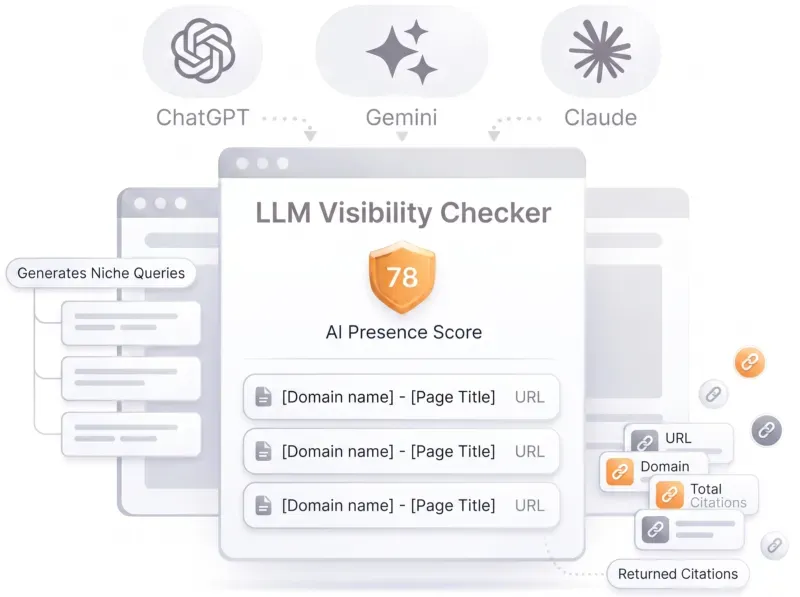
LLM Visibility Checker

Track your brand across ChatGPT, Gemini and Claude

Get an AI Presence Score, see which of your pages get cited, and follow how you compare with competitors over time.

How visible your brand is to AI engines
Content Strengths and Weaknesses

This webpage is highly promotional and covers a broad range of gambling products, offers, and onboarding steps in a clear, sales-oriented structure. However, it relies heavily on marketing claims and lacks independent evidence, making the content feel more persuasive than authoritative.

Content Strengths

  • Clear Topic Focus
  • Detailed Product Coverage
  • Step-by-Step Onboarding

Content Weaknesses

  • Unverified Marketing Claims
  • Thin Expert Depth
  • Low Source Transparency
This test will analyze the content of the webpage to identify its strengths and weaknesses. The analysis includes factors such as keyword usage, readability, originality, and relevance to the target audience. By understanding the strengths and weaknesses of your content, you can make informed decisions about how to improve it and better meet the needs of your audience.
Content Trust
44%
Topical Relevance92%
Subject Expertise58%
Credibility28%

This webpage shows moderate topical relevance because nearly all content is about one gambling brand, its products, and its offers. Trust is weakened by the absence of visible policy pages, author attribution, third-party validation, or cited sources, despite the presence of contact details and a physical address.
This test will evaluate the trustworthiness of the content on the webpage. It assesses factors such as the credibility of sources, accuracy of information, and overall reliability. A high level of content trust can enhance your website's reputation and improve its ranking in search engine results.
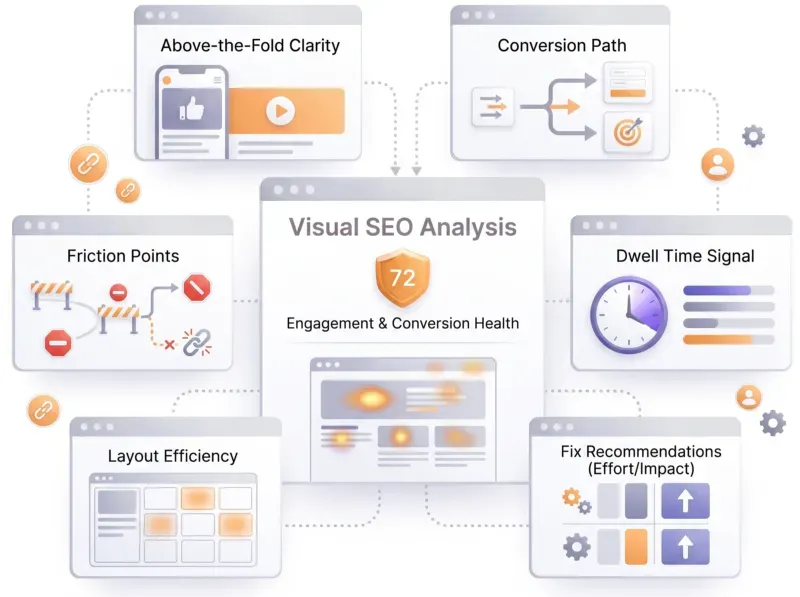
Visual SEO Analysis
Visual SEO Analysis

Find out if your page design converts the visitors you earn

We score six things that decide whether a visitor stays and acts, from the first screen to the path to action, and rank every fix by effort and impact.

How your page's design and UX affect conversions
Content Freshness
66%

The page appears current in a superficial sense because it references October 2026 promotions, 2026 imagery, and recent-sounding operational claims. However, the freshness is mostly supported by promotional copy and footer-year boilerplate rather than strong primary timestamps on the main content.

Positive Signals

  • October 2026 promotion references
  • 2026 image assets
  • Current-year marketing language

Staleness Signals

  • Footer copyright 2026 only
  • No article publish date
  • No visible update timestamp
This test will check the freshness of the content on the webpage. It evaluates how recently the content was created or updated, and whether it remains relevant to current trends and user interests. Fresh content can attract more visitors and improve your website's ranking in search engine results.
Content Opportunities

The page has room to become more useful by moving beyond promotional claims and adding practical, verifiable information. The biggest opportunities are trust-building, deeper explanations of products and rules, and more audience-focused guidance for new users.

Quick Wins

  • •Add clickable policy links in the footer that open real Terms, Privacy, and Responsible Gambling pages.
  • •Expand the FAQ section with specific answers about withdrawal limits, bonus wagering, and account verification.
  • •Replace anonymous testimonials with attributed user quotes that include names, roles, or source context.
This test will identify potential content opportunities for the webpage. It analyzes the current content landscape, identifies gaps in coverage, and suggests topics or keywords that could be targeted to attract more visitors and improve search engine rankings.

Common SEO issues

Score:77
Failed:2
Warnings:2
Passed:15
Meta Title Test
100% of top 100 sites passed
This webpage is using a title tag with a length of 61 characters. While there's no target number of characters, titles should be descriptive and concise. We recommend using a title with a length between 20 - 60 characters in order to fit Google Search results that have a 600-pixel limit.
Text: TN88 - Link Nhà Cái TN88.COM Không Chặn #2026 | Đăng Ký +888k
Length: 61 characters
The meta title is an HTML element that defines a page's title, displayed in search engine results, browser tabs, and bookmark lists. A concise, keyword-relevant title is a strong on-page ranking signal and a major driver of organic click-through rate. AI answer engines and LLM-driven search experiences also rely on the title to identify, summarize, and cite the page in generative results.
Meta Description Test
92% of top 100 sites passed
This webpage is using a meta description tag.
Text: TN88 là nền tảng giải trí trực tuyến uy tín hướng đến người dùng châu Á, cung cấp thể thao, live casino, nổ hũ, đá gà, bắn cá cùng ưu đãi tân thủ 88k free.
Length: 155 characters
The meta description is an HTML tag that provides a short summary of a page's content, often shown beneath the title in search results. While not a direct ranking factor, an accurate and inviting description significantly improves click-through rate from organic listings. AI answer engines and social platforms also use it as a trusted summary when generating previews, citations and shareable snippets.
Google Search Results Preview Test
Desktop version
https://baccarat44.co/TN88 - Link Nhà Cái TN88.COM Không Chặn #2026 | Đăng Ký +888kTN88 là nền tảng giải trí trực tuyến uy tín hướng đến người dùng châu Á, cung cấp thể thao, live casino, nổ hũ, đá gà, bắn cá cùng ưu đãi tân thủ 88k free.
Mobile version
https://baccarat44.co/TN88 - Link Nhà Cái TN88.COM Không Chặn #2026 | Đăng Ký +888kTN88 là nền tảng giải trí trực tuyến uy tín hướng đến người dùng châu Á, cung cấp thể thao, live casino, nổ hũ, đá gà, bắn cá cùng ưu đãi tân thủ 88k free.
A simulated preview of how the page may appear in Google search results, combining the title, URL, and meta description as Google typically renders them. Useful for spotting truncated text, weak phrasing, or missing elements before publishing, since the snippet directly influences whether searchers click through.
Social Media Meta Tags Test
89% of top 100 sites passed
This webpage is using social media meta tags.
Open Graph Meta Tags
og:localevi_VN
og:typewebsite
og:titleTN88 - Link Nhà Cái TN88.COM Không Chặn #2026 | Đăng Ký +888k
og:descriptionTN88 là nền tảng giải trí trực tuyến uy tín hướng đến người dùng châu Á, cung cấp thể thao, live casino, nổ hũ, đá gà, bắn cá cùng ưu đãi tân thủ 88k free.
og:urlhttps://baccarat44.co/vi-vn/
og:site_nameTN88
og:updated_time2026-10-05T17:56:13+07:00
og:imagehttps://baccarat44.co/wp-content/uploads/2026/10/tn88-nha-cai-uy-tin-hang-dau-chau-a-dang-ky-nhan-88k.webp
og:image:secure_urlhttps://baccarat44.co/wp-content/uploads/2026/10/tn88-nha-cai-uy-tin-hang-dau-chau-a-dang-ky-nhan-88k.webp
og:image:width800
og:image:height400
og:image:altTN88 🎖️Nhà Cái Uy Tín Hàng Đầu Châu Á| Đăng Ký Nhận 88K
og:image:typeimage/webp
Twitter Card Meta Tags
twitter:cardsummary_large_image
twitter:titleTN88 - Link Nhà Cái TN88.COM Không Chặn #2026 | Đăng Ký +888k
twitter:descriptionTN88 là nền tảng giải trí trực tuyến uy tín hướng đến người dùng châu Á, cung cấp thể thao, live casino, nổ hũ, đá gà, bắn cá cùng ưu đãi tân thủ 88k free.
twitter:imagehttps://baccarat44.co/wp-content/uploads/2026/10/tn88-nha-cai-uy-tin-hang-dau-chau-a-dang-ky-nhan-88k.webp
twitter:label1Được viết bởi
twitter:data1seovietnam
twitter:label2Thời gian để đọc
twitter:data215 phút
Open Graph and Twitter Card meta tags tell social platforms and link unfurlers how to display a page when its URL is shared. Well-formed tags produce richer previews with the intended title, description, and image, which improves click-through on social channels. They also serve as a structured signal that AI crawlers and answer engines can use when summarizing the page.
Most Common Keywords Test
There is likely no optimal keyword density (search engine algorithms have evolved beyond keyword density metrics as a significant ranking factor). It can be useful, however, to note which keywords appear most often on your page and if they reflect the intended topic of your page. More importantly, the keywords on your page should appear within natural sounding and grammatically correct copy.
32chơi
29cược
23người
22giải
21được
A frequency analysis of the most repeated words and phrases in the page's visible content. Useful for getting a quick sense of which topics search engines are likely to associate with the page, and for spotting cases where the actual content drifts from the intended subject.
Keywords Usage Test
48% of top 100 sites passed
The most common keywords of this webpage are not distributed across the important HTML tags! Primary keywords should appear in title tag, meta description and heading tags to help Search Engines to properly identify the topic of this webpage.
Keyword
Title tag
Meta description
Headings
chơi
cược
người
giải
được
Cross-checks whether the most frequently used keywords on the page also appear in the title and meta description. Alignment between body content and metadata helps search engines confirm the page's topic and reinforces relevance for those terms.
Keywords Cloud Test
biệt
bạch
bằng
casino
chuyên
châu
chính
chơi
chất
chọn
cung
cách
công
cùng
cược
diện
doanh
dung
dưới
dạng
dịch
game
gian
giao
giúp
giải
hiện
hoàn
hoạt
hoặc
hàng
hướng
khoản
khuyến
khác
khách
không
khẩu
kiện
live
liên
lượng
mang
minh
ngay
nghiệm
nghiệp
ngày
người
nhanh
nhiều
nhất
nhận
nhập
những
phong
phát
phép
phút
phẩm
quan
sánh
sảnh
tham
thanh
thao
thiết
thoại
thành
thích
thông
thưởng
thức
thực
tiêu
tiếp
tiết
tiền
toàn
trang
triển
trong
trên
trình
trường
trải
trực
tuyến
tính
tương
tổng
viên
điều
điểm
điện
đánh
đăng
được
định
động
A visual word cloud of the page's content, with more frequent terms shown in larger text. Provides a quick at-a-glance view of which words dominate the page, helping confirm that the visible content reflects the intended topic.
Competitor Domains Test
Competitor Domains

Understand your competitors' SEO and backlink profile

Get related competitors and their domain authority score in relation to your domain.

Identifies up to ten domains that compete for similar organic search results, ranked by overall domain authority based on the volume and quality of their backlink profiles. Useful for benchmarking the competitive landscape and prioritizing which sites to study for content and link-building strategy.
Heading Tags Test
62% of top 100 sites passed
This webpage contains headings tags.
H1 tags
TN88🎖️Nhà Cái Uy Tín Hàng Đầu Châu Á | Đăng Ký TN88 Nhận 888K
H2 tags
Tổng quan sơ bộ về TN88
Sức hút của TN88 đến từ những yếu tố nào?
So sánh nhanh TN88 và một số trang web khác
Điểm danh top 4 sản phẩm làm nên vị thế của TN88
Hướng dẫn tham gia trải nghiệm TN88 ngắn gọn
Top ưu đãi TN88 người chơi không nên bỏ lỡ
Review nhanh trang web TN88 từ hội viên
Lời kết
Inspects the page for H1 and H2 heading tags and reports their structure. Headings give both users and search engines a clear outline of the page's topics, with the H1 acting as the primary subject and H2s framing major sections. A clean heading hierarchy also helps AI answer engines segment the content into discrete passages they can quote or summarize.
Robots.txt Test
99% of top 100 sites passed
This website is using a robots.txt file.
Verifies whether the site exposes a robots.txt file at the root domain. This file is the first resource most crawlers request, telling search engines and other bots which paths they may or may not access. It is also the standard mechanism for allowing or blocking modern AI crawlers used by training pipelines and answer engines.
Sitemap Test
83% of top 100 sites passed
This website has a sitemap file.
Looks for an XML sitemap on the site and reports whether one is published. Sitemaps give search engines an explicit, machine-readable list of the URLs you want crawled, along with metadata such as last-modified dates, which speeds up discovery of new and updated pages. They are especially useful for large sites or those with weak internal linking.
Image Alt Test
78% of top 100 sites passed
This webpage is using "img" tags with empty or missing "alt" attribute!

Image Alt Test

How to pass this test?

Alt attributes provide a text alternative for images, used by screen readers when a user cannot see the image and by search engines and multimodal AI models to understand what the image depicts. Fixing this issue means writing concise, descriptive alt text for every meaningful image on the page, and using empty alt for purely decorative images so assistive technology can skip them. The same alt text helps multimodal LLMs and image search tools surface and cite your visuals.

Example

<img src="/images/marathon-shoes.jpg"
     alt="Side view of a lightweight neon-green marathon running shoe">

<img src="/images/divider.svg" alt="">

Where to make the change

  • Raw HTML: add the alt attribute to every <img> tag. For decorative images, use alt="" so screen readers skip them.
  • WordPress: the media library has an Alt text field on every uploaded image. Fill it once and the value is reused everywhere the image is inserted.
  • Shopify: in the product or page editor, click an image and use the Edit alt text option. Theme code that renders product images should pull image.alt.
  • Wix or Squarespace: click the image in the editor and use the Alt text or Image description field in the side panel.
  • Headless or framework sites: require an alt prop on every image component and lint for missing values during build.

Common causes and how to resolve them

  • Attribute missing: add alt="" at minimum so the page validates. Replace with descriptive text on any image that conveys information.
  • Alt text is the filename: "IMG_4837.jpg" tells the user nothing. Replace with a description of what is in the image.
  • Alt text duplicates the visible caption: screen readers will read both, doubling the user's listening time. Differentiate the alt from the caption or empty the alt.
  • Decorative images get descriptive alt text: background patterns and dividers should use alt="", otherwise screen readers narrate noise.
  • Bulk imports left alt blank: a one-off audit of the media library or a CMS-side script can fill missing alt values from product names, captions, or asset descriptions.

Best practices

  • Describe the function, not just the appearance: for a chart, describe what the chart shows. For a button image, describe what the button does.
  • Keep it concise: aim for under 125 characters. Screen readers do not pause mid-sentence, so long alt text is exhausting to listen to.
  • Skip "image of" or "picture of": the screen reader already announces it as an image.
  • Include the focus keyword when natural: alt text is a minor on-page signal, but stuffing keywords in unnatural alt text harms both accessibility and ranking.
Inspects whether images on the page include descriptive alt attributes. Alt text provides accessibility for screen readers, a fallback when images fail to load, and a textual signal that helps search engines understand image content. It also improves how AI crawlers and image search tools interpret and surface the visuals.
Responsive Image Test
29% of top 100 sites passed
All images in this webpage are properly sized for different users' viewports.
Compares the natural dimensions of each image to the size at which it is actually rendered in the user's viewport. Serving images significantly larger than needed wastes bandwidth, slows page load, and forces the browser to scale assets unnecessarily, all of which hurt performance and user experience.
Image Aspect Ratio Test
75% of top 100 sites passed
All image display dimensions match the natural aspect ratio.
Compares each image's natural aspect ratio against the ratio at which it is displayed on the page. Significant mismatches result in stretched or squashed visuals that look unprofessional and degrade the user experience.
Deprecated HTML Tags Test
94% of top 100 sites passed
This webpage does not use HTML deprecated tags.
Scans the markup for HTML elements that are no longer part of the modern HTML specification. Deprecated tags may still render today, but browsers can drop support at any time, leading to broken layouts and rendering inconsistencies. Replacing them with current standards keeps the page resilient and easier to maintain.
Google Analytics Test
72% of top 100 sites passed
A Google Analytics script is not detected on this page. While there are several tools available to monitor your site's visitors and traffic sources, Google Analytics is a free, commonly recommended program to help diagnose potential SEO issues.

Google Analytics Test

How to pass this test?

Google Analytics 4 is a free measurement platform that records visitor behavior, traffic sources, and conversion data. Installing it does not directly affect rankings, but the data it produces is essential for measuring SEO performance, identifying high-value pages, and prioritizing future optimization work. Fixing this issue means installing the GA4 tag site-wide and confirming events appear in your reports.

Example

<!-- Place inside <head> on every page -->
<script async src="https://www.googletagmanager.com/gtag/js?id=G-XXXXXXXXXX"></script>
<script>
  window.dataLayer = window.dataLayer || [];
  function gtag(){dataLayer.push(arguments);}
  gtag('js', new Date());
  gtag('config', 'G-XXXXXXXXXX');
</script>

Where to make the change

  • Raw HTML: paste the GA4 snippet into the <head> of every page. A shared layout file is the cleanest place.
  • WordPress: use a site-kit or analytics plugin, or paste the snippet into your theme's header file. Avoid duplicating the tag across multiple plugins.
  • Shopify: add the GA4 measurement ID under Online Store, Preferences, Google Analytics, or install the official Google channel app.
  • Wix or Squarespace: both platforms offer a GA4 measurement ID field in their analytics settings panel.
  • Headless or framework sites: install via Google Tag Manager or use the framework's analytics integration so the tag fires on every route change.

Common causes and how to resolve them

  • Tag not installed at all: install GA4 using the snippet above or the platform-specific path.
  • Universal Analytics tag still in place: Universal Analytics stopped processing data on July 1, 2024. Replace any UA tag (UA-...) with a GA4 measurement ID (G-...).
  • Tag fires only on the homepage: ensure the snippet is in a shared template loaded by every page, not pasted into one post.
  • Cookie banner blocks the tag before consent: integrate Consent Mode v2 so GA4 receives anonymized signals before consent and full data after.
  • Tag duplicated: two snippets on the same page double-count sessions. Audit with the Tag Assistant browser extension and remove duplicates.

Best practices

  • Verify with real-time reports: after installing, open GA4's Realtime view and load the site to confirm events arrive.
  • Use Google Tag Manager: for any site beyond the simplest, GTM gives you a single place to manage analytics, conversion tags, and third-party scripts without code changes.
  • Configure key events: mark conversions (purchase, lead, signup) as key events so reports highlight what matters for SEO ROI.
  • Link to Search Console: connecting GA4 to Search Console surfaces organic queries alongside on-site behavior in the same reports.
Detects whether the page is instrumented with Google Analytics tracking code. Analytics is not an SEO ranking factor, but having reliable traffic and behavior data is essential for measuring the impact of SEO work and identifying opportunities for improvement.
Favicon Test
100% of top 100 sites passed
favicon
This website appears to have a favicon.
Verifies whether the site declares a favicon and that it loads correctly. Favicons appear in browser tabs, bookmarks, and increasingly in search engine result pages, where they reinforce brand recognition and make a listing easier to spot at a glance.
JS Error Test
83% of top 100 sites passed
There are no severe JavaScript errors on this webpage.
Inspects the page for JavaScript runtime errors that occur as it loads. Unhandled errors can break interactive features, leave content unrendered, and signal poor code quality, all of which hurt the user experience that search engines factor into rankings.
Console Errors Test
27% of top 100 sites passed
This webpage doesn't have any warnings or errors caught by the Chrome DevTools Console.
Reviews the browser console for warnings and errors emitted while the page loads. Console messages often expose underlying issues such as failed network requests, deprecated APIs, or security warnings that can quietly degrade the experience even when the page appears to work.
Charset Declaration Test
96% of top 100 sites passed
This webpage has a character encoding declaration.
Content-Type: text/html; charset=UTF-8
Checks whether the page declares a character encoding such as UTF-8. Without an explicit charset declaration, browsers must guess the encoding, which can lead to garbled symbols, broken accented characters, and inconsistent rendering across devices. UTF-8 is the modern standard recommended by Google.

Speed optimizations

Score:84
Failed:3
Warnings:2
Passed:15
HTML Page Size Test
23% of top 100 sites passed
The size of this webpage's HTML is 34.91 Kb, and is greater than the average size of 33 Kb! This can lead to slower loading times, lost visitors, and decreased revenue. Good steps to reduce HTML size include: using HTML compression, CSS layouts, external style sheets, and moving javascript to external files.

HTML Page Size Test

How to pass this test?

This test fails when the raw HTML document weighs significantly more than necessary, even before counting images, CSS, or JavaScript. Bloated HTML increases time to first byte, slows parsing, and stalls rendering on mobile networks and lower-powered devices. Fixing this issue means trimming inline data, removing legacy markup, and keeping the document focused on what the user needs.

Where to make the change

  • Application code or templates: identify which sections produce the most bytes (often a large inline JSON blob, an inline base64 image, or a giant comment block) and refactor them to load externally or be removed.
  • WordPress: check for plugins or page builders that emit large inline configurations. Disable unused plugins and prefer themes that ship clean markup.
  • Shopify: theme code may inline large product or section JSON. Move heavy data to a fetch-on-demand endpoint when possible.
  • Headless or framework sites: review the rendered output for serialized state (for example __NEXT_DATA__ in Next.js) and trim what is sent on first paint by streaming or lazy-loading non-critical chunks.

Common causes and how to resolve them

  • Inline base64 images or fonts: move them to external files so the browser can cache them across requests.
  • Excessive inline CSS or JavaScript: link to external stylesheets and scripts so they cache. Inline only the truly critical CSS for above-the-fold content.
  • Large server-side JSON payloads: ship only the data needed for first render. Fetch the rest on demand.
  • Repeating boilerplate or commented-out code: strip comments and dead code in the production build.
  • HTML compression disabled: Gzip or Brotli compression often shrinks the response by half or more. Confirm the server sends the appropriate Content-Encoding header.

Best practices

  • Aim for under 100 KB of HTML: most pages can comfortably stay under this. Anything beyond a few hundred KB usually indicates structural bloat worth refactoring.
  • Enable compression: Gzip is the safe minimum, Brotli is even better for HTML and other text formats.
  • Defer non-critical content: rendering only what is needed for the initial viewport keeps both bytes and parse time down.
  • Audit periodically: add HTML size to your performance budget so regressions get caught in CI.
Measures the size of the raw HTML document, excluding images and external CSS or JavaScript. Bloated HTML increases time to first byte and parsing time, slowing down rendering on mobile networks and lower-powered devices. Trimming inline styles, redundant markup, and oversized inline data keeps initial load fast.
DOM Size Test
56% of top 100 sites passed
The Document Object Model (DOM) of this webpage has 1,001 nodes which is less than the recommended value of 1,500 nodes.
Measures the size and depth of the page's Document Object Model, the tree of nodes the browser builds from the HTML. Very large DOMs increase memory usage, lengthen style and layout calculations, and slow down rendering, particularly on mobile devices. Keeping the DOM lean improves both load time and runtime responsiveness.
HTML Compression/GZIP Test
99% of top 100 sites passed
This webpage is successfully compressed using zstd compression on your code. The HTML code is compressed from 141.59 Kb to 34.91 Kb (75% size savings). This helps ensure a faster loading webpage and improved user experience.
Verifies whether the server delivers the HTML using a compression algorithm such as Gzip or Brotli. Compressed responses dramatically reduce transfer size with negligible decompression cost, translating directly into faster page loads, especially on slower connections.
Site Loading Speed Test
71% of top 100 sites passed
The loading time of this webpage (measured from N. Virginia, US) is around 1.85 seconds and this is under the average loading speed which is 5 seconds.
Related Keywords

Accurate historical loading speed monitor and reports

Get detailed and accurate loading speed reports for your websites and see how your pages are being loaded over time.

Measures the overall time required to load the page in the browser. Page speed is a confirmed Google ranking factor and a strong driver of bounce rate, with slower pages losing a meaningful share of users before they even see the content. Faster pages also tend to convert better, making this a key metric for both SEO and revenue.
JS Execution Time Test
53% of top 100 sites passed
The JavaScript code used by this webpage is executed in less than 2 seconds.
Reports the total time the browser spends parsing, compiling, and executing JavaScript while the page loads. Heavy JavaScript work blocks the main thread and is the primary cause of poor Interaction to Next Paint, the Core Web Vital that replaced First Input Delay in 2024 and that Google uses as part of its ranking algorithms. Reducing bundle size and deferring non-critical scripts directly improves perceived performance.
Page Objects Test
7% of top 100 sites passed
This webpage is using more than 20 http requests, which can slow down page loading and negatively impact user experience!
Content size by content type
Content type
Percent
Size
image
41.7 %
221.27 Kb
javascript
23.5 %
124.89 Kb
font
21.6 %
114.84 Kb
html
6.9 %
36.84 Kb
css
6.1 %
32.42 Kb
other
0.1 %
447 B
TOTAL
100%
530.69 Kb
Requests by content type
Content type
Percent
Requests
javascript
56.3 %
18
font
15.6 %
5
css
12.5 %
4
image
9.4 %
3
html
3.1 %
1
other
3.1 %
1
TOTAL
100%
32
Content size by domain
Domain
Percent
Size
baccarat44.co
98.1 %
520.59 Kb
static.cloudflareinsights.com
1.9 %
10.10 Kb
TOTAL
100%
530.69 Kb
Requests by domain
Domain
Percent
Requests
baccarat44.co
96.9 %
31
static.cloudflareinsights.com
3.1 %
1
TOTAL
100%
32
Verifies that every resource the page requests, including images, scripts, stylesheets, and fonts, can be successfully retrieved. Broken or unreachable assets can leave the page rendered incorrectly, trigger console errors, and damage both user experience and how search engines perceive page quality.
CDN Usage Test
95% of top 100 sites passed
This webpage is serving all images, javascript and css resources from CDNs.
Detects whether static assets such as images, JavaScript, and CSS are delivered through a Content Delivery Network. CDNs serve files from edge locations close to the user, reducing latency, improving cache hit rates, and offloading traffic from the origin server. The result is faster, more consistent page performance worldwide.
Modern Image Format Test
43% of top 100 sites passed
This webpage is using images in a modern format.
Identifies images served in legacy formats such as JPEG and PNG instead of modern alternatives like WebP or AVIF. Modern formats compress significantly better at equivalent visual quality, which means smaller transfers, faster page loads, and lower data usage for visitors on metered connections.
Image Metadata Test
72% of top 100 sites passed
This webpage is not using images with large metadata.
Flags images carrying disproportionately large embedded metadata such as EXIF data, thumbnails, color profiles, geolocation, and camera information. This metadata is rarely useful on the web and adds bytes to every request without any rendering benefit, making it an easy win for shrinking image payloads.
Image Caching Test
95% of top 100 sites passed
This website is using cache headers for images and the browsers will display these images from the cache.
Inspects whether image responses include caching headers that allow browsers to store them for repeat visits. With proper caching directives, returning visitors retrieve images from the local cache instead of refetching them, producing noticeably faster subsequent page loads.
JavaScript Caching Test
96% of top 100 sites passed
This webpage is using cache headers for all JavaScript resources.
Inspects whether external JavaScript files are served with caching headers that allow browsers to store and reuse them. Cached scripts skip the network on repeat visits, reducing load time and bandwidth for returning users without sacrificing the ability to push fresh code by versioning file URLs.
CSS Caching Test
98% of top 100 sites passed
This webpage is using cache headers for all CSS resources.
Inspects whether external CSS files are served with caching headers that allow browsers to store and reuse them. Cached stylesheets skip the network on repeat visits, reducing load time for returning users while still allowing updates through versioned filenames.
JavaScript Minification Test
98% of top 100 sites passed
All JavaScript files used by this webpage are minified.
Detects whether external JavaScript files are minified by stripping whitespace, comments, and shortening identifiers. Minified scripts are substantially smaller and faster to download and parse, which lowers page load time and improves Core Web Vitals scores.
CSS Minification Test
100% of top 100 sites passed
All CSS resources used by this webpage are minified.
Detects whether external CSS files are minified by removing whitespace, comments, and unused characters. Minification reduces stylesheet size with no functional change, leading to faster downloads and quicker first render.
Render Blocking Resources Test
15% of top 100 sites passed
This webpage is using render blocking resources! Eliminating render-blocking resources can help this webpage to load significantly faster and will improve the website experience for your visitors.

Render Blocking Resources Test

How to pass this test?

This test fails when JavaScript or CSS resources block the browser from rendering visible content. Each render-blocking file delays the first paint, and on slower networks the cumulative impact can be severe. Fixing this issue means inlining the truly critical CSS, deferring or asynchronously loading non-essential scripts, and removing unused code.

Example

<head>
  <!-- Inline only above-the-fold critical CSS -->
  <style>/* critical styles here */</style>

  <!-- Load full stylesheet asynchronously -->
  <link rel="preload" href="/styles/main.css" as="style"
        onload="this.onload=null;this.rel='stylesheet'">

  <!-- Defer non-critical scripts -->
  <script src="/scripts/app.js" defer></script>
</head>

Where to make the change

  • Application code or templates: identify the CSS and JavaScript needed for the initial render and load only those synchronously. Defer the rest.
  • Build pipeline: use a critical CSS extractor (such as critical or penthouse) to generate the above-the-fold styles automatically.
  • WordPress: performance plugins offer "delay JS execution" and "load CSS asynchronously" options that handle most of this without code changes.
  • Headless or framework sites: use the framework's preload and code-splitting hints to control what blocks rendering.

Common causes and how to resolve them

  • Single large stylesheet blocking render: inline critical CSS for the first viewport, load the full stylesheet asynchronously.
  • Synchronous third-party scripts in the head: add defer or async, or move them to the end of the body.
  • Web fonts blocking text rendering: add font-display: swap in @font-face rules so the fallback font shows immediately.
  • Render-blocking @import in CSS: replace with separate <link rel="stylesheet"> tags so the browser can fetch them in parallel.

Best practices

  • Use defer for scripts that need the DOM: they execute after parsing but before DOMContentLoaded.
  • Use async for fully independent scripts: they execute as soon as they download, in any order.
  • Preload the critical request chain: tell the browser early about fonts and key assets with <link rel="preload">.
  • Audit with Lighthouse: the Render-blocking resources audit lists every offending file with the estimated time saved by deferring it.
Identifies JavaScript and CSS resources that the browser must download and process before it can render visible content. Each render-blocking file delays the first paint, and on slower networks the cumulative impact can be severe. Inlining critical styles, deferring non-essential scripts, and removing unused code all help unblock the rendering path.
URL Redirects Test
97% of top 100 sites passed
This URL performed 1 redirects! While redirects are typically not advisable (as they can affect search engine indexing issues and adversely affect site loading time), one redirect may be acceptable, particularly if the URL is redirecting from a non-www version to its www version, or vice-versa.
Counts the number of HTTP redirects required for the URL to resolve to its final destination. Each hop adds latency and can dilute link equity, while long redirect chains sometimes confuse crawlers and indexing pipelines. Keeping redirects short and direct is a Google recommendation for both performance and SEO.
Time To First Byte Test
99% of top 100 sites passed
The Time To First Byte value of this webpage is 0.342 seconds. To provide a good user experience, Google recommends that sites should strive to have a TTFB of 0.8 seconds or less.
0.342 s
0.8 s
1.8 s
Measures Time to First Byte, the delay between the browser requesting the page and the first byte of the response arriving. TTFB reflects backend, network, and CDN performance and effectively sets the floor for every other loading metric, since rendering cannot begin until bytes start flowing. Sustained high TTFB usually points to slow server processing, missing edge caching, or inefficient redirects.
First Contentful Paint Test
90% of top 100 sites passed
The First Contentful Paint value of this webpage is 1.816 seconds. To provide a good user experience, Google recommends that sites should strive to have a First Contentful Paint value of 1.8 seconds or less.
1.816 s
1.8 s
3 s

First Contentful Paint Test

How to pass this test?

First Contentful Paint (FCP) measures the time from when the page starts loading to when any part of its content is rendered on the screen. FCP is the user's first visual confirmation that the page is loading, and faster values are strongly correlated with lower bounce rates and better Core Web Vitals scores. Fixing this issue means reducing time to first byte, eliminating render-blocking resources, and serving above-the-fold content without delay.

Where to make the change

  • Server and CDN: reduce TTFB so the browser receives bytes sooner. Edge caching for HTML produces dramatic FCP wins.
  • Application code or templates: inline the critical CSS for above-the-fold content and defer everything not needed for the first paint.
  • Build pipeline: ensure JavaScript bundles are split so the initial load only includes what is needed for first render.

Common causes and how to resolve them

  • Slow TTFB: address the underlying server, redirect, or hosting issue (see Time to First Byte fix).
  • Render-blocking CSS: inline the critical CSS for the first viewport, load the full stylesheet asynchronously.
  • Render-blocking JavaScript in the head: add defer or move scripts to the end of the body.
  • Web fonts delaying text rendering: add font-display: swap so a fallback font is shown immediately while the custom font loads.
  • Heavy hero image without prioritization: add fetchpriority="high" to the hero image and <link rel="preload"> for it in the head.

Best practices

  • Target sub-1.8 second FCP at the 75th percentile: Google's recommended threshold for a "good" experience.
  • Inline critical CSS: the styles needed for the first viewport should not require an extra network round trip.
  • Preload key resources: hero image, key fonts, and critical scripts benefit from explicit preload hints.
  • Defer non-critical work: analytics, chat widgets, and below-the-fold content can wait until after first paint.
Measures First Contentful Paint, the moment when the browser renders the first piece of visible content from the DOM, such as text, an image, or an SVG. FCP is the first signal to the user that the page is actually loading, and faster values are strongly correlated with lower bounce rates and better Core Web Vitals scores.
Largest Contentful Paint Test
77% of top 100 sites passed
The Largest Contentful Paint duration of this webpage is 1.82 seconds. To provide a good user experience, Google recommends that sites should strive to have Largest Contentful Paint of 2.5 seconds or less.
1.82 s
2.5 s
4 s
Largest Contentful Paint element within the viewport:
<img fetchpriority="high" decoding="async" width="1920" height="600" src="https://baccarat44.co/wp-content/uploads/2026/10/b..." class="attachment-original size-original" alt="banner tn88" srcset="https://baccarat44.co/wp-content/uploads/2026/10/b..." sizes="(max-width: 1920px) 100vw, 1920px">
Measures Largest Contentful Paint, the time at which the largest visible element in the viewport, such as a hero image or main heading, finishes rendering. LCP is one of Google's Core Web Vitals and a direct ranking factor, used as a proxy for when the user perceives the page as effectively loaded.
Cumulative Layout Shift Test
91% of top 100 sites passed
The CLS score of this webpage is 0.0019. To provide a good user experience, Google recommends that sites should strive to have a CLS score of 0.1 or less.
0.0019
0.1
0.25
DOM element which contributes the most to CLS score:
Score: 0.0019
Measures Cumulative Layout Shift, the total amount that visible elements move around unexpectedly while the page loads. Layout shifts cause users to misclick and feel the page is unstable, and CLS is one of Google's Core Web Vitals and a direct ranking factor. Common causes include images without explicit dimensions, late-loading fonts, and aggressively injected overlays such as cookie consent banners.

Server and security

Score:95
Failed:1
Warnings:0
Passed:6
URL Canonicalization Test
93% of top 100 sites passed
Detects whether different URL variants of the site, such as the apex domain and the www subdomain or HTTP and HTTPS, all resolve consistently to a single canonical version. When the same content is reachable at multiple URLs without proper redirects, search engines may split ranking signals across the variants and become unsure which one to index.
SSL Checker and HTTPS Test
100% of top 100 sites passed
This website is successfully using HTTPS, a secure communication protocol over the Internet.
The certificate is not used before the activation date.
The certificate has not expired.
The hostname "baccarat44.co" is correctly listed in the certificate.
The certificate should be trusted by all major web browsers.
The certificate was not revoked.
The certificate was signed with a secure hash.
Certificate Chain:
Server certificate
Common Name
baccarat44.co
Subject Alternative Names
baccarat44.co, *.baccarat44.co
Not Valid Before
Wed, September 9, 2026 at 1:43:11 PM UTC
Not Valid After
Tue, December 8, 2026 at 2:40:49 PM UTC
Signature Algorithm
ecdsaWithSha256
Issuer
WE1
Root certificate
Common Name
WE1
Organization
Google Trust Services
Location
US
Not Valid Before
Wed, December 13, 2023 at 9:00:00 AM UTC
Not Valid After
Tue, February 20, 2029 at 2:00:00 PM UTC
Signature Algorithm
ecdsaWithSha384
Issuer
GTS Root R4
Verifies whether the site is served over HTTPS with a valid TLS certificate. HTTPS encrypts the connection between visitor and server, protecting credentials and other sensitive data in transit, and Google has used it as a positive ranking signal since 2014. Modern browsers also flag non-HTTPS pages as Not Secure, which damages user trust.
Mixed Content Test (HTTP over HTTPS)
100% of top 100 sites passed
This webpage does not use mixed content - both the initial HTML and all other resources are loaded over HTTPS.
Detects whether a page served over HTTPS is loading any sub-resources such as images, scripts, or stylesheets over insecure HTTP. Mixed content weakens the security guarantees of HTTPS, and modern browsers either block the resources outright or warn the user, often breaking the page in the process.
HTTP2 Test
99% of top 100 sites passed
This webpage is using the HTTP/2 protocol.
Verifies whether the page and its resources are delivered over HTTP/2 or newer, rather than the legacy HTTP/1.1 protocol. HTTP/2 introduces multiplexing, header compression, and prioritization, which together reduce latency and allow the browser to load many resources from the same origin far more efficiently.
HSTS Test
84% of top 100 sites passed
This webpage is not using the Strict-Transport-Security header! This is a security header that was created as a way to force the browser to use secure connections when a site is running over HTTPS.

HSTS Test

How to pass this test?

The Strict-Transport-Security (HSTS) response header tells browsers to access the site only over HTTPS, automatically upgrading future requests and refusing to fall back to HTTP. Fixing this issue means configuring the server to send the header on every HTTPS response.

Example

Strict-Transport-Security: max-age=31536000; includeSubDomains; preload

Where to make the change

  • Server configuration: add the header in Nginx (add_header Strict-Transport-Security "max-age=31536000; includeSubDomains" always;), Apache (Header always set Strict-Transport-Security ...), or your application's response middleware.
  • CDN: Cloudflare, Fastly, and CloudFront let you set HSTS at the edge so it applies regardless of origin configuration.
  • Cloud platforms: Netlify and Vercel allow HSTS via headers files (_headers on Netlify, vercel.json on Vercel).

Common causes and how to resolve them

  • Header not sent: add it in the server or CDN config. Confirm in DevTools, Network tab.
  • Header sent only on HTTP responses: HSTS is only honored over HTTPS, so the header must accompany the HTTPS response.
  • Short max-age: a max-age below a few months provides little protection. Bump to a year (31536000) once you are confident HTTPS is stable.
  • includeSubDomains breaking subdomains that lack HTTPS: only add this directive after every subdomain serves HTTPS. Otherwise users will lose access to the HTTP-only ones.

Best practices

  • Start with a short max-age, then ramp up: a one-week max-age lets you back out quickly if something breaks. Increase to a year once stable.
  • Add preload after testing: submit your domain to hstspreload.org so browsers ship with HSTS for your site baked in. Note that removing a preloaded site is slow.
  • Pair with HTTP-to-HTTPS redirects: HSTS only kicks in after a successful HTTPS visit. Until then, redirects do the work.
Checks whether the server sends a Strict-Transport-Security header instructing browsers to only access the site over HTTPS. HSTS protects users from protocol downgrade attacks and accidental exposure to insecure connections, and is a baseline requirement for any site handling sensitive data.
Plaintext Emails Test
97% of top 100 sites passed
This webpage does not include email addresses in plaintext.
Scans the page for email addresses written in plain text. Spambots harvest such addresses to add them to bulk mailing lists, so obfuscating contact emails or replacing them with contact forms helps reduce inbox spam without hiding the address from legitimate visitors.

Mobile usability

Score:100
Failed:0
Warnings:0
Passed:3
Meta Viewport Test
92% of top 100 sites passed
This webpage is using a viewport meta tag.
<meta name="viewport" content="width=device-width, initial-scale=1" />

Checks whether the page declares a viewport meta tag that controls how the layout scales on mobile devices. Without it, mobile browsers render the page at a default desktop width and shrink it to fit, producing unreadable text and unusable touch targets. A correct viewport declaration is the foundation of responsive design.
Media Query Responsive Test
98% of top 100 sites passed
This webpage is using CSS media queries, which is the base for responsive design functionalities.
Detects whether the page's stylesheets use CSS media queries to adapt the layout to different screen sizes. Media queries are the primary mechanism for responsive design, allowing typography, spacing, and component arrangement to adjust gracefully from phones to large desktops. Because Google now indexes the web mobile-first, the responsive mobile layout is effectively the version search engines crawl, evaluate, and rank.
Mobile Snapshot Test
Mobile view
A rendered screenshot of how the page appears on a mobile device. Useful for visually confirming that responsive layouts work as intended and for spotting issues such as overflowing content, illegible text, or broken images that automated checks alone may miss.

Advanced SEO

Score:74
Failed:3
Warnings:1
Passed:5
Structured Data Test
66% of top 100 sites passed
This webpage is using structured data.
Inspects the page for structured data markup such as JSON-LD or Microdata that follows schema.org vocabularies. Structured data helps search engines understand entities and relationships on the page, often unlocking rich result features in SERPs such as star ratings, FAQs, recipes, and product cards. It is also a primary signal AI answer engines use to extract precise facts when generating responses.
Custom 404 Error Page Test
80% of top 100 sites passed
This website is using a custom 404 error page. We recommend to have a custom 404 error page in order to improve the website's user experience by letting users know that only a specific page is missing/broken (and not the entire site), providing them helpful links, the opportunity to report bugs, and potentially track the source of broken links.
Detects whether the site serves a branded, helpful page when a requested URL is not found, instead of the browser's generic error screen. A custom 404 keeps users on the site by offering navigation, search, or suggested links, which reduces frustration and protects engagement metrics that influence both UX perception and indirect SEO outcomes.
Noindex Tag Test
99% of top 100 sites passed
This webpage does not use the noindex meta tag. This means that it can be indexed by search engines.
Detects whether the page is being excluded from search engine indexes via a noindex directive in the robots meta tag or X-Robots-Tag HTTP header. A noindex on the wrong page is one of the most common ways important content silently disappears from search results, so verifying its absence on pages meant to rank is critical.
Canonical Tag Test
93% of top 100 sites passed
This webpage is using the canonical link tag. This tag specifies that the URL: https://baccarat44.co/vi-vn/ should be the preferred version of this page. The canonical tag can be useful when there are similar versions of the same content on several URLs (e.g., such as e-commerce sites where URL modifiers like sort parameters are appended to a product page's URL). Please ensure that this specification is correct, as canonical tags are often hard-coded and may not always reflect the latest changes in a site's URL structure.
<link href="https://baccarat44.co/vi-vn/" rel="canonical"/>

Canonical Tag Test

How to pass this test?

The canonical link tag declares the preferred URL for a page when the same or similar content is reachable at multiple URLs. Fixing this issue means adding a <link rel="canonical"> tag to every page that points at the URL you want indexed, which consolidates ranking signals onto the canonical version and helps AI crawlers identify the source of truth when citing the page. See the Google canonicalization guide for the full specification.

Example

<head>
  <link rel="canonical" href="https://example.com/shoes/marathon">
</head>

Where to make the change

  • Raw HTML: add a single <link rel="canonical"> inside the <head>. The href must be an absolute URL.
  • WordPress: a dedicated SEO plugin emits canonical tags automatically. Override per-post when the auto-derived URL is wrong.
  • Shopify: the default Liquid layout emits canonical tags from {{ canonical_url }}. Confirm your custom theme has not removed them.
  • Wix or Squarespace: both platforms emit canonical tags automatically; per-page override fields are available in SEO settings.
  • Headless or framework sites: emit the canonical tag from the framework's metadata API alongside title and description.

Common causes and how to resolve them

  • No canonical tag at all: add one pointing at the page's preferred URL.
  • Canonical points to the wrong page: a templating bug can point every page's canonical at the homepage. Verify the value matches the current URL on a sample of pages.
  • Canonical uses a relative URL: always use the full https:// URL. Relative paths can be misinterpreted.
  • Multiple canonical tags on the same page: only one should exist. A theme and an SEO plugin sometimes both emit one. Pick a single source.
  • Canonical conflicts with a noindex tag: if a page is noindexed, the canonical pointing at it has no effect. Resolve which signal you actually want.

Best practices

  • Self-canonicalize when in doubt: if a page has no duplicates, it should canonicalize to itself.
  • Pair with consistent internal linking: link to the canonical URL from internal navigation, not to query-parameter variants.
  • Use canonicals for pagination and filters: filtered or sorted product list URLs typically canonicalize to the unfiltered base view.
  • Verify with URL Inspection: Google Search Console reports the canonical Google has chosen, which may differ from the one you declared.
Detects whether the page declares a canonical link tag indicating its preferred URL. Canonical tags consolidate ranking signals across duplicate or near-duplicate URLs onto a single authoritative version, which prevents search engines from splitting authority across variants caused by query parameters, session IDs, or alternate paths. They also help AI crawlers identify the source of truth when citing the page.
Nofollow Tag Test
This webpage is using the nofollow meta tag! We recommend to use this tag carefully since search engines will not crawl all links from this webpage.

Nofollow Tag Test

How to pass this test?

This test reports on whether the page applies a nofollow directive that tells search engines not to follow outbound links. The nofollow attribute (and the related sponsored and ugc values) controls how link equity flows from your page. Fixing this issue means using the right rel value on each external link based on its purpose so signals are passed only where you intend.

Where to make the change

  • Raw HTML: add rel="nofollow", rel="sponsored", or rel="ugc" to specific outbound links rather than blanket-applying them site-wide.
  • WordPress: the block editor offers a "mark as nofollow" option per link, and SEO plugins can auto-tag external links by domain.
  • Shopify, Wix, Squarespace: editor-generated links allow rel attribute toggles; manual HTML embeds need them set explicitly.
  • Headless or framework sites: wrap external links in a component that decides the rel based on the link's classification.

Common causes and how to resolve them

  • Site-wide nofollow on every external link: overly aggressive. Reserve nofollow for sponsored, untrusted, or user-generated content.
  • Sponsored content not labeled: use rel="sponsored" on paid placements and affiliate links to comply with Google's link spam policy.
  • User-generated content unmarked: comments, forum posts, and review user submissions should use rel="ugc".
  • Trusted editorial links nofollowed: these should pass equity. Remove the nofollow.

Best practices

  • Use the most specific value: sponsored for paid links, ugc for user content, nofollow for everything else you want to disclaim. They can be combined: rel="sponsored noopener".
  • Do not nofollow internal links: "PageRank sculpting" with internal nofollow no longer works and just wastes crawl signal.
  • Audit periodically: as content ages, sponsored relationships change. Review affiliate and partner links once a year.
Detects whether the page applies a nofollow directive, either through a robots meta tag, an X-Robots-Tag header, or per-link rel attributes, that tells search engines not to follow outbound links. Google recommends nofollow for sponsored links and for user-generated content where the linked sites are not vetted, so its presence or absence has real consequences for how link equity flows.
Disallow Directive Test
Your robots.txt file includes a disallow command which instructs search engines to avoid certain parts of your website! You are advised to confirm if access to these resources or pages are intended to be blocked (e.g., if they contain internal-only content or sensitive information).
Surfaces the disallow rules declared in the site's robots.txt file. Disallow directives tell search engine crawlers not to access specific files, paths, or directories, which is useful for keeping admin sections and duplicate content out of indexes but dangerous when applied too broadly, since over-blocking can hide important pages from search.
Meta Refresh Test
98% of top 100 sites passed
This webpage is not using a meta refresh tag.
Detects whether the page uses a meta refresh tag to automatically reload or redirect after a delay. Meta refresh is largely obsolete, hurts accessibility by jumping focus and disorienting screen reader users, and is a weaker signal to search engines than a proper server-side 301 redirect. Its presence usually indicates outdated implementation worth updating.
SPF Records Test
94% of top 100 sites passed
This DNS server is not using an SPF record! SPF (Sender Policy Framework) allows administrators to specify which hosts are allowed to send mail from a given domain by creating a specific SPF record or TXT record in the Domain Name System (DNS). You can find more information about SPF records here.

SPF Records Test

How to pass this test?

The Sender Policy Framework (SPF) DNS record lists the mail servers authorized to send email on behalf of your domain. Receiving servers use it to verify that messages claiming to come from your domain are legitimate, which significantly reduces the chance of email being marked as spam. Fixing this issue means publishing an SPF record in your DNS that includes every legitimate sender and ends with a strict policy.

Example

example.com.  TXT  "v=spf1 include:_spf.google.com include:mailgun.org ~all"

Where to make the change

  • DNS provider: add a TXT record at the domain root with the SPF policy. Cloudflare, Route 53, Namecheap, GoDaddy, and similar all expose a TXT record editor.
  • Email providers: Google Workspace, Microsoft 365, and most transactional email services publish their required SPF include directives in their setup documentation.

Common causes and how to resolve them

  • No SPF record at all: add one. Even a minimal record (v=spf1 include:_spf.google.com ~all) is better than nothing.
  • Multiple SPF records: SPF only allows one TXT record per domain. Merge multiple records into a single one with all required include: directives.
  • Policy too permissive: ending with +all authorizes anyone to send as your domain. Use ~all (soft fail) or -all (hard fail) instead.
  • Missing legitimate senders: add an include: for every transactional email service (SendGrid, Mailgun, Postmark) and every marketing platform you use.
  • Too many DNS lookups: SPF caps include lookups at ten. Flatten or consolidate include: chains if you exceed it.

Best practices

  • Pair SPF with DKIM and DMARC: SPF alone is not enough. DKIM signs messages cryptographically; DMARC tells receivers what to do when SPF or DKIM fails.
  • Start with ~all, move to -all: soft fail lets you observe before strict enforcement. Move to hard fail once you are confident no legitimate sender is missing.
  • Test deliverability: tools such as MXToolbox SPF check or Google Postmaster Tools surface SPF problems before users complain.
  • Audit annually: as you add or remove email vendors, the SPF record needs to keep up.
Checks the domain's DNS for a Sender Policy Framework record. SPF lets receiving mail servers verify that messages claiming to come from the domain were actually sent by an authorized mail server, which significantly reduces the chance of legitimate email being marked as spam and protects the domain's sender reputation.
Ads.txt Validation Test
67% of top 100 sites passed
This website doesn't use an ads.txt file! Ads.txt is a text file that contains a list of Authorized Digital Sellers. The purpose of ads.txt files is to give advertisers and advertising networks the ability to verify who is allowed to sell advertising on your website.
Validates the format of the site's ads.txt file, which publishers use to declare which advertising vendors are authorized to sell their inventory programmatically. A correctly formatted ads.txt protects against domain spoofing in the ad supply chain and is required for inclusion in many premium advertising marketplaces.

Dominate search today on Google and AI Engines.

Join 85,000+ SaaS Marketers, Growth Agencies, Content-Led Companies and E-commerce Brands.

See Pricing
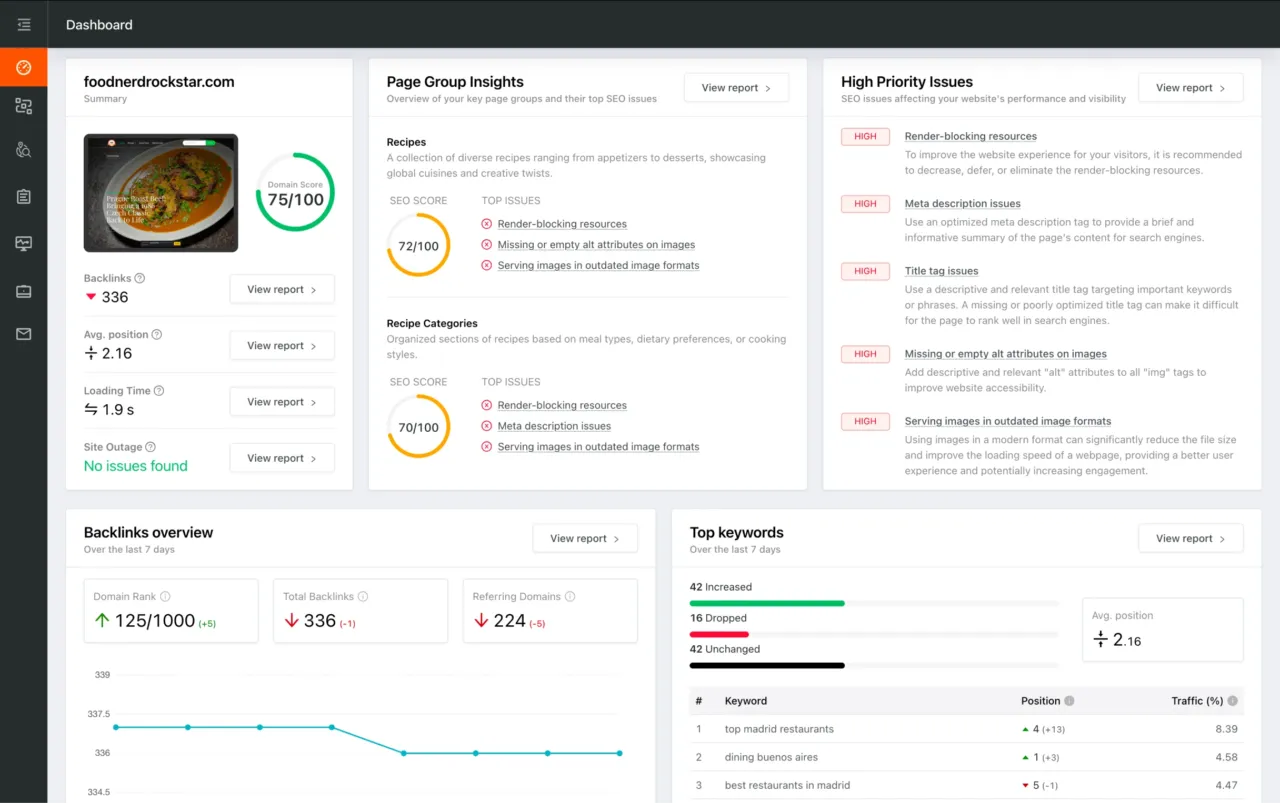
Dashboard preview showing SEO site checkup metrics, page group insights, and issue prioritization