Archived

SEO Report for https://eluniversal.com.mx

Your general SEO Checkup Score


SEO Score71/100
Average SEO score of top 100 sites: 75%This value indicates the average SEO score of the top 100 most visited websites in the US (in the past 12 months)

Your site scored 71/100, below the 75 average for top sites. We found 14 issues to fix, and clearing them is how you move up.

14 Failed
7 Warnings
37 Passed

Want to fix these issues and track your progress?

Issues to fix

HIGH
To improve the website experience for your visitors, it is recommended to eliminate any render-blocking resources on this webpage.
Details
HIGH
Users may abandon pages that take longer than 5 seconds to load, resulting in a potential loss of up to 50% of visitors. Faster loading pages can lead to increased traffic, better conversions, and higher sales.
Details
HIGH
Using images in a modern format can significantly reduce the file size and improve the loading speed of a webpage, providing a better user experience and potentially increasing engagement.
Details
MEDIUM
Serve properly sized images to reduce page loading times and to improve user's experience.
Details
MEDIUM
Avoid using distorted images, as they can have a negative impact on the user experience.
Details
MEDIUM
Reducing the JavaScript execution time can result in faster page load times and a smoother user experience, as it allows the browser to render and display the page more quickly.
Details
MEDIUM
Avoid performance and security issues by adding "rel=noopener" or "rel=noreferrer" to your "target=_blank" links.
Details
LOW
Consider reducing the HTML size to improve loading times and retain visitors.
Details
LOW
Reducing the Document Object Model (DOM) size can lead to faster page loading times, improved site performance, and better user experience by decreasing the amount of time it takes for the browser to process and render the page.
Details
LOW
Resolving errors identified by the Chrome DevTools Console can improve user experience.
Details
LOW
Using more than 20 HTTP requests on a webpage can negatively impact the loading time.
Details
LOW
Strip out any unnecessary metadata to improve loading time, security, and privacy. Metadata should not exceed 16% of the image size.
Details
LOW
Consider adding the Strict-Transport-Security header to your webpage to ensure that web traffic is encrypted over HTTPS, mitigating the risk of man-in-the-middle attacks and other security threats.
Details

Common SEO issues

Score:72
Failed:3
Warnings:3
Passed:13
Meta Title Test
100% of top 100 sites passed
This webpage is using a title tag with a length of 70 characters. While there's no target number of characters, titles should be descriptive and concise. We recommend using a title with a length between 20 - 60 characters in order to fit Google Search results that have a 600-pixel limit.
Text: El Universal | El periódico de México líder en noticias y clasificados
Length: 70 characters
Your webpage's meta title is an HTML tag that defines the title of your page. This tag displays your page title in search engine results, at the top of a user's browser, and also when your page is bookmarked in a list of favorites. A concise, descriptive title tag that accurately reflects your page's topic is important for ranking well in search engines.
Meta Description Test
92% of top 100 sites passed
This webpage is using a meta description tag.
Text: Noticias de última hora de México y el mundo. Noticias minuto a minuto de política, ovidio, culiacan, AMLO, AIFA, Ucrania, Rusia, deportes, espectáculos,
Length: 153 characters
Your webpage's meta description is an HTML tag that is intended to provide a short and accurate summary of your page. Search engines use meta descriptions to help identify the a page's topic - they may also use meta descriptions by displaying them directly in search engine results. Accurate and inviting meta descriptions can help boost both your search engine rankings and a user's likelihood of clicking through to your page.
Google Search Results Preview Test
Desktop version
https://www.eluniversal.com.mx/El Universal | El periódico de México líder en noticias y clasificadosNoticias de última hora de México y el mundo. Noticias minuto a minuto de política, ovidio, culiacan, AMLO, AIFA, Ucrania, Rusia, deportes, espectáculos,
Mobile version
https://www.eluniversal.com.mx/El Universal | El periódico de México líder en noticias y clasificadosNoticias de última hora de México y el mundo. Noticias minuto a minuto de política, ovidio, culiacan, AMLO, AIFA, Ucrania, Rusia, deportes, espectáculos,
Check how your page might appear in Google search results. Google search results typically uses your webpage title, url and meta-description in order to display relevant summarized information about your site. If these elements are too long, Google will truncate their content. Webpage title up to 70 characters in length, and webpage descriptions up to 160 characters in length are recommended in order to optimize readability.
Social Media Meta Tags Test
89% of top 100 sites passed
This webpage is using social media meta tags.
Open Graph Meta Tags
og:typewebsite
og:site_nameEl Universal
og:urlhttps://www.eluniversal.com.mx/
og:titleEl Universal | El periódico de México líder en noticias y clasificados
og:image/pf/resources/website/eluniversal/h2.webp?d=1601
og:localees_LA
og:descriptionNoticias de última hora de México y el mundo. Noticias minuto a minuto de política, ovidio, culiacan, AMLO, AIFA, Ucrania, Rusia, deportes, espectáculos,
Twitter Card Meta Tags
twitter:cardsummary_large_image
twitter:image/pf/resources/website/eluniversal/h2.webp?d=1601
twitter:urlhttps://www.eluniversal.com.mx/
twitter:titleEl Universal | El periódico de México líder en noticias y clasificados
twitter:site@El_Universal_Mx
twitter:creator@El_Universal_Mx
twitter:descriptionNoticias de última hora de México y el mundo. Noticias minuto a minuto de política, ovidio, culiacan, AMLO, AIFA, Ucrania, Rusia, deportes, espectáculos,
This test will check if the analyzed webpage is using social media meta tags. While this type of meta tags don't affect what people see when they visit the webpage, they exist to provide information about it to search engines and social media platforms. Also, when a link is shared, both Facebook and Twitter will scrape the associated webpage and read its meta tags to display the appropriate information. Thus, social media meta tags will help to amplify your webpage's content, will improve brand visibility and will help to generate website traffic.
Most Common Keywords Test
There is likely no optimal keyword density (search engine algorithms have evolved beyond keyword density metrics as a significant ranking factor). It can be useful, however, to note which keywords appear most often on your page and if they reflect the intended topic of your page. More importantly, the keywords on your page should appear within natural sounding and grammatically correct copy.
40para
19méxico
17publicidad
12cómo
11mejor
Check the most common keywords in your page and their usage (number of times used). This can help give a quick overview of the keywords and topics that crawlers may associate with your web page.
Keywords Usage Test
48% of top 100 sites passed
The most common keywords of this webpage are distributed well across the important HTML tags. This helps search engines to properly identify the topic of this webpage.
Keyword
Title tag
Meta description
Headings
para
méxico
publicidad
cómo
mejor
This will check if your most common keywords are used in the webpage's title and description
Keywords Cloud Test
abre
acción
alfombra
amazon
amor
ante
arte
aviso
años
buen
cada
calendario
calidad
canción
carlos
cdmx
centro
circula
claudio
como
compra
compromiso
confiable
conoce
corte
cynthia
cómo
debate
descubre
descuento
desde
diciembre
digna
donde
durante
días
edad
edomex
encuentro
este
estilo
está
eutanasia
familia
filme
fotos
garcía
horas
huevocartoon
information
inédita
juegan
laura
leer
león
libre
llega
luis
línea
mano
manzo
mejor
mejores
mercado
metro
mexicana
mundial
mundo
méxico
nacional
nueva
nuevo
oaxaca
obras
ofertas
opinión
papa
para
pausini
país
periodismo
personal
premio
publicidad
puedes
regala
rodríguez
roja
saber
seguridad
selección
seres
suscríbete
suárez
tras
trump
universal
vale
vaticano
vida
The Keyword Cloud is a visual representation of keywords used on your website. This will show you which words are frequently used in the content of your webpage. Keywords having higher density are presented in larger fonts and displayed in alphabetic order.
Competitor Domains Test
Competitor Domains

Understand your competitors' SEO and backlink profile

Get related competitors and their domain authority score in relation to your domain.

Identifies up to ten domains that compete for similar organic search results, ranked by overall domain authority based on the volume and quality of their backlink profiles. Useful for benchmarking the competitive landscape and prioritizing which sites to study for content and link-building strategy.
Heading Tags Test
62% of top 100 sites passed
This webpage contains too many H2 tags! H2 tags should re-inforce the related content of your page to search engines - too many tags may make the topic less clear, or look like spam tactics. Consider using less than 10 H2 tags.
H1 tags
Rocío Nahle y su gabinete se dan “aumentazo”; ella dice que no sabía
Opt out of the sale or sharing of personal information
H2 tags
Servicios
Principales
Laura Pausini le regala una canción inédita al Papa León XIV durante un encuentro en el Vaticano
"Las locuras" de Rodrigo García llega a cines, antes que al streaming
"Zinnia", una heroína al estilo samurai
Cavernícolas se la juegan para salvar a su tribu de la mano de Huevocartoon
Cynthia Rodríguez abre el debate: eutanasia, fe y “vida digna”
Opinión
Refuerzan fronteras entre Edomex y Michoacán
¿Se le subirá el azúcar a la inflación?
El "artivismo" de Rivelino interpela a los Diputados a través de 55 obras
Respuestas lamentables
Copiando en el examen
Mano-festación
PORTADA
Los otros Izaguirre
Quejas de EUA, un podcast de Ana Paula Ordorica
Operación Sable: el golpe secreto en el Corredor Interoceánico
EL UNI TWITCH; Hoy hablamos del discurso 1ncel
“No me convence que el CJNG quisiera matarme”: Ciro, Con los de Casa
¡Google Discover cambió! Ahora puedes ver posteos y notas de EL UNIVERSAL en un mismo lugar
Se agrava crisis en escuela de música del Centro Ollin Yoliztli
Cómo saber qué días circula tu auto con este calendario del Hoy No Circula
¡Así podrás ganar el premio mayor del Mega Millions de 17,7 mil millones MXN desde México!
Buen Fin 2025: ¿Cómo saber qué tiendas tendrán promociones exclusivas?
Huevos enhojados, el desayuno ancestral y saludable de la Huasteca hidalguense
Sanciones para motociclistas: Siete de estas faltas ameritan retención de la unidad
Familiares identifican a Noe, niña asesinada en Juchitán; “que tu muerte no quede impune”, expresan
Nación
Javier Duarte tendrá que esperar para salir de prisión; jueza aplaza audiencia
Encapsulan el Zócalo; amurallan Palacio Nacional y Catedral
Cae presunto ladrón de joyerías tras operativo virtual; la SSC lo detuvo en Venustiano Carranza
CNTE hará 48 horas de paro; Segob refuta amenazas
VIDEOS “¿Quién te mandó?” Estos fueron los últimos momentos del asesino de Carlos Manzo
Metrópoli y Estados
Migrantes centroamericanos caen en mentiras de polleros
Obras en Línea 3 del Metro comenzarán en diciembre de 2026 y se prevé que duren un año
Hallan sin vida a niña de 4 años desaparecida tras agresión armada en Juchitán, Oaxaca; hay 3 detenidos
INAH suspende obras de construcción de Calzada Flotante en alcaldía Cuauhtémoc tras encontrar vestigios arqueológicos
Estudiantes de secundaria en Zacatecas crean catálogo sexual con IA; suspenden a directivos y maestros protestan
Mundo y Economía
Revelan correos de Epstein que sugieren que Trump “sabía de las chicas” y “pasó horas” con una de las víctimas
Petro ordena suspender intercambio de inteligencia con EU por ataques a lanchas en el Caribe y Pacífico
“Las personas tienen derecho a decidir el fin de sus vidas”: Luis Enrique Gallo, diputado por el Frente Amplio en Uruguay
"Trump está redoblando su estupidez", afirma gobernador de California en la COP30
La Bolsa Mexicana de Valores rompe techo de 64 mil puntos
Deportes
Guillermo Ochoa se alista para su sexta Copa del Mundo y presume su nuevo uniforme con la Selección Mexicana
Claudio Suárez lamenta falta de personalidad en Selección Mexicana: “Les pesa la playera, nadie toma el liderazgo”
Claudio Suárez desea que Chivas nunca rompa su tradición de jugar exclusivamente con mexicanos
Claudio Suárez admite que Chivas no tiene a “los mejores mexicanos” para ser un espirante al título
Claudio Suárez le recuerda a Chivas que tiene la obligación de ser campeón en cada torneo
Lo último
Espectáculos y Cultura
¿Puebla va a recuperar sus playas? Esto dice el gobernador Alejandro Armenta
San Luis Metal Fest 2026: Esto es lo que sabemos del nuevo festival “oscuro”
Librería El Alquimista suma más de 30 años dedicados a impulsar la lectura en Querétaro
"Ella era inocente", dice gobernador de Oaxaca por asesinato de la niña de 4 años en Juchitán
Tendencias
¿Cómo limpiar las gafas sin rayar los lentes? Conoce los trucos eficaces
¿Cómo ahuyentar las moscas de la casa y el jardín? Descubre el método infalible
Hotel en Nueva York lanza paquete para revivir experiencia de “Mi Pobre Angelito 2”: ¿cuánto cuesta?
Energía en movimiento
Descubre y Compra
Descuentos 11/11 en Amazon y Mercado Libre: las mejores ofertas relámpago
¿Qué ofertas tendrán Mercado Libre y Amazon por el Buen Fin 2025?
Sofás comprimidos en en caja: ¿vale la pena apostar por uno?
Nueva camiseta de la Selección Nacional de México: versiones, precios y dónde comprarla
Guns N’ Roses: Cómo conseguir boletos de última hora para el concierto en CDMX
FOTOS
Lo mejor de Suplementos
Cómo "desactivar" temporalmente tu cuenta de WhatsApp
Qué tramo del Periférico estará cerrado por 40 días, desde noviembre
Cabañas de lujo escondidas en el bosque en Mineral del Chico
El corte de cabello para las chicas que lo quieren largo y corto a la vez
¿Cuáles son los mejores aceites para cocinar?
REDES SOCIALES
USO DE COOKIES

Check if your webpage is using any H1 and H2 HTML header tags. Header tags are not visible to users, but help clarify and support the overall theme or purpose of your page to search engines. The H1 tag represents the most important heading, e.g., the title of the page or blog post. The H2 tag represents the second most important headings on the webpages, e.g., the subheadings.
Robots.txt Test
99% of top 100 sites passed
This website is using a robots.txt file.
Check if your website is using a robots.txt file. When search engine robots crawl a website, they typically first access a site's robots.txt file. Robots.txt tells Googlebot and other crawlers what is and is not allowed to be crawled on your site.
Sitemap Test
83% of top 100 sites passed
This website has a sitemap file.
Check if the website has a sitemap. A sitemap is important as it lists all the web pages of the site and let search engine crawlers to crawl the website more intelligently. A sitemap also provides valuable metadata for each webpage.
Image Alt Test
78% of top 100 sites passed
This webpage is using "img" tags with empty or missing "alt" attribute!

Image Alt Test

How to pass this test?

In order to pass this test you must add an alt attribute to every <img> tag used into your webpage.

An image with an alternate text specified is inserted using the following HTML line:

<img src="image.png" alt="text_to_describe_your_image">

Remember that the point of alt text is to provide the same functional information that a visual user would see. Search engines, users who disabled images in their browsers and other agents who are unable to see the images on your webpage can read the alt attributes assigned to the image since they cannot view it.

Learn more about optimizing images for SEO.

Check if images on your webpage are using alt attributes. If an image cannot be displayed (e.g., due to broken image source, slow internet connection, etc), the alt attribute provides alternative information. Using relevant keywords and text in the alt attribute can help both users and search engines better interpret the subject of an image.
Responsive Image Test
29% of top 100 sites passed
Not all images in this webpage are properly sized! This webpage is serving images that are larger than needed for the size of the user's viewport.

Responsive Image Test

How to pass this test?

This issue can be fixed by using responsive images, which relies on creating multiple versions of each image, that are served via CSS media queries depending on the user's viewport dimensions.

Another solution can be to use vector-based image formats like SVG. SVG images scale appropriately to any size, without wasting unnecessary bandwidth. Also consider image CDNs that can help serve responsive images.

This test will check if all of your page's images are appropriately sized for your user's viewport. Ideally, your page should not serve images that are larger than the version that's rendered on the user's screen. Serving an image larger than the user's viewport results in scaling down the image, use of unnecessary bandwidth, and slower page load time.
Image Aspect Ratio Test
75% of top 100 sites passed
Not all image display dimensions match the natural aspect ratio! Fix aspect ratio issues to avoid distorted images on this website!

Image Aspect Ratio Test

How to pass this test?

There are two common causes for an incorrect image aspect ratio:

  • An image is set to explicit width and height values that differ from the source image's dimensions.
  • An image is set to a width and height as a percentage of a variably-sized container.

To help avoid these issues, consider using an image CDN, to help automate the process of creating different size versions of your image.

Also check any CSS that can affects the image's aspect ratio - if you're having trouble finding the CSS that's causing the incorrect aspect ratio, Chrome DevTools can show you the CSS declarations that affect a given image.

Finally, check the image's width and height attributes in the HTML. When possible, it's good practice to specify each image's width and height attributes in your HTML so that the browser can allocate space for the image. This approach helps to ensure that content below the image doesn't shift once the image is loaded.

This test will check if all images are displayed with a correct aspect ratio. If a rendered image has an aspect ratio that's significantly different from the aspect ratio in its source file (the natural aspect ratio), the rendered image may look distorted, possibly creating an unpleasant user experience.
Deprecated HTML Tags Test
94% of top 100 sites passed
This webpage does not use HTML deprecated tags.
Check if your webpage is using old, deprecated HTML tags. These tags will eventually lose browser support and your web pages may render incorrectly as browsers drop support for these tags.
Google Analytics Test
72% of top 100 sites passed
This webpage is using Google Analytics.
Check if your website is connected with Google Analytics. Google Analytics is a popular, free website analysis tool that helps provide insights about your site's traffic and demographics.
Favicon Test
100% of top 100 sites passed
favicon
This website appears to have a favicon.
Check if your site is using and correctly implementing a favicon. Favicons are small icons that appear in your browser's URL navigation bar. They are also saved next to your URL's title when your page is bookmarked. This helps brand your site and make it easy for users to navigate to your site among a list of bookmarks.
JS Error Test
83% of top 100 sites passed
There are no severe JavaScript errors on this webpage.
Check your page for JavaScript errors. These errors may prevent users from properly viewing your pages and impact their user experience. Sites with poor user experience tend to rank worse in search engine results.
Console Errors Test
27% of top 100 sites passed
This webpage has some errors caught by the Chrome DevTools Console!

Console Errors Test

How to pass this test?

In order to pass this test, you have to fix all the warnings and errors reported in Chrome DevTools console. You can also visit Google's documentation for further troubleshooting support: https://developer.chrome.com/docs/devtools/issues/

This will check the Chrome DevTools Console for warnings and errors. These errors may prevent users from properly viewing your pages and impact their user experience. Sites with poor user experience tend to rank worse in search engine results.
Charset Declaration Test
96% of top 100 sites passed
This webpage has a character encoding declaration.
Content-Type: text/html; charset=utf-8
This test will check if the webpage has a character encoding declaration ("charset"). If the server doesn't specify a character encoding format when it sends an HTML file, the browser may display some characters incorrectly to users. Google recommends using the Unicode/UTF-8 character set when possible.
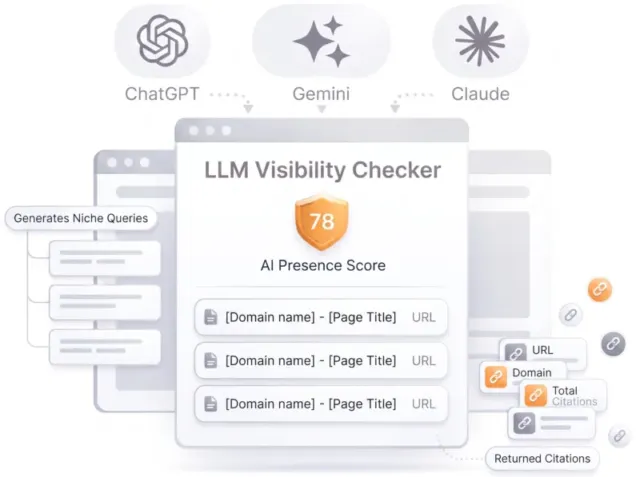
LLM Visibility Checker

LLM Visibility Checker

Track your brand across ChatGPT, Gemini and Claude

Get an AI Presence Score, see which of your pages get cited, and follow how you compare with competitors over time.

Speed optimizations

Score:58
Failed:8
Warnings:2
Passed:10
HTML Page Size Test
23% of top 100 sites passed
The size of this webpage's HTML is 316.37 Kb, and is greater than the average size of 33 Kb! This can lead to slower loading times, lost visitors, and decreased revenue. Good steps to reduce HTML size include: using HTML compression, CSS layouts, external style sheets, and moving javascript to external files.

HTML Page Size Test

How to pass this test?

In order to resolve this problem you are advised to:

  • use gzip compression
  • move all CSS style rules into a single, external and minified CSS file
  • minify all JS files and, if possible, try combining them into a single external JS file
  • use CSS layouts
Check your page's HTML size. HTML size is the size of all the HTML code on your web page - this size does not include images, external JavaScript or CSS files.
DOM Size Test
56% of top 100 sites passed
The Document Object Model (DOM) of this webpage has 2,296 nodes which is greater than the recommended value of 1,500 nodes! A large DOM size negatively affects site performance and increases the page load time.

DOM Size Test

How to pass this test?

In order to pass this test, you need to reduce the DOM size.

First, you need to identify the causes of an excessive number of DOM nodes. They can be: poorly coded plugins or themes, DOM nodes created dynamically via JavaScript, page builders that generate bloated HTML, copy-paste text into a WYSIWYG editor, hidden elements via CSS, etc.

Second, you need to remove the unnecessary tags and even refactor or rewrite some parts of the code/template. Another workarounds can be: code splitting (create more pages instead of one long page), consider to lazy load some parts of your website in order to speed up the initial rendering, implement infinite scroll, improve page rendering with content visibility (with the CSS content-visibility property, the browser will skip the styling, layout, and paint until the user scrolls down the page).

This test will check the size of the DOM tree. When a web page is loaded, the browser creates a Document Object Model (DOM) of the page. All the tags in the HTML document are called nodes and the sum of them is translated as the DOM size. A large DOM tree will likely increase memory usage, cause longer style calculations, and may produce slower layout rendering.
HTML Compression/GZIP Test
99% of top 100 sites passed
This webpage is successfully compressed using gzip compression on your code. The HTML code is compressed from 2173.27 Kb to 316.37 Kb (85% size savings). This helps ensure a faster loading webpage and improved user experience.
Check if your website is using HTML compression. HTML compression plays an important role in improving website speed by finding similar strings within a text file and replacing them temporarily to reduce overall file size.
Site Loading Speed Test
71% of top 100 sites passed
The loading time of this webpage (measured from N. Virginia, US) is around 16.24 seconds and is greater than the average loading speed which is 5 seconds!
Related Keywords

Accurate historical loading speed monitor and reports

Get detailed and accurate loading speed reports for your websites and see how your pages are being loaded over time.

Check your website's loading speed. Page speed is an important factor in search engine rankings and overall site success. Pages that take longer than 5 seconds to load can lose up to 50% of users. Faster webpages result in higher traffic, better conversions, and increased sales over slower loading pages.
JS Execution Time Test
53% of top 100 sites passed
The JavaScript code used by this webpage is executed in more than 3.5 seconds! When the JavaScript code takes a long time to execute, it slows down the page performance in several ways: longer download times, main thread bottlenecks, delays of "Time To Interactive", memory leaks, etc.

JS Execution Time Test

How to pass this test?

In order to pass this test you have to decrease the JavaScript code execution time. You can do this by:

- implementing code-splitting: split the JavaScript bundle into smaller files so that only the critical code is executed during initial page load.

- removing unused code: unused code can often be inherited from previous versions of your site, and/or imported from other modules that aren't referenced anymore.

- reduce network trips by caching your code with the PRPL pattern: preload the most important resources, render the initial route as soon as possible, pre-cache remaining assets and lazy load other routes and non-critical assets.

- minifying and compressing the JavaScript code

This test will check the total execution time of the JavaScript code. Reducing the JavaScript execution time, in general, refers to decreasing the amount of time spent to parse, compile and execute the JavaScript code. Improving JavaScript execution time will result in faster page load times, and improved user experience (which Google uses as a factor in its ranking algorithms).
Page Objects Test
7% of top 100 sites passed
This webpage is using more than 20 http requests, which can slow down page loading and negatively impact user experience!
Content size by content type
Content type
Percent
Size
javascript
60.5 %
2.91 Mb
image
18.8 %
928.00 Kb
html
12.2 %
599.59 Kb
font
4.2 %
208.14 Kb
other
3.0 %
148.33 Kb
css
1.3 %
66.08 Kb
TOTAL
100%
4.82 Mb
Requests by content type
Content type
Percent
Requests
image
39.3 %
224
javascript
22.8 %
130
other
22.6 %
129
html
13.9 %
79
font
0.9 %
5
css
0.5 %
3
TOTAL
100%
570
Content size by domain
Domain
Percent
Size
eluniversal.com.mx
21.5 %
1.04 Mb
youtube.com
20.0 %
987.84 Kb
googletagmanager.com
9.5 %
469.91 Kb
securepubads.g.doubleclick.net
6.2 %
305.56 Kb
cloudfront-us-east-1.images.arcpublishing.com
5.2 %
256.92 Kb
connect.facebook.net
4.1 %
203.22 Kb
pagead2.googlesyndication.com
2.9 %
142.87 Kb
cdn.tinypass.com
2.6 %
130.05 Kb
fonts.gstatic.com
2.5 %
123.65 Kb
fundingchoicesmessages.google.com
2.1 %
104.73 Kb
Other
23.2 %
1.12 Mb
TOTAL
100%
4.82 Mb
Requests by domain
Domain
Percent
Requests
eluniversal.com.mx
9.5 %
54
cs-server-s2s.yellowblue.io
4.4 %
25
cs.minutemedia-prebid.com
3.7 %
21
s.amazon-adsystem.com
3.5 %
20
us-u.openx.net
3.5 %
20
simage2.pubmatic.com
3.3 %
19
cs.openwebmp.com
3.2 %
18
fundingchoicesmessages.google.com
3.0 %
17
youtube.com
2.3 %
13
image2.pubmatic.com
2.3 %
13
Other
61.4 %
350
TOTAL
100%
570
Check if all the objects requested by this webpage can be retrieved. If they are not retrievable, your page may display incorrectly, leading to a bad user experience and lower search engine rankings.
CDN Usage Test
95% of top 100 sites passed
This webpage is not serving all resources (images, javascript and css) from CDNs!

CDN Usage Test

How to pass this test?

In order to pass this test you are advised to use a CDN service. A Content Delivery Network (CDN) is a globally distributed network of web servers that allows a quick transfer of assets and provides high availability and high performance. The primary benefits of using a CDN service are:
  • Improving website loading times
  • Reducing bandwidth costs
  • Increasing content availability and redundancy
  • Improving website security
Check if your webpage's resources (images, javascript and css files) are served via CDNs.
Modern Image Format Test
43% of top 100 sites passed
This webpage is not serving images in a modern format! Image formats like JPEG 2000, JPEG XR, and WebP often provide better compression than PNG or JPEG, which means faster downloads and less data consumption.

Modern Image Format Test

How to pass this test?

In order to pass this test, convert all the images listed in this report into a modern image format such as JPEG 2000, JPEG XR or WebP.

It's important to understand that the modern image formats, like WebP, are not yet widely supported across all devices and browsers. You can find here a full list of supported browsers and devices for the WebP format.

If your target audience falls within one of the unsupported browser/device categories, you should serve optimized fall-back images in the original JPEG/PNG format so that your users don't see a broken or badly designed page:

<!--Before:-->
<img src="image.jpg" alt="">

<!--After:-->
<picture>
	<source type="image/webp" srcset="image.webp">
	<img src="image.jpg" alt="">
</picture>

The browser uses the first listed source that's in a format it supports. If the browser does not support any of the formats listed in the "source" tags, it falls back to loading the image specified by the "img" tag.

This test will check if the webpage is serving images in modern formats. Image formats like JPEG 2000, JPEG XR, and WebP often provide better compression than PNG or JPEG, which means faster downloads and less data consumption for users.
Image Metadata Test
72% of top 100 sites passed
This webpage is using images with large metadata (more than 16% of the image size)! Stripping out unnecessary metadata tags can improve not only the loading time but also the security and privacy of a webpage.

Image Metadata Test

How to pass this test?

In order to pass this test, you have to remove the unnecessary image metadata (additional information which is stored along with the image). There are literally hundreds of metadata tags, but most of them (like camera model and settings, exposure, creation date, etc) are useless to site visitors and isn't required by browsers to render images. However, a few metadata tags can still be useful and may help Search Engine bots to better understand your images:

  • GPS tags - These define where the image was taken providing location information that might help with local SEO. If you have a location-based business, tag your image with the GPS coordinates of your premises.
  • Author/Owner Name - Add your brand name (or your own name) here because it may influence the image being shown when someone searches your brand in Google Images.
  • Image Description - Just like an ALT description, the image description metadata tag can provide information pertaining to what the content of the image is about.
This test will check if the images used in a webpage have large metadata (more than 16% of the image size). Image Metadata refers to additional information (thumbnails, comments, date-times, copyright, camera model and settings, geo location, etc) which is stored along with the image. Most of this information is useless to site visitors and isn't required by browsers to render images.
Image Caching Test
95% of top 100 sites passed
This website is using cache headers for images and the browsers will display these images from the cache.
Checks if your page is using an image expires tag, which specifies a future expiration date for your images. Browsers will see this tag and cache the image until the specified date (it doesn't re-fetch the unchanged image from your server). This speeds up your site the next time returning visitors arrive at your site and require the same image.
JavaScript Caching Test
96% of top 100 sites passed
This webpage is using cache headers for all JavaScript resources.
Checks if your page is using caching headers for all JavaScript resources. Users browsers will check for these headers and, if any, will cache the JavaScript resources until the specified date (so that it does not keep re-fetching the unchanged file from your server). This speeds up your site the next time returning visitors arrive at your site and require the same JavaScript resource.
CSS Caching Test
98% of top 100 sites passed
This webpage is not using uncached CSS resources from same domain!
Checks if your page is using caching headers for all CSS resources. Users browsers will check for these headers and, if any, will cache the CSS resources until the specified date (so that it does not keep re-fetching the unchanged file from your server). This speeds up your site the next time returning visitors arrive at your site and require the same CSS resource.
JavaScript Minification Test
98% of top 100 sites passed
All JavaScript files used by this webpage are minified.
Checks if any external javascript files used in your page is minified. Minified files reduce page size and overall load time.
CSS Minification Test
100% of top 100 sites passed
All CSS resources used by this webpage are minified.
Checks if any CSS files used in your page is minified. Minified files reduce page size and overall load time.
Render Blocking Resources Test
15% of top 100 sites passed
This webpage is using render blocking resources! Eliminating render-blocking resources can help this webpage to load significantly faster and will improve the website experience for your visitors.

Render Blocking Resources Test

How to pass this test?

In order to pass this test, you have to reduce the impact of render-blocking resources.

First, you have to identify what's critical and what's not. You can use the Chrome DevTools (Coverage tab) to identify non-critical CSS and JS.

Once you've identified critical code, you can try the below methods to eliminate render-blocking resources:

  • inline critical JS within a script tag in your HTML document
  • inline critical CSS required for the first paint inside a style block in the head of the HTML document
  • move the script and link tags at the end of the HTML document
  • add async or defer attributes to non-critical script or link tags
  • split CSS styles into different files, organized by media query
  • compress and minify your text-based resources
This test will check if any of the webpage's JavaScript or CSS resources is blocking the render process. When the browser encounters a render blocking resource, it stops downloading the rest of the resources until these critical files are processed. In the meantime, the entire rendering process is put on hold. Aim to reduce the impact of these render-blocking URLs by inlining critical resources, deferring non-critical resources, and removing anything unused. This can greatly improve page load times and the user experience (factors which Google uses in its ranking algorithms).
URL Redirects Test
97% of top 100 sites passed
This URL performed 1 redirects! While redirects are typically not advisable (as they can affect search engine indexing issues and adversely affect site loading time), one redirect may be acceptable, particularly if the URL is redirecting from a non-www version to its www version, or vice-versa.
Check how many redirects your URL will perform to resolve to the final destination URL. Redirects often cause search engine indexing issues and can also lead to some minor loading delays. Google recommends removing or keeping redirects to a minimum.
Time To First Byte Test
99% of top 100 sites passed
The Time To First Byte value of this webpage is 0.066 seconds. To provide a good user experience, Google recommends that sites should strive to have a TTFB of 0.8 seconds or less.
0.066 s
0.8 s
1.8 s
This test will check the Time To First Byte (TTFB) score of the analyzed webpage. TTFB is a metric that measures the time between the request for a resource and when the first byte of a response begins to arrive. To provide a good user experience, Google recommends that sites should strive to have Time To First Byte of 0.8 seconds or less.
First Contentful Paint Test
90% of top 100 sites passed
The First Contentful Paint value of this webpage is 0.852 seconds. To provide a good user experience, Google recommends that sites should strive to have a First Contentful Paint value of 1.8 seconds or less.
0.852 s
1.8 s
3 s
This test will check the First Contentful Paint (FCP) score of the analyzed webpage. FCP is a metric that measures the time from when the page starts loading to when any part of the page's content is rendered on the screen. To provide a good user experience, Google recommends that sites should strive to have a First Contentful Paint of 1.8 seconds or less.
Largest Contentful Paint Test
77% of top 100 sites passed
The Largest Contentful Paint duration of this webpage is 2.32 seconds. To provide a good user experience, Google recommends that sites should strive to have Largest Contentful Paint of 2.5 seconds or less.
2.32 s
2.5 s
4 s
Largest Contentful Paint element within the viewport:
<img width="651" height="400" alt="Laura Pausini le regala una canción inédita al Pap..." src="https://www.eluniversal.com.mx/resizer/v2/GZPUW2H5..." class="cards-story-opener-fr__img block w-full h-auto md:..." loading="lazy">
This test will check the Largest Contentful Paint (LCP) score of the analyzed webpage. LCP is a Core Web Vitals metric that measures when the largest element (image or text block) of a given web page becomes visible within the viewport, relative to when the page first started loading. To provide a good user experience, Google recommends that sites should strive to have Largest Contentful Paint of 2.5 seconds or less.
Cumulative Layout Shift Test
91% of top 100 sites passed
The CLS score of this webpage is 0.0016. To provide a good user experience, Google recommends that sites should strive to have a CLS score of 0.1 or less.
0.0016
0.1
0.25
DOM element which contributes the most to CLS score:
Text: El protocolo no falló [...] Si desde un principio hubiera aceptado que fuera per...
Html: <div class="phrase-background">
Score: 0.0011
This test will check the Cumulative Layout Shift (CLS) score of the analyzed webpage. CLS is a Core Web Vitals metric calculated by summing all layout shifts that aren't caused by user interaction. Basically, whenever a page loads, certain page elements unexpectedly shift, affecting the way users interact with the webpage. A website with a low CLS has a stable page display, which does not shift elements around and ensures a steady, predictable loading of all website content. To provide a good user experience, Google recommends that sites should strive to have a CLS score of 0.1 or less.
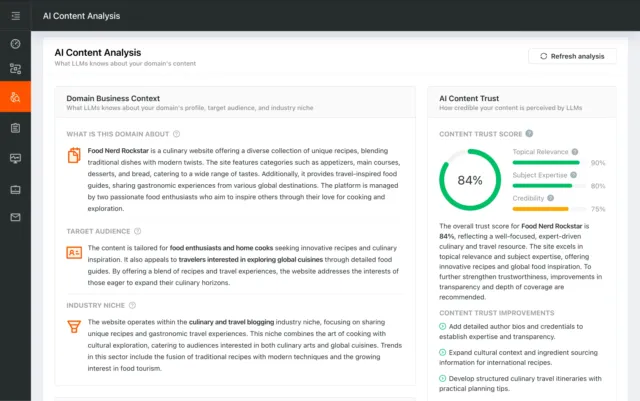
AI Content Analysis

AI Content Analysis

Optimize your content for search and LLMs

AI Content Analysis scores your pages on clarity, depth, and machine readability, so you optimize for both human readers and LLMs.

Server and security

Score:79
Failed:2
Warnings:1
Passed:4
URL Canonicalization Test
93% of top 100 sites passed
Test your site for potential URL canonicalization issues. Canonicalization describes how a site can use slightly different URLs for the same page (e.g., if http://www.example.com and http://example.com displays the same page but do not resolve to the same URL). If this happens, search engines may be unsure about which URL is the correct one to index. Learn more about canonicalization issues.
SSL Checker and HTTPS Test
100% of top 100 sites passed
This website is successfully using HTTPS, a secure communication protocol over the Internet.
The certificate is not used before the activation date.
The certificate has not expired.
The hostname "www.eluniversal.com.mx" is correctly listed in the certificate.
The certificate should be trusted by all major web browsers.
The certificate was not revoked.
The certificate was signed with a secure hash.
Certificate Chain:
Server certificate
Common Name
eluniversal.web.arc-cdn.net
Subject Alternative Names
beta.revistaclase.mx, betaarc.eluniversal.com.mx, betaarcsanluis.eluniversal.com.mx, eluniversal.web.arc-cdn.net, oaxaca.eluniversal.com.mx, sanluis.eluniversal.com.mx, www.de10.com.mx, www.de10sports.com, www.de10sports.com.mx, www.de10sports.mx, www.dedinero.com.mx, www.dedinero.mx, www.elgrafico.mx, www.eluniversal.com.mx, www.eluniversaledomex.com.mx, www.eluniversalhidalgo.com, www.eluniversalhidalgo.com.mx, www.eluniversalhidalgo.mx, www.eluniversalpuebla.com.mx, www.eluniversalqueretaro.mx, www.revistaclase.mx, www.viveusa.com.mx, www.viveusa.mx
Not Valid Before
Wed, October 22, 2025 at 12:37:36 PM UTC
Not Valid After
Tue, January 20, 2026 at 12:37:35 PM UTC
Signature Algorithm
sha256WithRsaEncryption
Issuer
R13
Intermediate certificate
Common Name
R13
Organization
Let's Encrypt
Location
US
Not Valid Before
Wed, March 13, 2024 at 12:00:00 AM UTC
Not Valid After
Fri, March 12, 2027 at 11:59:59 PM UTC
Signature Algorithm
sha256WithRsaEncryption
Issuer
ISRG Root X1
Root certificate
Common Name
ISRG Root X1
Organization
Internet Security Research Group
Location
US
Not Valid Before
Thu, June 4, 2015 at 11:04:38 AM UTC
Not Valid After
Mon, June 4, 2035 at 11:04:38 AM UTC
Signature Algorithm
sha256WithRsaEncryption
Issuer
ISRG Root X1
Check if your website is using HTTPS, a secure protocol for sending/receiving data over the Internet. Using HTTPS indicates that an additional encryption/authentication layer was added between client and server. HTTPS should be used by any site that collects sensitive customer data such as credit card information. Even for sites that do not collect such data, switching to https helps users by improving privacy and overall security. Google is increasingly using https as a positive ranking factor.
Mixed Content Test (HTTP over HTTPS)
100% of top 100 sites passed
This webpage does not use mixed content - both the initial HTML and all other resources are loaded over HTTPS.
This will check if all resources are loaded over a secure HTTPS connection. Mixed content occurs when initial HTML is loaded over a secure HTTPS connection, but other resources (such as images, videos, stylesheets, scripts) are loaded over an insecure HTTP connection. This is called mixed content because both HTTP and HTTPS content are being loaded to display the same page, and the initial request was secure over HTTPS. Browsers may block mixed content, so fixing this issue helps ensure your content loads as intended.
HTTP2 Test
99% of top 100 sites passed
This webpage is using the HTTP/2 protocol but not all resources are served over this protocol!
Checks if the webpage and all resources are served over HTTP/2. As the first major HTTP protocol update since 1997, HTTP/2 offers several key improvements such as increased speed and security.
HSTS Test
84% of top 100 sites passed
This webpage is not using the Strict-Transport-Security header! This is a security header that was created as a way to force the browser to use secure connections when a site is running over HTTPS.

HSTS Test

How to pass this test?

HSTS stands for HTTP Strict Transport Security and it's a security header that was created as a way to force the browser to use secure connections when a site is running over HTTPS.

When a user connects to a site using HTTPS, the website then encrypts the session with a secure sockets layer (SSL) certificate. One of the flaws associated with HTTPS is that it isn't entirely hack-proof: it leaves your site open to SSL stripping. This often occurs with 301 redirects if a website relies on 301 redirects for switching from HTTP to HTTPS. While this doesn't seem like a big deal, it's those few milliseconds in between you really need to worry about because it leaves the site vulnerable to hackers who try to strip down your SSL certificate. The solution for this issue is to add a Strict Transport Security response header.

An HSTS enabled server can include the following header in an HTTPS reply:

Strict-Transport-Security: max-age=16070400; includeSubDomains
This test will check if your webpage is using the Strict-Transport-Security header.
Plaintext Emails Test
97% of top 100 sites passed
This webpage does not include email addresses in plaintext.
Check your webpage for plaintext email addresses. Any e-mail address posted in public is likely to be automatically collected by computer software used by bulk emailers (a process known as e-mail address harvesting). A spam harvester can read through the pages in your site and extract plaintext email addresses which are then added to bulk marketing databases (resulting in more inbox spam). There are several methods for email obfuscation.
Visual SEO Analysis

Visual SEO Analysis

Find out if your page design converts the visitors you earn

We score six things that decide whether a visitor stays and acts, from the first screen to the path to action, and rank every fix by effort and impact.

Mobile usability

Score:100
Failed:0
Warnings:0
Passed:3
Meta Viewport Test
92% of top 100 sites passed
This webpage is using a viewport meta tag.
<meta name="viewport" content="width=device-width, initial-scale=1" />
This will check if the webpage is using a viewport meta tag, which is necessary for responsive web design. Without a viewport meta tag, mobile devices render pages at typical desktop screen widths and then scale the pages down, making them difficult to read. Setting the viewport meta tag lets you control the width and scaling of the viewport so that it's sized correctly on all devices.
Media Query Responsive Test
98% of top 100 sites passed
This webpage is using CSS media queries, which is the base for responsive design functionalities.
Check if your page implements responsive design functionalities using the media query technique. The '@media' rule allows different style rules for screen sizes. Media query techniques allow different presentation and content to be served depending on the output device, helping ensure that your website renders optimally on all devices and platforms.
Mobile Snapshot Test
Mobile view
Check how your website renders on a mobile device.

Advanced SEO

Score:98
Failed:1
Warnings:1
Passed:7
Structured Data Test
66% of top 100 sites passed
This webpage is using structured data.
Check if your webpage is using structured data markup. Search engines use structured data to better understand the content of your webpage and to create rich snippets in search results (which helps increase click-through rate to your site).
Custom 404 Error Page Test
80% of top 100 sites passed
This website is using a custom 404 error page. We recommend to have a custom 404 error page in order to improve the website's user experience by letting users know that only a specific page is missing/broken (and not the entire site), providing them helpful links, the opportunity to report bugs, and potentially track the source of broken links.
This SEO test will check if your website is using a custom 404 error page. By creating a custom 404 error page, you can improve your website's user experience by letting users know that only a specific page is missing/broken (and not your entire site), providing them helpful links, the opportunity to report bugs, and potentially track the source of broken links in your site.
Noindex Tag Test
99% of top 100 sites passed
This webpage does not use the noindex meta tag. This means that it can be indexed by search engines.
Check if your webpage is using the robots meta tag or the X-Robots-Tag HTTP header to instruct search engines not to show your site in search results pages.
Canonical Tag Test
93% of top 100 sites passed
This webpage is using the canonical link tag. This tag specifies that the URL: https://www.eluniversal.com.mx/ is preferred to be used in search results. Please ensure that this specification is correct, as canonical tags are often hard-coded and may not always reflect the latest changes in a site's URL structure.
<link href="https://www.eluniversal.com.mx/" rel="canonical"/>
Check if your webpage is using the canonical link tag. The canonical link tag is used to nominate a primary page when you have several pages with duplicate or very similar content.
Nofollow Tag Test
This webpage is using the nofollow meta tag! We recommend to use this tag carefully since search engines will not crawl all links from this webpage.

Nofollow Tag Test

How to pass this test?

If you want search engines to crawl all the outgoing links on your webpage you must remove the nofollow meta tag.
Check if your webpage is using the robots meta tag or the X-Robots-Tag HTTP header to instruct search engines not to follow the links on your page. Outgoing links marked with this tag will tell search engines not to follow or crawl that particular link. Google recommends that nofollow tags are used for paid advertisements on your site and links to pages that have not been vetted as trusted sites (e.g., links posted by users of your site).
Disallow Directive Test
Your robots.txt file includes a disallow command which instructs search engines to avoid certain parts of your website! You are advised to confirm if access to these resources or pages are intended to be blocked (e.g., if they contain internal-only content or sensitive information).
Check if your robots.txt file is instructing search engine crawlers to avoid parts of your website. The disallow directive is used in robots.txt to tell search engines not to crawl and index a file, page, or directory.
Meta Refresh Test
98% of top 100 sites passed
This webpage is not using a meta refresh tag.
This test will check if your webpage is using a refresh meta tag. This tag causes a web page to refresh automatically after a specified amount of time. Users generally don't expect automatic refreshes, so they can be disorienting. Refreshing also moves focus to the top of the page, which may frustrate or confuse users, particularly those who rely on screen readers or other assistive technologies.
SPF Records Test
94% of top 100 sites passed
This DNS server is using an SPF record.
v=spf1 ip4:201.149.4.28 ip4:207.248.232.2 ip4:200.188.114.166 include:spf.protection.outlook.com include:amazonses.com ~all
Check if your DNS records contains an SPF record. SPF (Sender Policy Framework) records allow email systems to verify if a given mail server has been authorized to send mail on behalf of your domain. Creating an SPF record increases email delivery rates by reducing the likelihood of your email being marked as spam.
Ads.txt Validation Test
67% of top 100 sites passed
This website is using an Authorized Digital Sellers (ads.txt) file, but it contains duplicated or invalid records! These warnings highlight points of concern which should not affect the processing of the authorized sellers list, but which should be resolved as soon as possible.

Ads.txt Validation Test

How to pass this test?

In order to pass this test, the ads.txt file should be publicly available in the website's root domain and its content should be properly formatted.

The advertising systems will read the content of the ads.txt file only if the request will return a 200 OK HTTP status code. The content of this file should be encoded as a formatted plain text and the HTTP Content-Type header should be text/plain (all other Content-Types are treated as an error and the content will be ignored).

As outlined in the IAB Tech Lab specifications for ads.txt file, the format logically consists of three types of records: comments, data records and variables:

  1. Comments
    Lines starting with # symbol are considered comments and are ignored.
  2. Data records
    For each Exchange or Supply-Side Platform (SSP) that is authorized to sell your inventory you must add a data record. Each of these lines should contain 3 or 4 comma separated fields:
    <FIELD #1>, <FIELD #2>, <FIELD #3>, <FIELD #4>
    • #1 - The canonical domain name of the system where bidders connect (e.g. google.com, appnexus.com, etc)
    • #2 - The publisher account ID
    • #3 - The type of account or relationship (e.g. DIRECT or RESELLER)
    • #4 - (Optional) An ID that uniquely identifies the advertising system within a certification authority
  3. Variables

    Any line containing a pattern of <VARIABLE>=<VALUE> should be interpreted as a variable declaration. The <VARIABLE> is a string identifier without internal whitespace. The only supported separator is the equals sign ‘=’. The <VALUE> is an open string that may contain arbitrary data.

    For human readability it is recommended that variables be declared at the end of the file, but this is not a strict requirement.

    Only the following variables are supported: CONTACT, SUBDOMAIN and INVENTORYPARTNERDOMAIN.

This test will check if your website's ads.txt file has a valid format.

Dominate search today on Google and AI Engines.

Join 85,000+ SaaS Marketers, Growth Agencies, Content-Led Companies and E-commerce Brands.

See Pricing
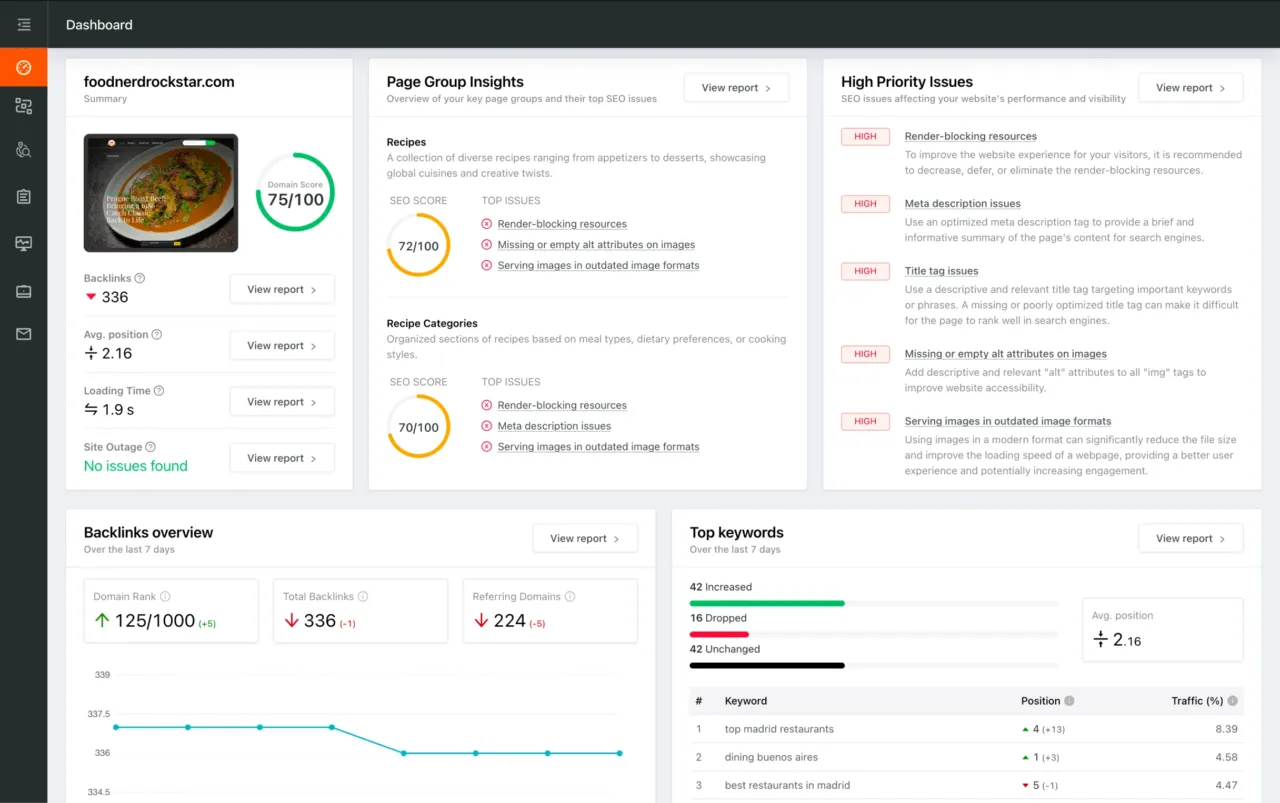
Dashboard preview showing SEO site checkup metrics, page group insights, and issue prioritization