You're viewing a free snapshot. Unlock full monitoring, AI visibility tracking, and weekly reports.
SEO ScoreNaN/100
Average SEO score of top 100 sites: 75%
Your site scored NaN/100, just above the 75 average for top sites. We found 10 issues to fix, and they're what's holding you back from the top spots.
10 Failed
0 Warnings
16 Passed
Want to fix these issues and track your progress?
Common SEO issues
Score:50
Failed:4
Warnings:0
Passed:5
Desktop version
http://109.66.10.12/dvir
Mobile version
http://109.66.10.12/dvir
boom
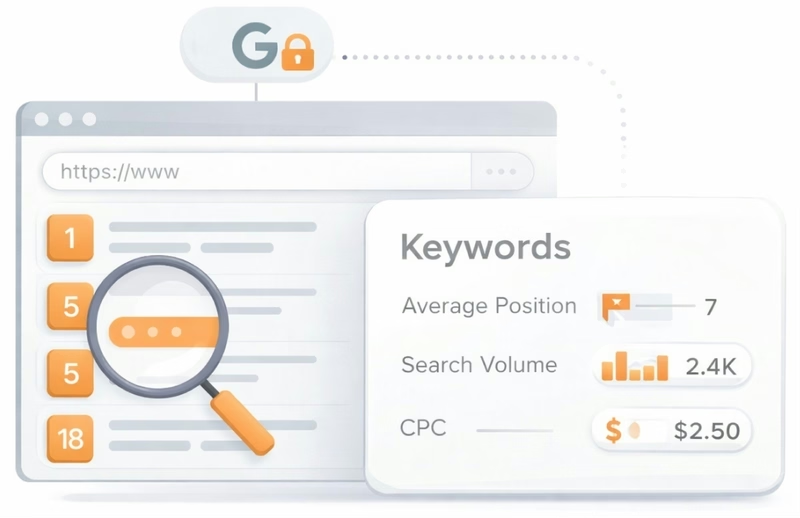
See which keywords rank your URL in Google’s top 20
Get key keyword metrics like average position, search volume, CPC, and more.


Understand your competitors' SEO and backlink profile
Get related competitors and their domain authority score in relation to your domain.
Robots.txt Test
Your site lacks a "robots.txt" file. This file can protect private content from appearing online, save bandwidth, and lower load time on your server. A missing "robots.txt" file also generates additional errors in your apache log whenever robots request one. Read more about the robots.txt file, and how to create one for your site.
Sitemap Test
Your site lacks a sitemap file. Sitemaps can help robots index your content more thoroughly and quickly. Read more on Google's guidelines for implementing the sitemap protocol.
Image Alt Test
Your website doesn't use <img> tags.
Google Analytics Test
Favicon Test
We've found a favicon in your page's HTML code, but it's not accessible.

Get a full and detailed list of your backlinks
See every website linking to yours, along with detailed backlink data.
JS Error Checker
Congratulations! There are no severe JavaScript errors on your web page.
Speed optimizations
Score:70
Failed:1
Warnings:0
Passed:5
HTML Page Size Test
HTML Compression/GZIP Test
Your page do not use any HTML compression!
You should compress your HTML to reduce your page size and page loading times - this will help your site retain visitors and increase page views. If you were using compression, you could be compressing your HTML size by 500 % - from 0.00 Kb to 0.02 Kb which would further reduce your page loading time.
You should compress your HTML to reduce your page size and page loading times - this will help your site retain visitors and increase page views. If you were using compression, you could be compressing your HTML size by 500 % - from 0.00 Kb to 0.02 Kb which would further reduce your page loading time.
Site Loading Speed Test
Your site loading time is around 0.508 seconds and this is under the average loading speed which is 5 seconds.

Accurate historical loading speed monitor and reports
Get detailed and accurate loading speed reports for your websites and see how your pages are being loaded over time.
Page Objects
Congratulations, your page has fewer than 20 http requests. A higher number of http requests results in a user's browser needing to request a large number of objects from your server, which will ultimately slow down the loading of your web page.
Total Objects: 2
- 2 HTML Pages
- 0 CSS Files
- 0 JS Files
- 0 Images
- 0 Flash Files
Image Caching Test
No image found on your site
URL Redirects Checker
Congratulations! Your URL doesn't have any redirects (which could potentially cause site indexation issues and site loading delays).
Server and security
Score:NaN
Failed:2
Warnings:0
Passed:1
URL Canonicalization Test
http://109.66.10.12/dvir and http://www.109.66.10.12/dvir should resolve to the same URL, but currently do not.
Plaintext Emails Test
Congratulations! Your webpage does not include email addresses in plaintext.
Mobile usability
Score:0
Failed:1
Warnings:0
Passed:1
Media Query Responsive Test
Your website is not using media queries. You should consider using this technique in order to implement responsive design functionalities.

Advanced SEO
Score:60
Failed:2
Warnings:0
Passed:4
Microdata Schema Test
Your webpage doesn't take the advantages of HTML Microdata specifications in order to markup structured data. View Google's guide for getting started with microdata.
SPF Records Checker
Your DNS server is not using an SPF record. SPF (Sender Policy Framework) allows administrators to specify which hosts are allowed to send mail from a given domain by creating a specific SPF record or TXT record in the Domain Name System (DNS). You can find more information about SPF records here.